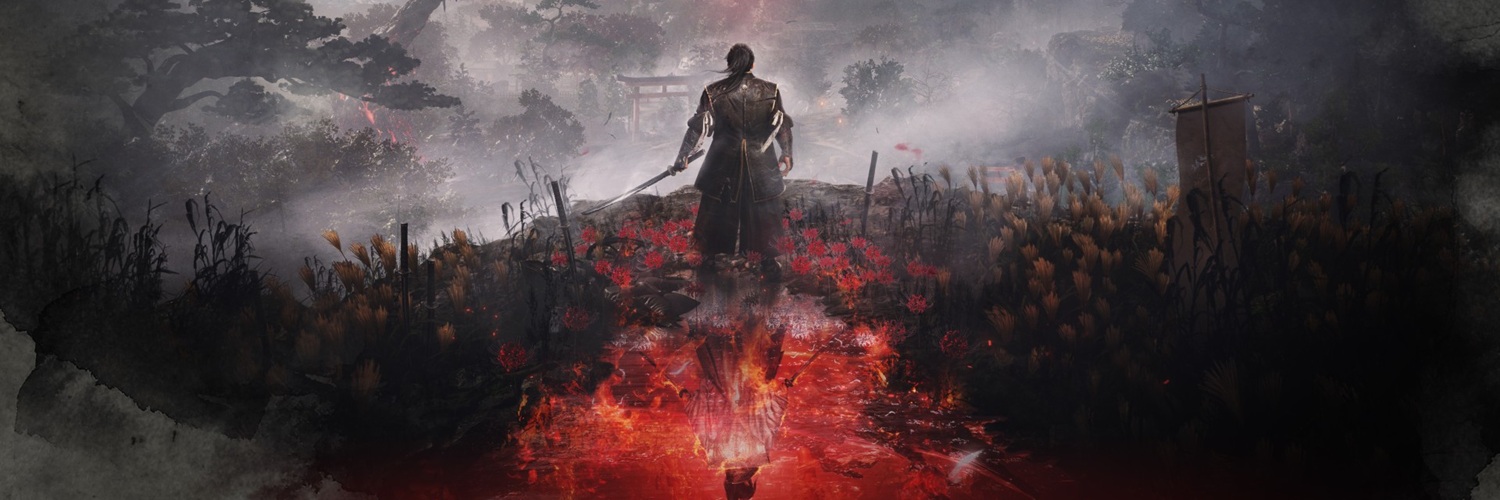
Nioh 3 PC Review
I first played Nioh in late 2017 through its PC Complete Edition. It stood out for me as a distinctive take on the Soulslike formula. While clearly inspired by FromSoftware’s games, Team Ninja focused more on fast and technical combat along with a weapon loot system. This gave the series its own identity. I would argue it was probably the first game in the Soulslike genre that brought their game to FromSoftware and even bested it in some areas, which at the time no other developer managed. Nioh 2 built on that strong foundation and turned it into a more refined and polished follow up. Now, close to six years later, Team Ninja is back with Nioh 3. This brings a shakeup to the series and provides an intensely combat-focused experience that ranks among the best Soulslikes released since Elden Ring.
The story can easily be enjoyed by newcomers to the series, as there aren’t many direct links to the previous games that would leave players feeling lost. Nioh 3 is set after the events of the earlier titles, beginning in the year 1622 at Edo Castle, where players take control of their own created version of Tokugawa Takechiyo. As with the Nioh series in general, the narrative mixes fiction with real historical figures. Takechiyo is based on the real-life shogun Tokugawa Iemitsu, who ruled Japan from 1623 to 1651. In the game’s version of events, his younger brother Kunimatsu grows resentful of Takechiyo’s succession and becomes bitter with envy.
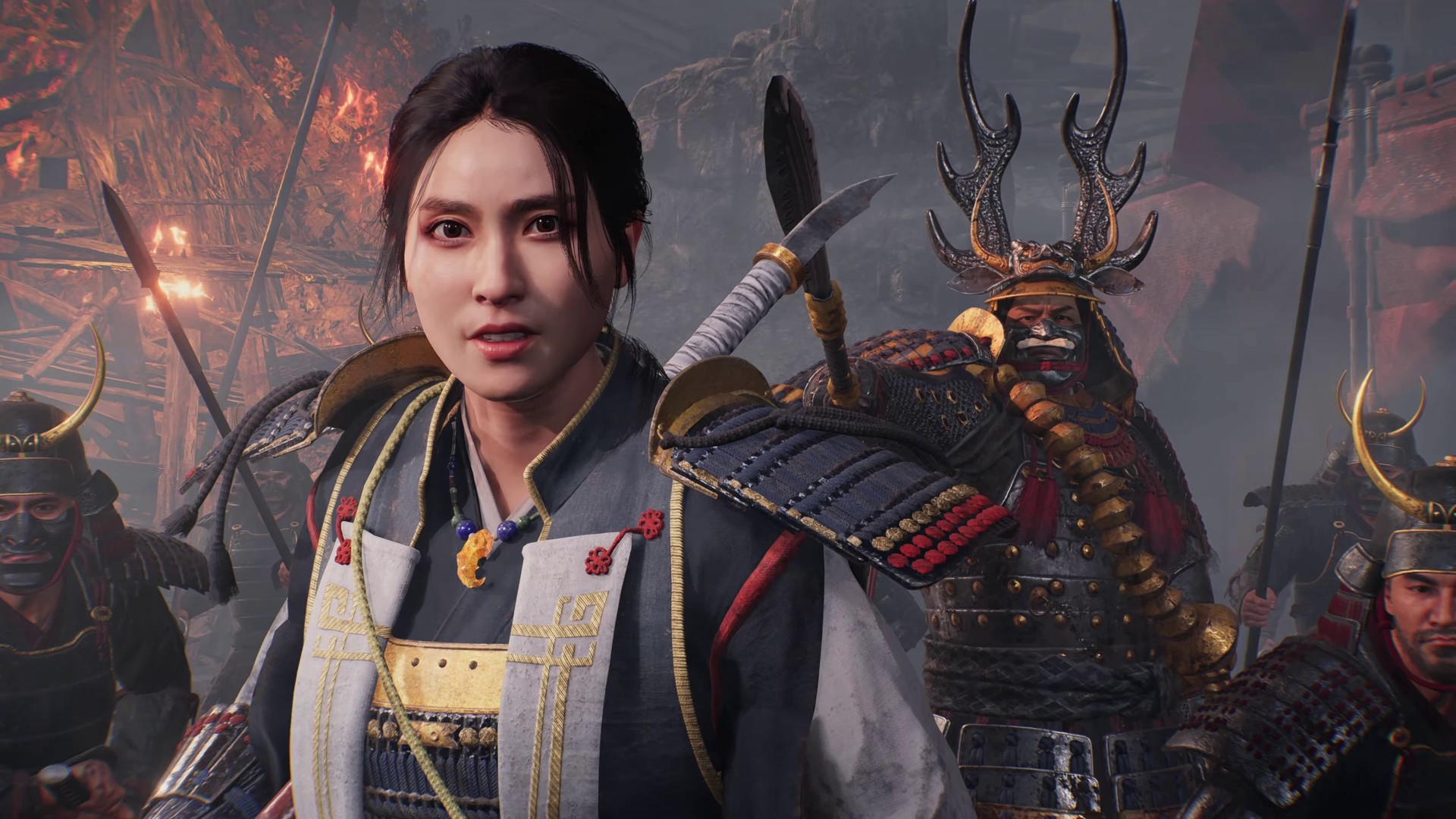
Players can create either a male or female version of Takechiyo through a robust character creator, which is arguably the best Team Ninja has implemented in one of their games so far. The story begins with Takechiyo about to be appointed the next shogun, but Kunimatsu’s hatred pushes him to become twisted. Harnessing the power of yokai, he launches an assault on Edo Castle and plunges the land into chaos. Just about to be taken down by their brother, Takechiyo’s guardian spirit activates and sends the hero back in time to the Sengoku Warring States period, 1572 to be exact, where the Tokugawa forces are locked in battle with Takeda Shingen.
The plot in Nioh 3 takes on a broader scope compared to previous entries in the series. While the story moves early on with a jump back to 1572, it doesn’t stay confined to a single moment in history, instead moving across several different periods of Japan’s past. This structure allows the game to set up conflicts across multiple eras while continuing the series’ usual blend of real historical figures with supernatural twists. Time travel itself isn’t a particularly new storytelling device, but here it is used as a framework that enables the game’s larger map ideas. By shifting between historical periods, the game is introducing new regions, battles and characters, all while expanding the sense of scale in its world with its more open-world design for most of the time periods. In essence, the story provides enough intrigue to keep players engaged with the ongoing yokai threat across Japan’s history, though it never becomes the reason to play Nioh 3.
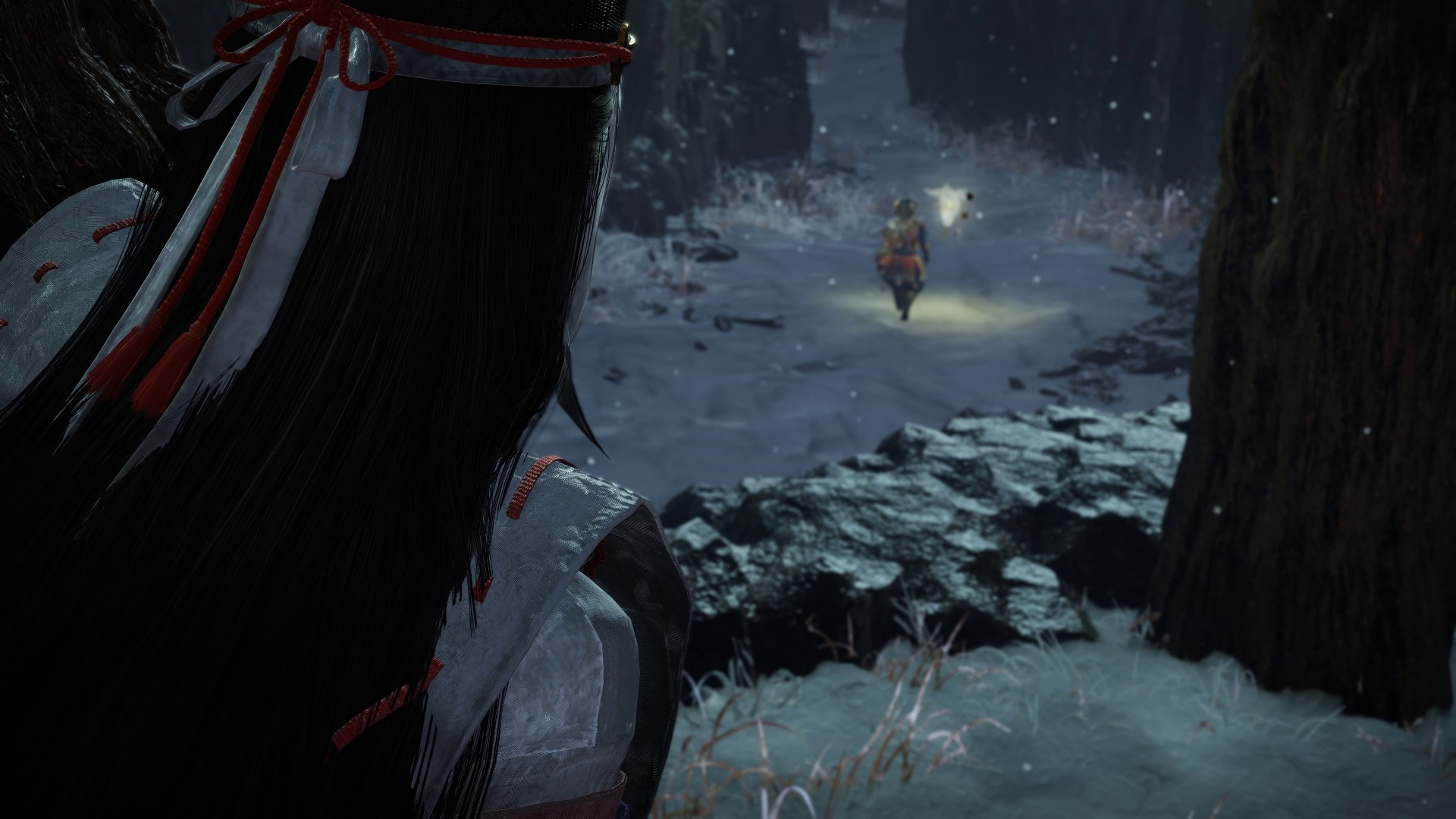
That brings us to the gameplay. Combat has always been one of the defining strengths of the series, and Nioh 3 builds on that foundation with some quality additions. The most notable feature is the introduction of the Ninja style, which now exists alongside the more traditional Samurai style that was part of the previous games. Players can switch between these two styles instantly with the press of a button, and the transition is smooth enough to be used freely in the middle of combat.
What makes this system particularly interesting is that each style comes with its own abilities, skills and equipment. It allows the game to offer two separate builds available at any given time. While earlier entries allowed players to craft ninja-focused builds through gear and skills, they were still built on the same underlying combat framework. In Nioh 3, however, the two styles feel far more distinct, giving players greater flexibility and depth when fighting.
Samurai style represents the classic combat system that fans know. It retains the familiar stance mechanics, allowing players to switch between low, mid and high stances. Each stance changes how weapons behave, affecting combo strings, attack speed and damage output. High stance delivers the most powerful attacks but consumes more Ki and leaves the player slower and more vulnerable, while low stance focuses on speed, quick attacks and improved evasion with lower Ki consumption. Mid stance sits comfortably between the two, offering a balanced approach to offence and defence and for most of the time was my go-to stance to use.
Ki management remains a central part of combat. Ki acts as the game’s stamina system, and the Ki Pulse mechanic allows players to recover spent Ki by pressing the button at the right moment after attacking. Perfectly timing a pulse, which is done when the blue sparks get close to the character, restore even more stamina and allows skilled players to maintain offensive pressure for longer. Ki Pulse also becomes essential when fighting yokai, as their attacks often create Yokai Realm pools that slow natural Ki regeneration and doing a Ki Pulse within that area will dispel the realm pool. Samurai style focuses on powerful weapon combat and defensive style. It deals higher single-hit damage and offers greater survivability, though it sacrifices some mobility for this stronger fighting style.
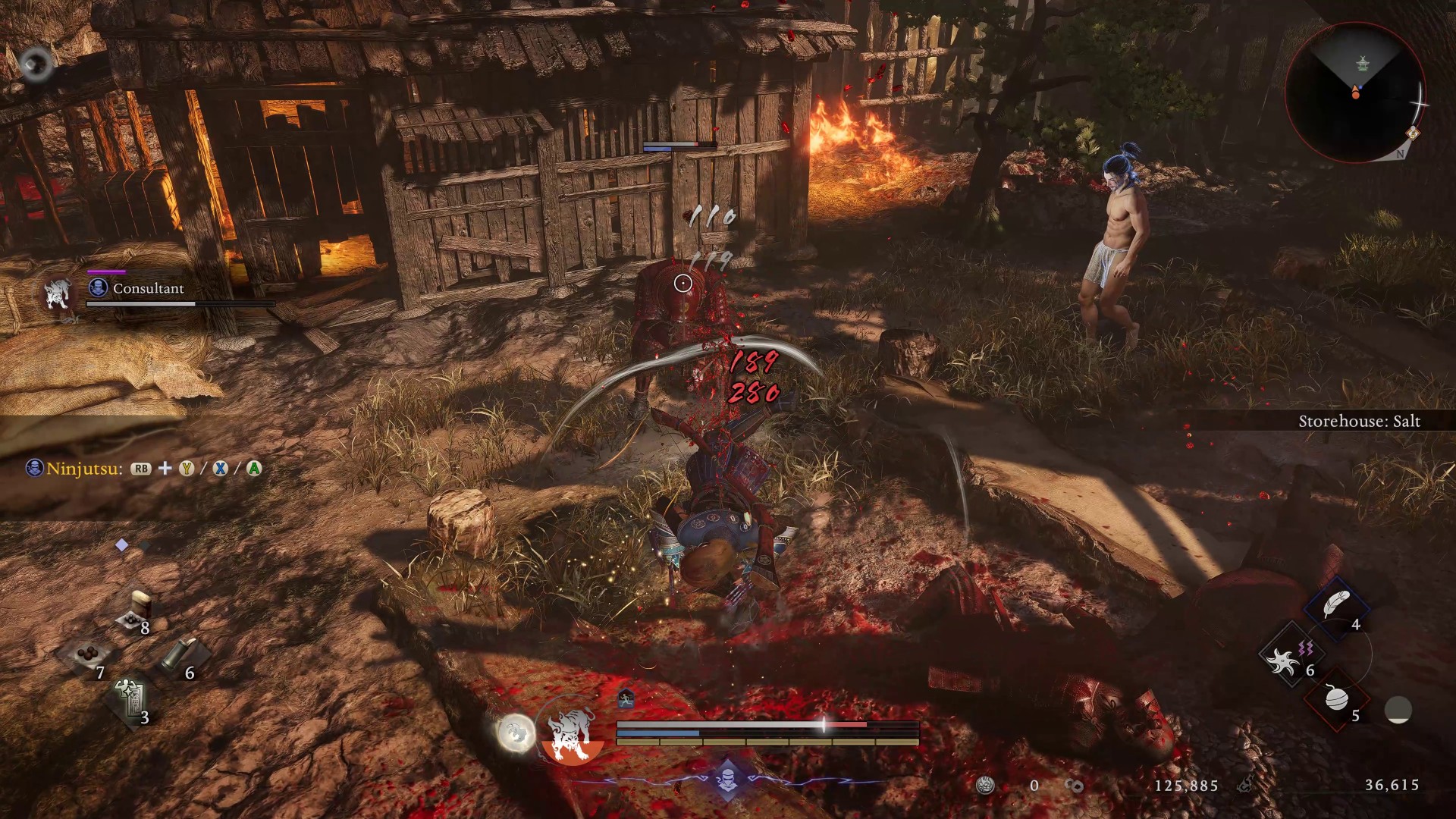
On the other side is the Ninja style, which focuses on speed and agility. Rather than relying on the traditional stance system, Ninja replaces the Ki Pulse button with a special evasive ability called Mist. This move can be triggered after an attack has finished, allowing players to quickly dash in any direction without consuming Ki. The result is a far more mobile combat style that encourages constant movement and aggressive hit-and-run tactics.
Instead of stances, Ninja style uses three Ninjutsu slots that can be equipped with a range of tools and abilities. These include useful skills such as paralysis shuriken, gunpowder bombs, elemental attacks, healing scrolls and caltrop balls that scatter spikes across the battlefield to slow and damage enemies. This toolkit gives Ninja players more tactical options during combat. The trade-off for this speed is survivability. Ninja characters have significantly lower defence and can die fast if caught by heavy attacks or, for me, mainly those long-range bowmen or bombers who would hit me during combat from their higher ground. However, Ninja’s fast combo chains allow them to overwhelm weaker enemies by stun locking them or to exploit attacks for behind. Unlike Samurai style, Ninja cannot perform Ki Pulses, meaning stamina recovery is slower and Yokai Realm pools can become more dangerous. Thankfully, switching between styles is instantaneous, allowing players to swap back to Samurai when needed before switching back to Ninja’s faster combat.
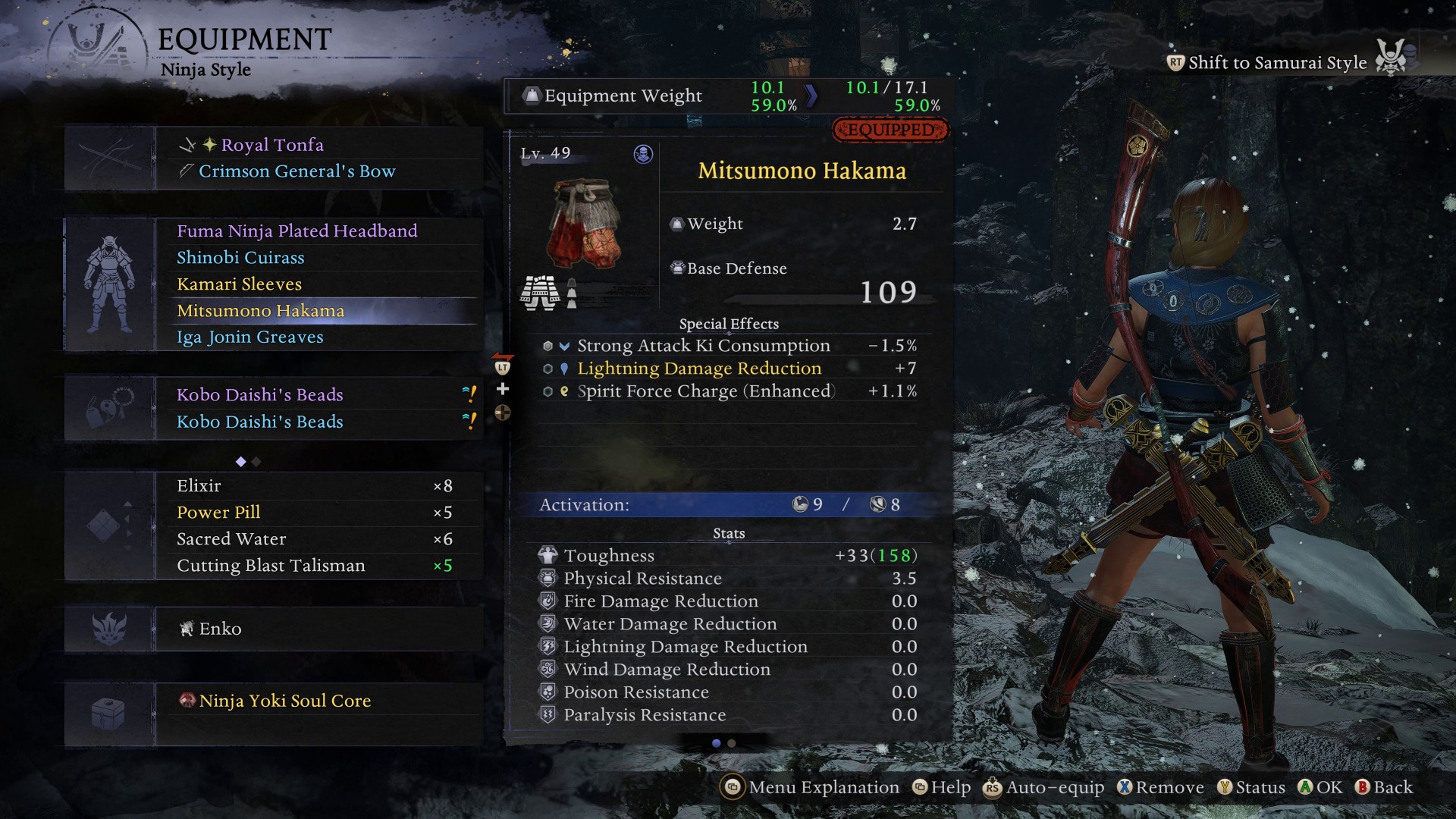
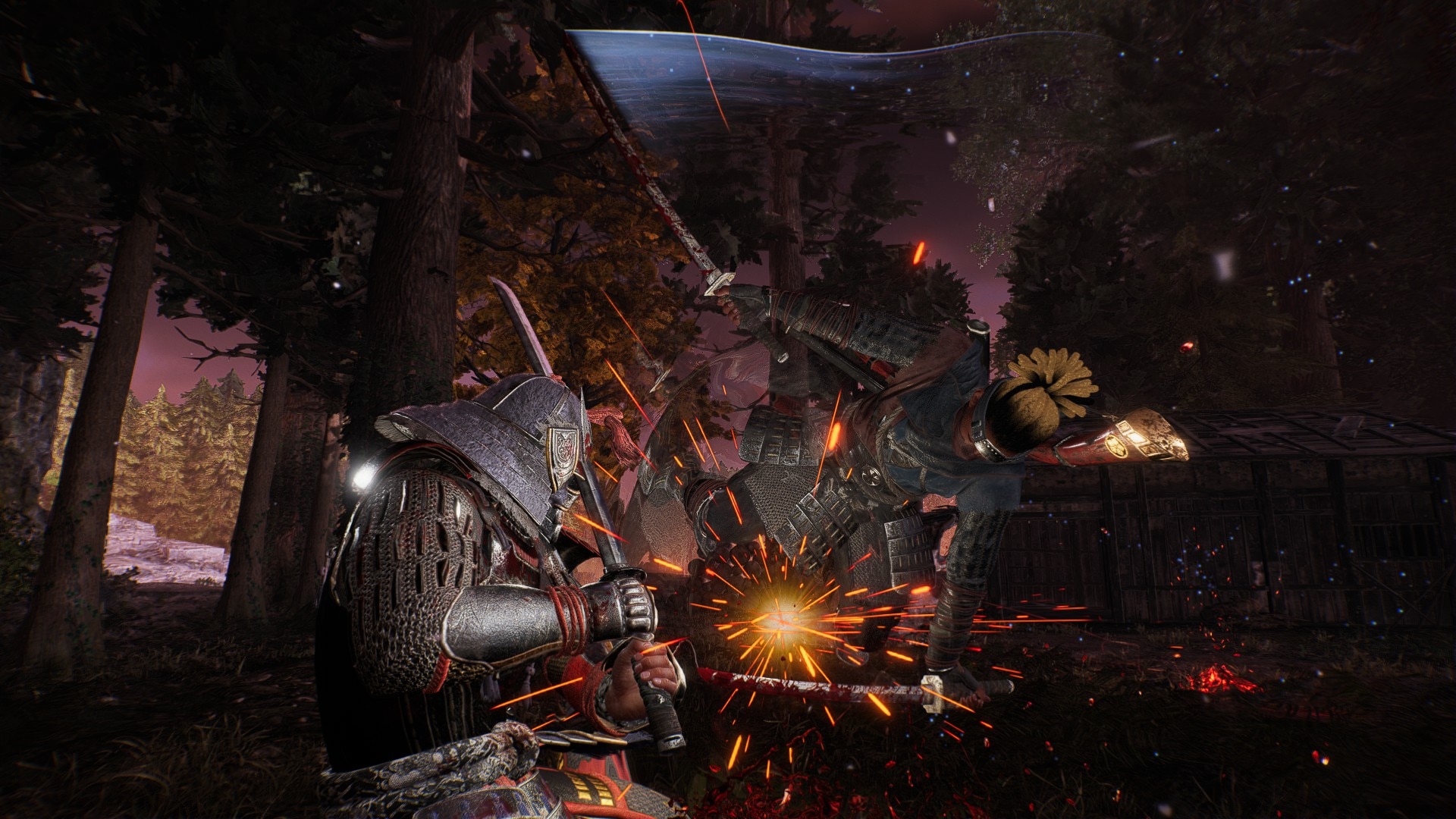
Each style also has its own exclusive set of weapons, with seven available for each. Samurai style focuses on heavier, more traditional weapon types such as swords, dual swords, odachis, spears, axes, cestuses (large glove-style weapons) and scythes. Ninja style, on the other hand, leans towards faster and more agile options including smaller dual blades, dual hatchets, ninja swords, split staves, talons, tonfas and the kusarigama (a sickle attached to a weighted chain). Some armour pieces and gear can be shared between both styles, though each also has its own unique equipment sets. As a result, the two styles not only play differently but look visually different as well.
There is no denying that the addition of dual playstyles does make the game feel easier, especially in the first third. The Ninja style can soften the difficulty thanks to its incredible mobility and abilities like Mist. Ninja plays aggressive, darting in and out of combat to avoid danger, while the Samurai feels more tactical, a slower, heavier style. Playing as Samurai feels closer to the traditional Nioh experience, though the game in general still feels a bit easier than previous entries. Even though I did die a few times, it felt like I was dying less per boss compared to earlier games, largely because the second style gives you another option to fall back on. The style switching mechanic also forms part of a combat ability, as when an enemy performs a red colour charge attack, pressing the style switch just as when hit will stun the enemy for free damage. There are also a huge number of combat elements to unlock, including new moves for both styles and their various weapons, allowing you to customise skills and select the preferred attack for each attack type.
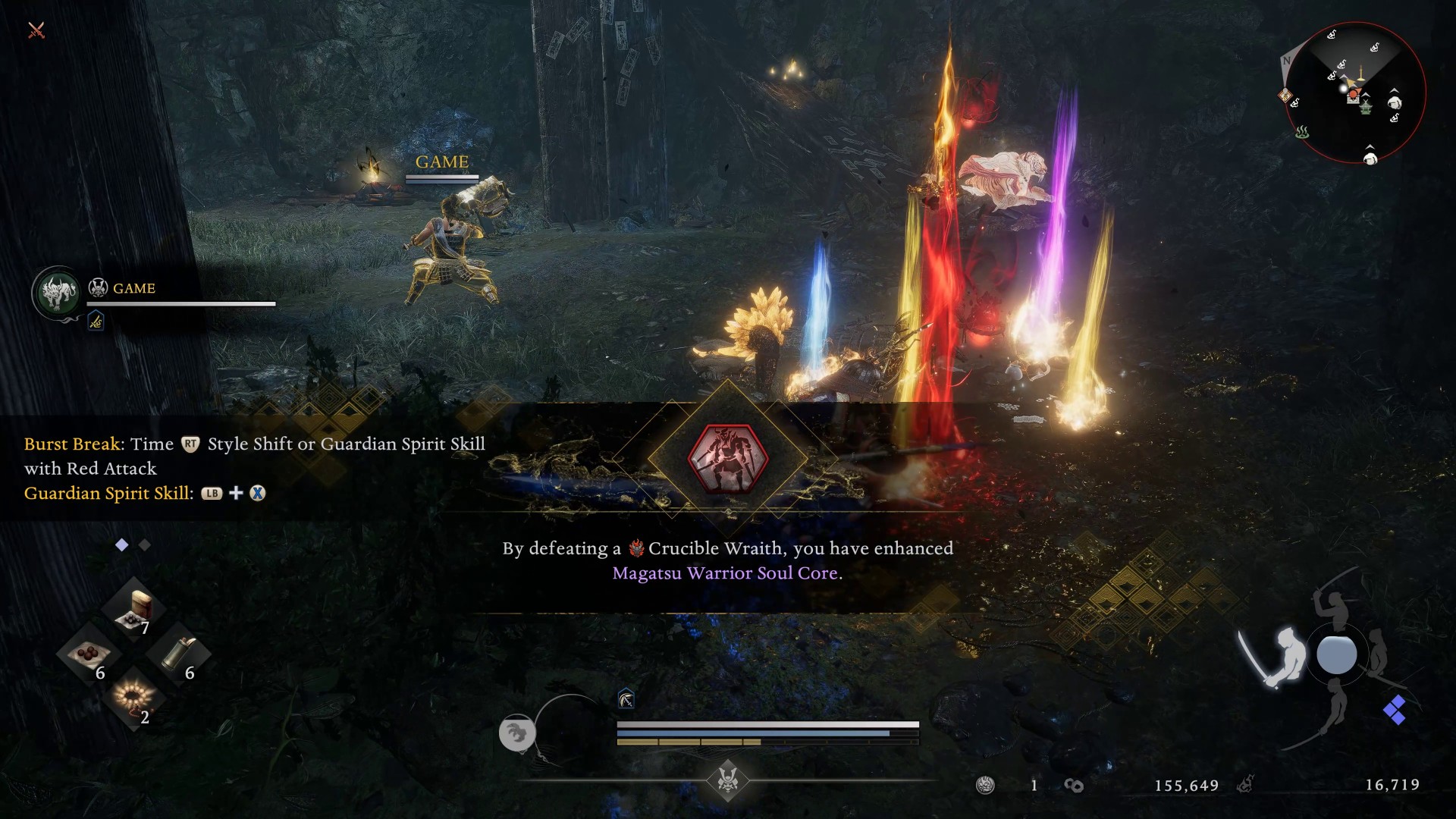
One thing about Nioh 3 is just how many systems are layered into its combat and character progression. At shrines, which function as the game’s checkpoints and levelling hubs, players are introduced to several mechanics beyond simply upgrading weapons, skills, or abilities. One mechanic is Soul Cores, special orbs dropped by yokai enemies that grant new abilities to the player. These orbs are divided into Yin and Yang functions, allowing them to serve two different roles depending on how they are equipped. When equipped to the Yin sockets they grant magical abilities or passive bonuses, while in Yang they allow players to briefly summon yokai during combat. Another system is the Guardian Spirits, spirit animals that provide their own abilities and determine the player’s powerful transformation when the gauge is full. During this state the player temporarily enters an empowered form, complete with anime-fied glowing armour and enhanced attacks.
Alongside these systems is the more traditional Soulslike progression where enemies give experience points that can be spent at shrines to level up core stats. Exploration also introduces additional layers, such as finding Kodama or Jizo statues, which provide points that can be used to improve elements like elixir drop rates, survivability bonuses, or other passive buffs. Like the Jizo/Kodama buffs is the Title system, where completing gameplay milestones awards points that can be exchanged for further stat bonuses. With so many mechanics contributing to character growth, Nioh 3 offers a huge number of systems, some are inevitably more impactful than others.
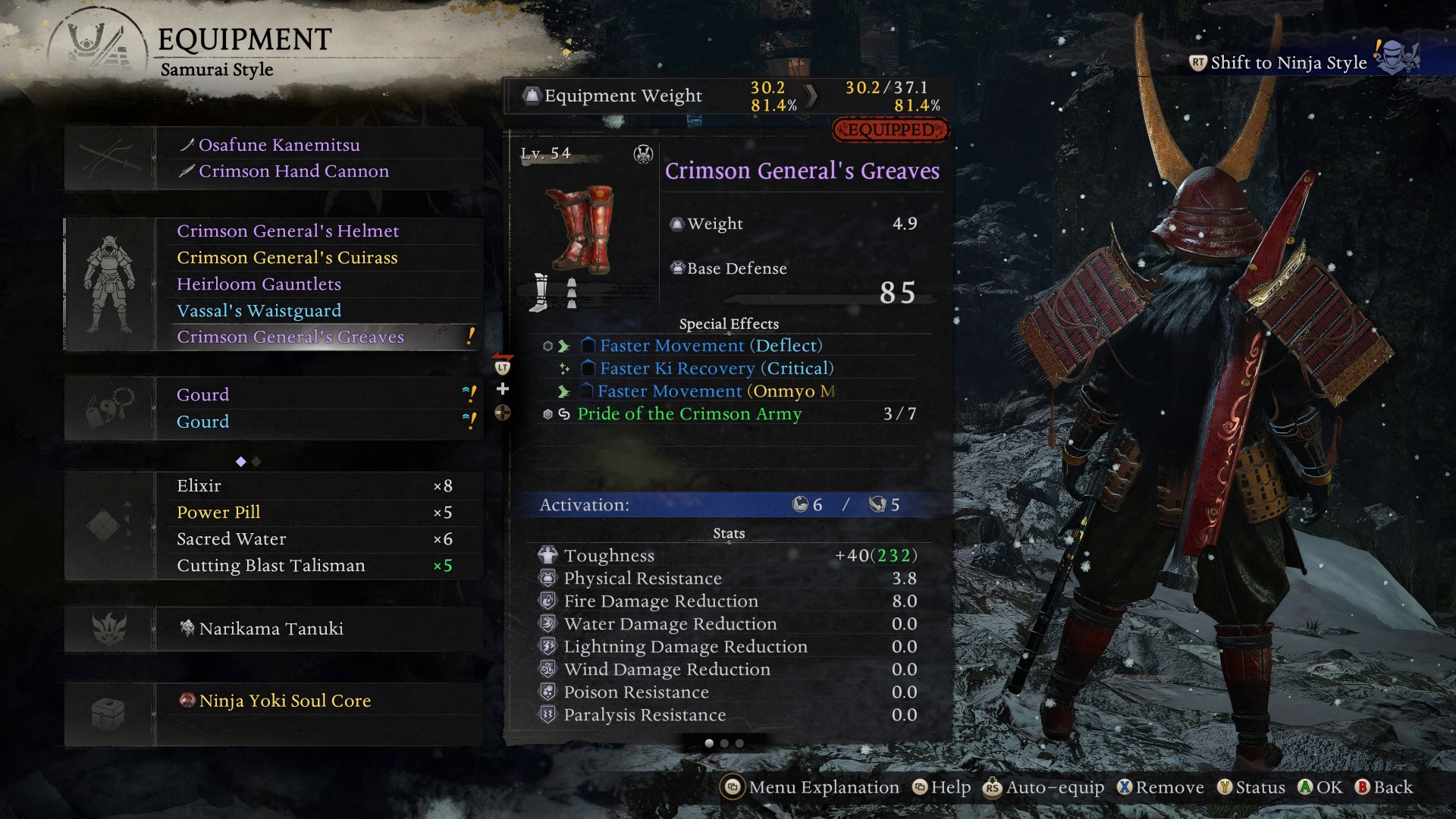
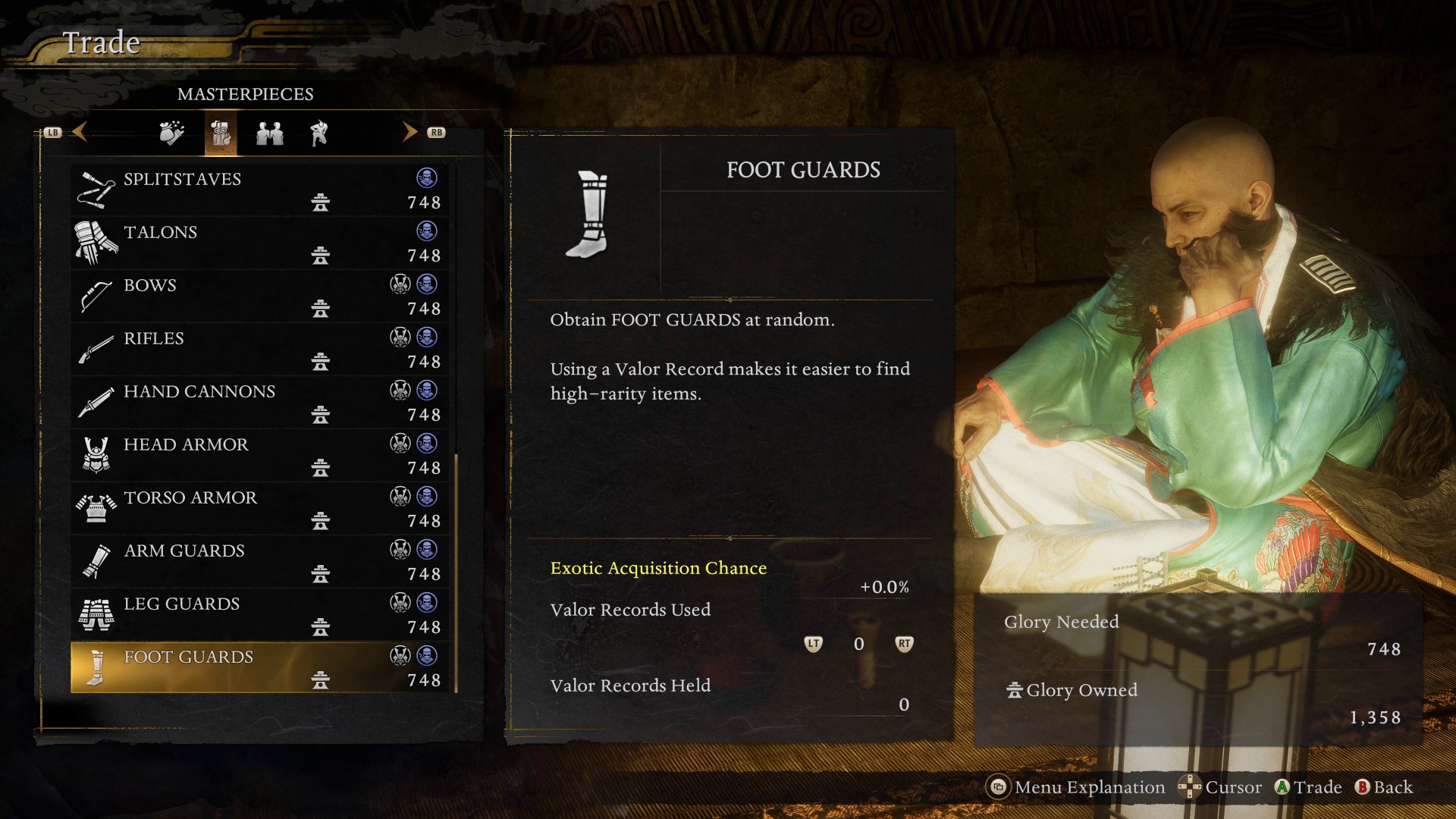
Returning in Nioh 3 is the series’ loot system, meaning hundreds upon hundreds of items dropping from enemies or being found in chests throughout the world. If you haven’t played a Nioh game before, its gear system works differently to something like Elden Ring. Rather than having mostly fixed weapons and armour sets, Nioh 3 follows a rarity-based system similar to games like Diablo. Each weapon, helmet, or armour piece comes with randomised stats and a colour-coded rarity, ranging from common white items to yellow uncommon, blue rare, purple epic, and green divine gear. The rarer the item, the more affixes it can have, granting additional bonuses to the player’s stats or abilities.
The game throws loot at the player constantly, to the point that I was picking up new gear every few minutes. In many ways this is great, who doesn’t love new equipment? It is especially so when putting together new gear to tackle areas on the map that are higher level than your character. However, the sheer volume of items also means a lot of inventory management, and it is easy to spend several minutes sorting through the thousands of weapons and armour pieces collected across the different categories. Thankfully, systems like auto-equip help players who do not want to worry too much about optimising every piece of gear. Unwanted items can also be dropped or taken to the blacksmith, where they can be dismantled into materials used to upgrade other equipment. As I said, there is a lot of systems here and a few of them maybe just require a tad too much time in the menus of Nioh 3.
Simply put, engaging in Nioh 3’s combat is constant pleasure. It stands as one of the best and varied combat systems in the Soulslike genre. The speed, fluidity, and depth of its mechanics add towards making fights a blast. That said, there are perhaps a few too many mechanics in play for the average player who may only complete the game once or twice. While the systems offer impressive depth for those willing to explore them for those harder new game + runs. The yokai enemies are where the combat truly shines. Unlike human opponents, they possess supernatural abilities and attack patterns that force the player to make use of the game’s combat mechanics, resulting in encounters that feel more demanding than fighting us weak humans.
One of the biggest changes in Nioh 3 is its shift toward a more open style of level design rather than the linearity mission structure of the previous games. Calling it fully open-world would not be entirely accurate, as the game does not feature one continuous map. Instead, it introduces large explorable zones that Team Ninja refers to as “open-fields.” There are three of these in the game, alongside several more traditional, linear locations that are used for key story moments. In some ways this structure feels similar to Rise of the Ronin, one of Team Ninja’s previous games, though the areas here are smaller in scale.
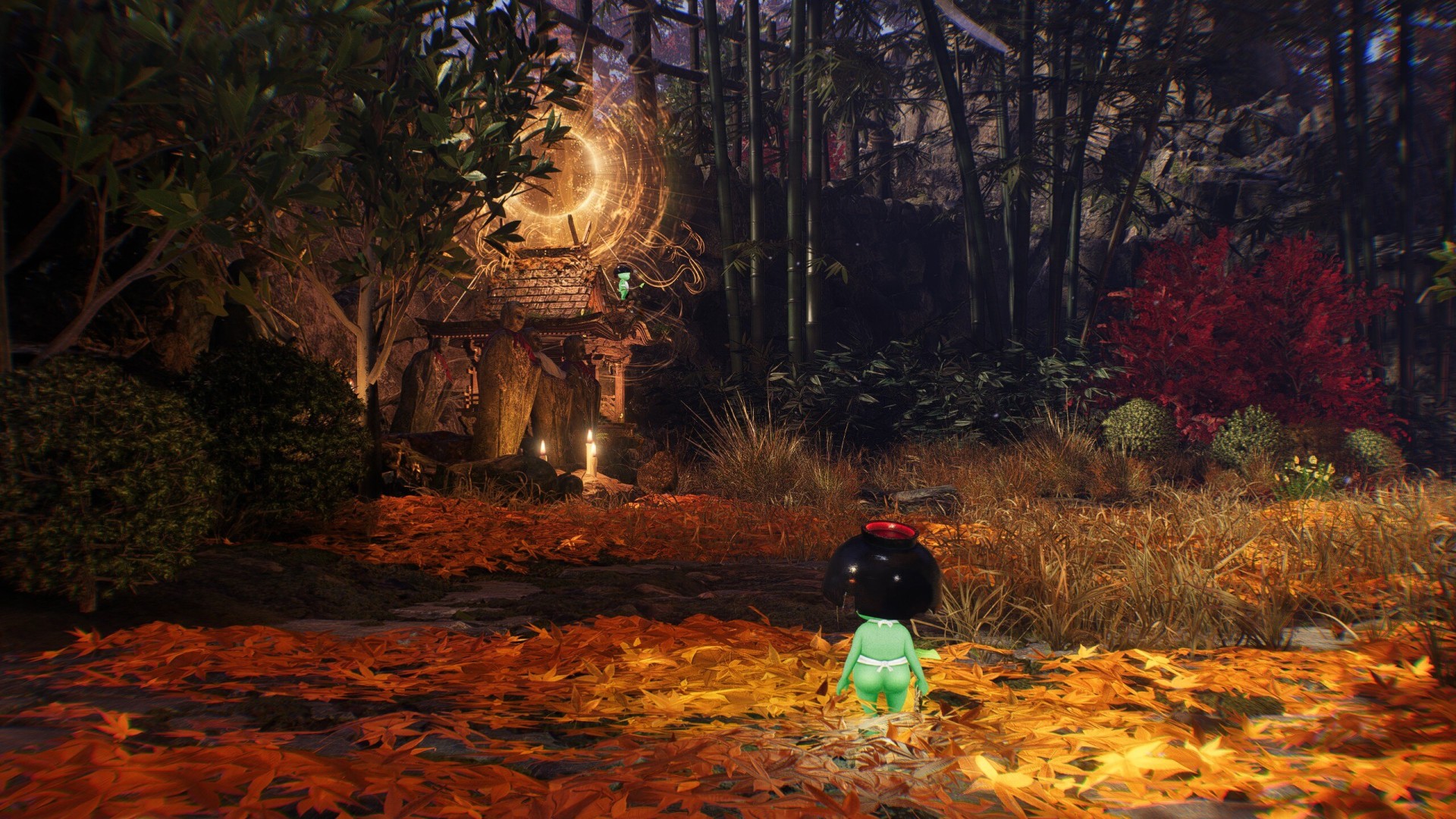
Despite not being a single open world, these open-fields still incorporate many familiar open-world elements. Players can discover things like Kodama, Jizo Statues, flying Chijiko, and the cat-like Scampuss that must be tracked and followed before the player can earn its reward. There are also Crucibles, small combat arenas infested with yokai that must be defeated before the crystal at their centre can be destroyed, dispelling the surrounding area of evil spirits. Then there are bases that need a target amount of enemies clearing out before they return to being friendly.
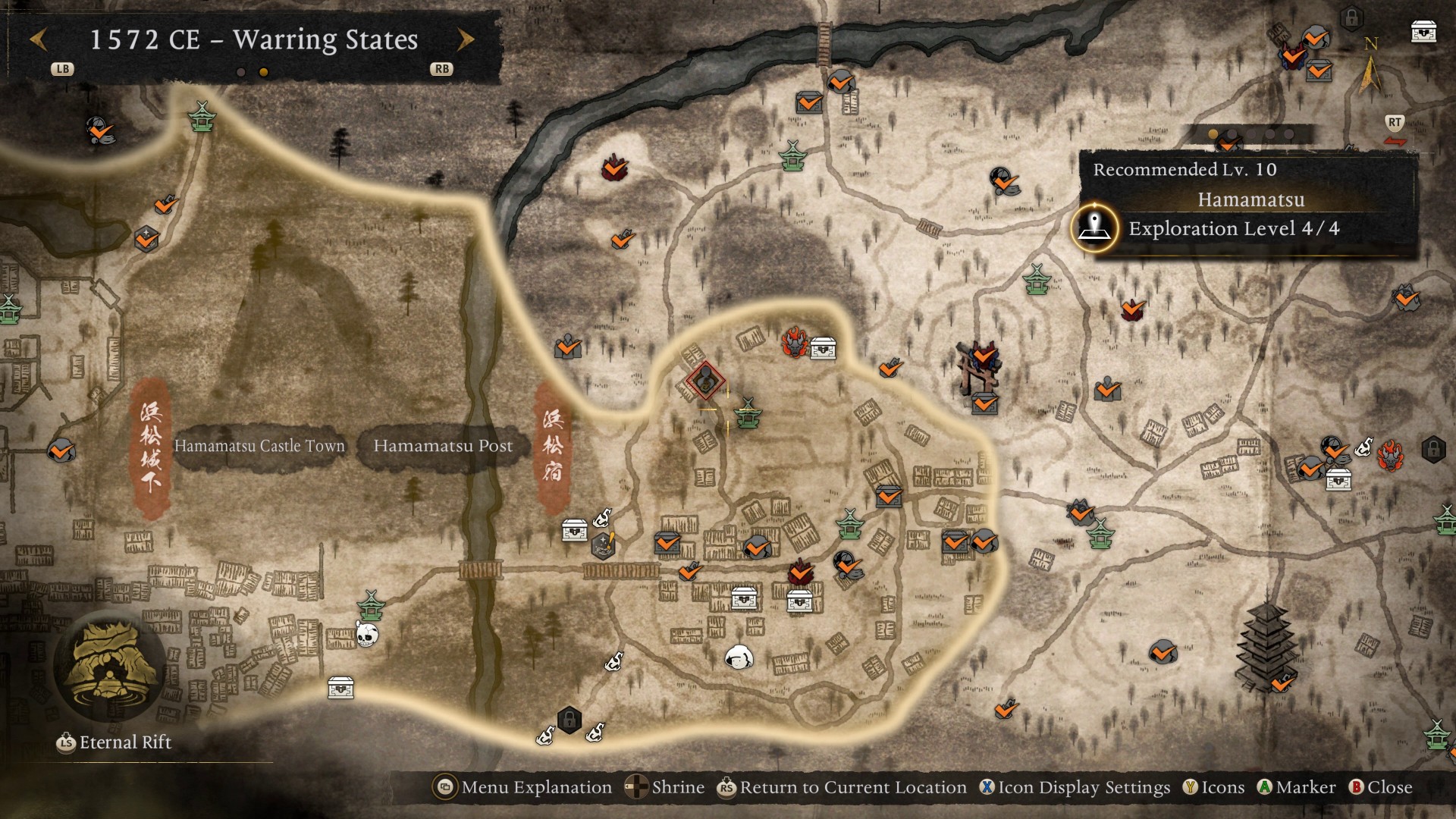
All these activities contribute to discovering everything each map has to offer. These discoveries provide various buffs and bonuses that enhance several of the game’s stat systems. However, it can feel like traditional open world clearing designed to reward players who thoroughly explore each area, especially as the map gradually becomes filled with icons as new regions are revealed, stepping close to something like seen in recent Assassin’s Creed games. That said, none of these side activities are mandatory. Players can ignore them entirely and focus solely on progressing through the main story once bored of exploring by travelling to the highlighted quest giver on the map.
But unlike some more open world games, this approach to open fields does allow the design to be a bit more curated to keep things interesting to explore. There are certainly elements where the game funnels players into areas for the story that feel more like traditional Nioh maps, but then the opposite is the freedom to explore in these maps for side quests in areas that are not repeated, unlike say in previous games where side quests had the player going back to reused map locations. There is no need for that here as the map is big enough to make side quest traverse fresh areas of the map. It is never going to be as perfectly designed as closed off levels are, but the trade-off I think for this sequel is worth it. It offers something slightly different than most Soulslikes. It is also easy to understand where to go, as maps have highlighted zones with recommended character level.
Packed throughout the maps are a wide variety of enemies to battle. The density of foes helps reduce some of the emptiness that can sometimes come with open exploration, as it rarely takes long before the player is back into combat. Save shrines also respawn standard enemies when used, ensuring that the world remains packed with foes as players continue exploring. This design plays directly to the game’s greatest strength, its combat, which the player engages with constantly throughout the roughly 40+ hour campaign. I did not complete every side quest or discover every collectible, but players who aim to see everything the game offers could easily double that playtime during a first playthrough.
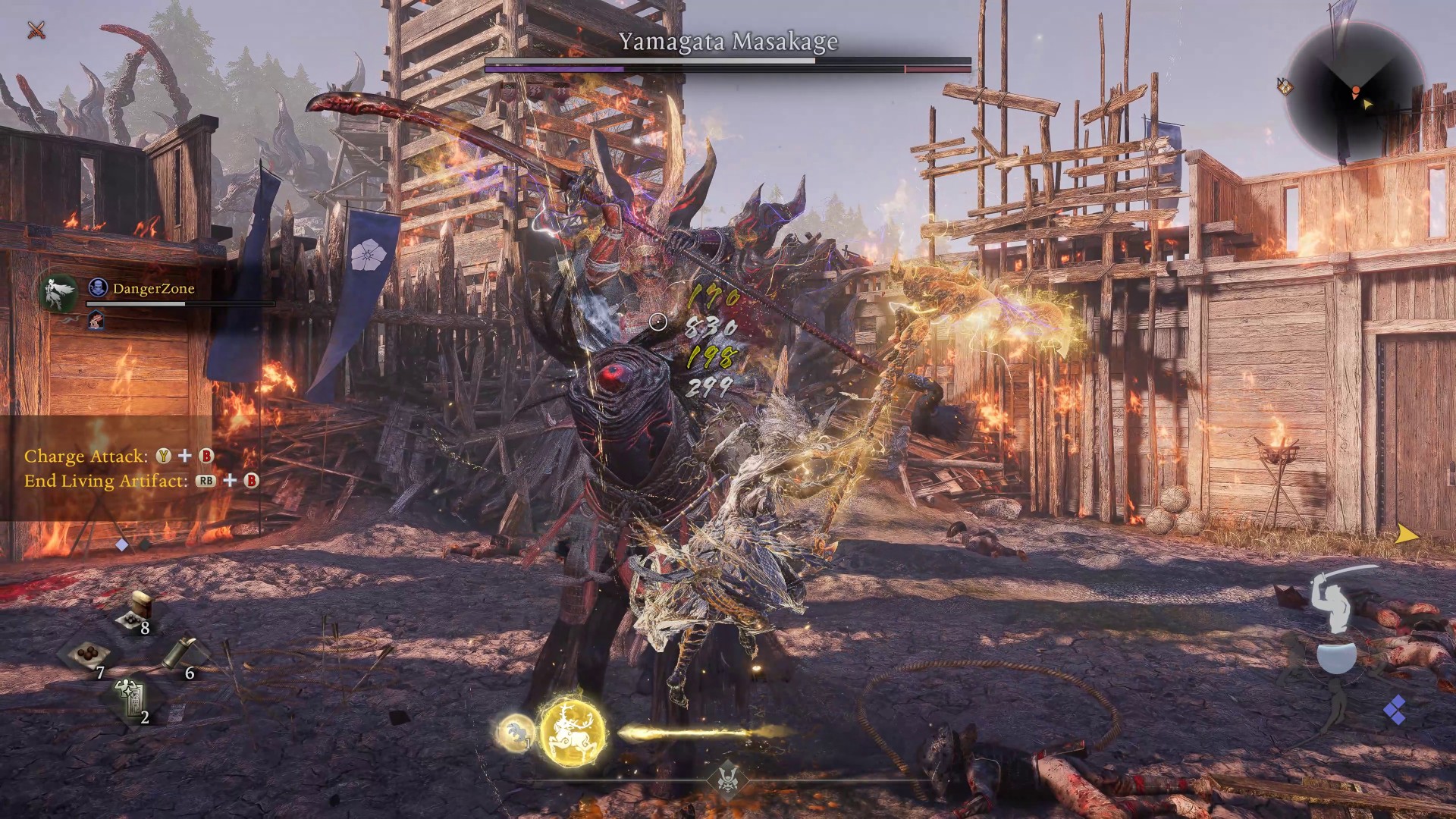
Story bosses and map bosses in the open sections create some spectacular encounters, with impressive designs that will test players. If a boss proves too challenging, the open nature of the maps allows players to leave, level up elsewhere, and return later to try again.
There is also a cooperative element to Nioh 3. Players can use Ochoko Cup to summon help through grave lights left by other players. Red graves summon hostile AI spirits that, when defeated, often reward the player with additional Ochoko Cups. Blue lights can summon AI-controlled versions of other players, complete with their equipment and level. These cups can also be used at shrines to summon real players for cooperative multiplayer. In my experience, summoned allies can be extremely powerful, often helping to quickly defeat bosses that were previously causing trouble. It is another system that helps make the game more approachable for struggling players. The game may not feature a traditional difficulty mode, but it offers several tools that allow players to ease the challenge if needed.
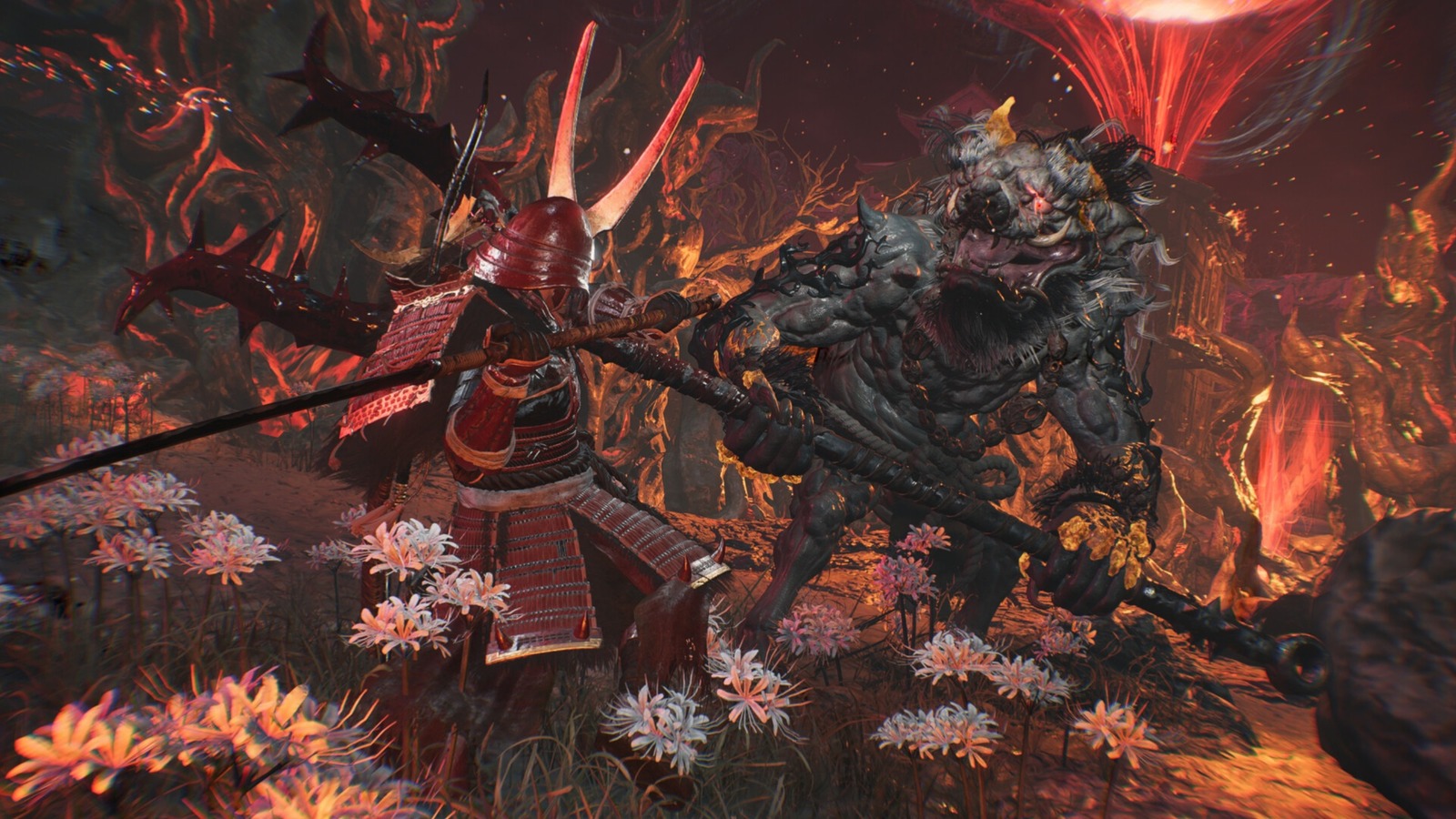
Nioh 3 is a good-looking game that benefits greatly from the strong artistic direction of Team Ninja. The studio’s distinctive Japanese character designs from their historic video games return once again, alongside the yokai enemies, which in particular stand out with creative and unsettling forms that bring the game’s folklore to life. Not everything receives the same level of detail, however, as some environmental textures can appear a little rough in places. Still, with the right visual settings, the game presents a sharp image that can sometimes be a showcase in special effects. Battles often fill the screen with particles, flashes of light, and bursts of colour that make the arenas feel ablaze with fireworks as abilities and attacks illuminate the surrounding space. Animations and character models are also improved compared to previous entries in the series, the best the series has seen so far, though I would argue that the genre has delivered more technically visuals in other titles.
I had no performance issues on a PC equipped with an AMD Ryzen 7800X3D and an Nvidia RTX 5090. Running at 4K with all settings maxed and DLAA enabled, the game spent most of its time in the 90 FPS range. One annoyance, however, is a warning message that appears every time the game launches, asking whether I want to keep my current settings because they “may lead to unstable gameplay.” If you accidentally select “Yes,” the game resets everything to default. Considering the game already accepted these settings previously, the repeated prompt feels unnecessary and quickly becomes irritating.
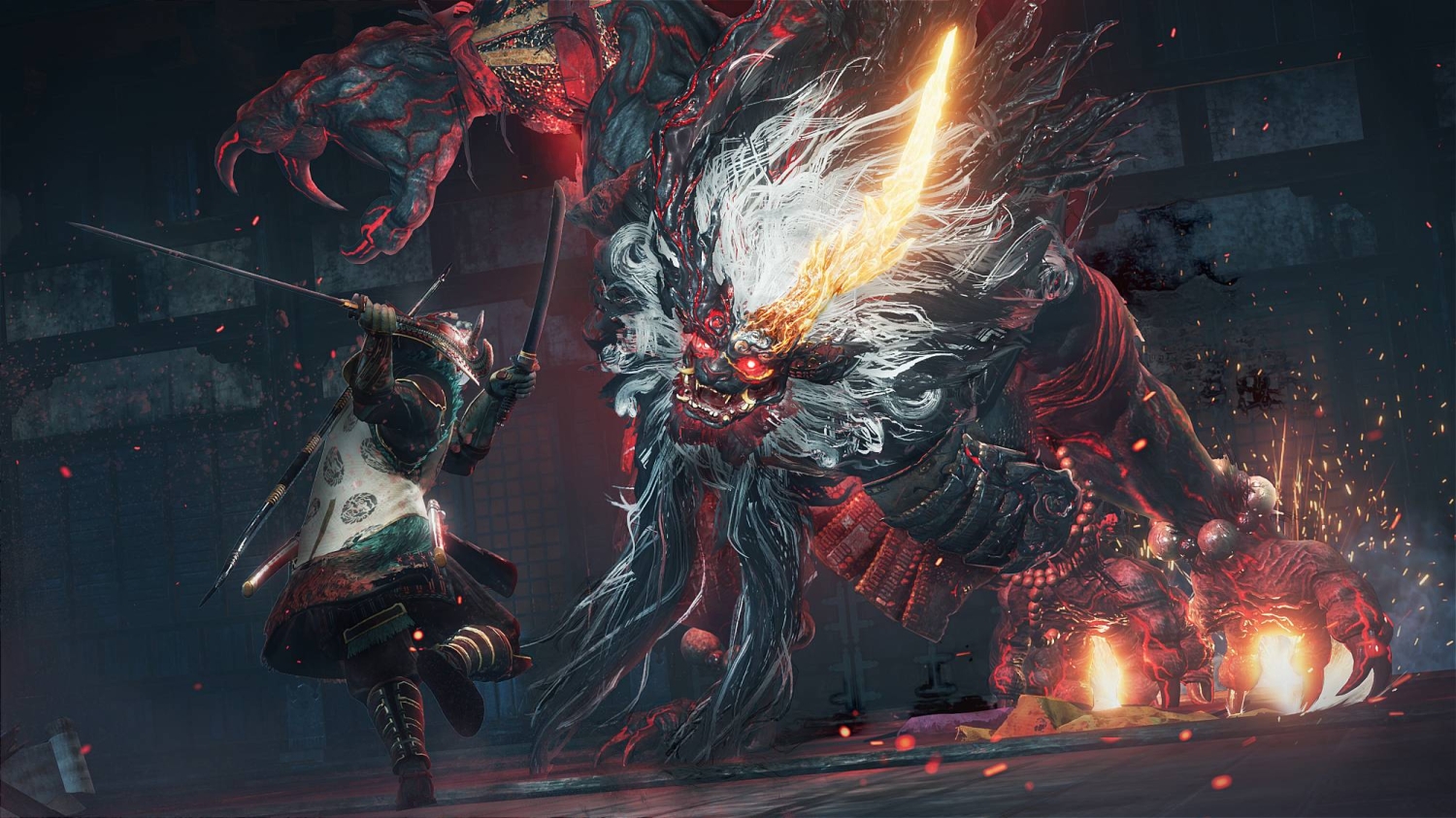
Nioh 3 feels like a natural evolution of the ideas that Team Ninja has been refining for years in not just Nioh, but their other action RPG titles as well. The expanded exploration, new combat styles, and improved systems give the game a greater sense of scale without losing too much of its identity that defines the series. What ultimately makes Nioh 3 excel is how rewarding its combat feels once everything begins to click. Switching styles mid-fight, managing Ki efficiently, and making smart use of abilities creates an exhilarating flow that few action RPGs hit. While some players may miss the tighter level design of previous entries and others may find the layered mechanics daunting, the overall experience remains incredibly rewarding. In the end, Nioh 3 refines what the series has always done best, Its deep combat, making it one of the most enthralling Soulslike action RPGs to play today.