Rise of the Ronin PC Review
It’s been a whole year since Rise of the Ronin first slashed its way onto PlayStation 5 as a console exclusive leaving PC players waiting outside on a tree like a sake drunken ronin. Given that this is a Team Ninja game, I had a sneaking suspicion it would eventually make its way to PC—because let’s be real, Koei Tecmo loves selling games. I mean why would you not want to sell games to such a big audience? I never got to experience Rise of the Ronin on PS5, so I’m coming in fresh eager to see what the developers of Nioh, Wo Long: Fallen Dynasty, and Stranger of Paradise: Final Fantasy Origin have cooked up this time. With Team Ninja’s history of making solid action games, I went in expecting good combat, but does the PC version do the game justice or is it a clunky port? Time to find out.
Rise of the Ronin transports players to 19th-century Japan during the tumultuous Bakumatsu period, a time marked by the decline of isolationist policies and the emergence of the Meiji government. The narrative centres on the Blade Twins, two assassins crafted by the player through a decent character customisation system, who are trained by the enigmatic Veiled Edge, a secret organisation focused on creating twin assassin pairings. Our protagonists first mission in the game is to eliminate American Commodore Matthew Perry before he arrives in Japan. However, the mission goes wrong, leading to the twins’ separation; one seemingly perishes while the other narrowly escapes. The player must decide this outcome, in essence saying which of their created character becomes the game’s protagonist, who then embarks on a quest to discover the fate of their lost counterpart.

Rise of the Ronin is rooted in historical authenticity, drawing players into the complex political and social landscape of the Bakumatsu era. The narrative centres on the ideological struggle between pro-Shogunate and anti-Shogunate groups, utilising color-coded indicators to clarify how player decisions affect relationships with non-playable characters and the broader world. Although the protagonist is a fictional creation, their choices can sway events, albeit without altering critical historical outcomes. The storyline unfolds over more than 30 hours, providing an engaging experience, yet some aspects feel underexplored. Certain characters lack sufficient development, and the initial segments of the game may progress slowly before the pacing picks up. Enthusiasts of the period and samurai culture will find much to enjoy, although the narrative does not achieve the same level of depth as other games set in this historical context.
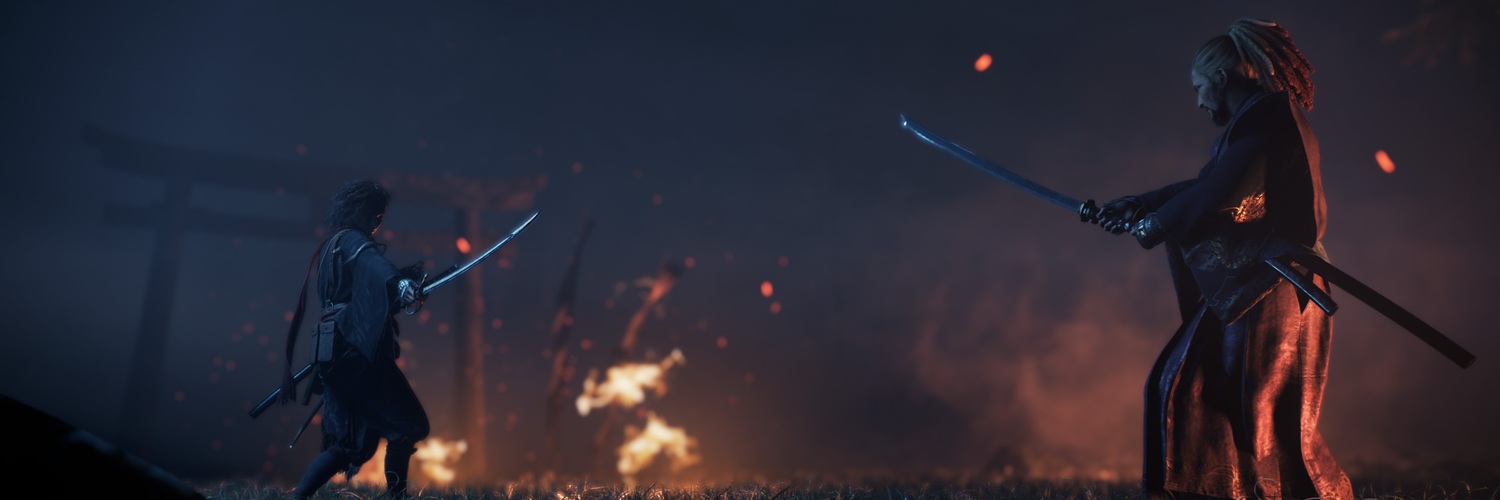
One aspect of Rise of the Ronin that never suffers from pacing issues is its exhilarating combat, which is something Team Ninja seem to be able to deliver on when it comes to game design. The combat system is arguably the best part of the game, remaining consistently engaging with a surprising level of variety despite being set in 19th-century Japan. This variety starts with an impressive arsenal of melee weapons, offering nine distinct options: Katana, Spear, Dual Swords, Odachi, Saber, Polearm, Greatsword, Oxtail Blade, and Bayonet. Each weapon comes with unique stances, attack animations, and combo chains, allowing players to experiment with different fighting styles to find the one they prefer. My personal favourite, the Bayonet, blends melee and ranged combat, delivering some of the most satisfying combo enders in the game. For those who prefer an unarmed approach, the game even allows players to fight barehanded. Beyond melee combat, ranged options include bows, rifles, and revolvers, each serving a strategic purpose in combat. Players can also make use of throwable items like shurikens and bombs, which can be used to stagger enemies or deal elemental damage. Additionally, various consumable items can be used to buff the player, providing temporary boosts to stats or enhancing weapon capabilities.

Embedded within the combat are several systems that make fights both rewarding and engaging. The standard controls provide the usual combat mechanics, such as dodging, blocking, guarding, and chaining together simple combos. Light and heavy attacks can be executed by tapping or holding the attack button, while tapping forward slightly alters distance for extra range. One of the most important mechanics in the game’s combat is the Counterspark attack—essentially Rise of the Ronin’s version of a parry. Almost any attack in the game, except for grabs, can be parried, and skilled players can chain multiple Countersparks in succession to nullify entire enemy combos. However, Counterspark isn’t just useful for parrying. Even if you mistime the move, the action still follows through, and if it connects before your opponent’s attack animation finishes, it deals a small amount of damage. This design choice makes Counterspark more than just a high-risk, high-reward mechanic; it encourages players to use it, even if they aren’t yet skilled at parrying, since failing doesn’t always leave them completely vulnerable. Instead, it provides a learning curve that allows them to gradually master enemy attack patterns without always being heavily penalized for early mistakes.
Weapons play a crucial role in shaping the Counterspark mechanic, affecting its timing and effectiveness. Heavier weapons, like the odachi, require players to anticipate attacks earlier due to their slower swings but reward successful parries with a more substantial stagger effect. In contrast, paired swords offer a wider parry window thanks to their fluid animation, making them particularly effective against rapid strikes. Polearms, with their linear motion makes it tricky to counter wide or unpredictable attacks.

There is also another layer to the combat, combat styles. Players can unlock and equip multiple stances by completing quests or hunting down wanted criminals, with up to three styles per weapon and two weapons swappable on the fly. Each stance not only alters attack animations but also influences Counterspark effectiveness. These styles fall into three categories—Ten, Chi, and Jin—which operate in a rock-paper-scissors system against enemies. A blue arrow next to an enemy’s health bar signals an advantage, red a disadvantage, and silver a neutral stance, encouraging players to adjust their tactics accordingly. I discovered over 25 combat styles in the game, with some weapons having more styles than others (Katana seems to have the most). One katana stance even pays homage to a legendary Team Ninja character, one that has a new game later this year. Between weapon selection, stance mastery, and the strategic use of Counterspark, Rise of the Ronin offers an enjoyable, rewarding combat system that is always in action due to the game’s open world nature filled with plenty of horrid samurai to slain.
Ki is the lifeblood of combat, functioning as a stamina gauge that both you and your adversaries rely upon. Every action, whether you’re attacking, blocking, or casting special moves, consumes Ki. If a character’s Ki is fully depleted, they’re left stunned in place for a few seconds, completely exposed to free hits. This creates a layered dynamic. Even if an enemy is expertly blocking your offence, sustained pressure will eventually break through their defences by draining their Ki, leaving them wide open. While weaker foes can often be overpowered quickly, enemies at or above your level demand more tactical finesse. The flow of battle revolves around parrying attacks, disrupting enemy momentum, and wearing down their Ki. Once their Ki is gone, standard enemies can often be executed on the spot, while stronger foes take significant damage before recovering.

It’s a formula familiar to fans of Souls-like games—stamina management, posture-breaking, and looking for openings. Even the difficulty can be challenging in the beginning until more tools, moves and gear available to use (Difficult settings are here and can be changed at any save point flag). It’s about reading your opponent’s style and countering with precision. Like shogi, if you will—with fewer pawns, more dismemberment and cooler, because I think being a samurai is more exciting than playing Shogi.
Combat is undeniably the highlight of Rise of the Ronin, and it’s supported well by the game’s open world design. The world is divided into three distinct regions—Yokohama, Edo, and Kyoto—each offering its own self-contained map. These areas aren’t massive by open-world standards, but that works in the game’s favour, allowing for a more concentrated experience. You’ll find a healthy mix of enemy encounters, side activities, and environmental details that make exploration rewarding without overwhelming the player. The game strikes a balance between open-ended freedom and structured, story-driven missions, which the latter can be done cooperative with a friend rather than using an AI controller partner from one of your bonds—in essence a friend’s list of characters the player befriends during the adventure. While you’re free to roam and engage with side content at your own pace, key missions often shift into more focused, isolated levels. These sections frequently emphasise stealth or direct combat as you make your way toward a boss encounter, which again gets to showcase the fun and intense combat.

As with many modern open-world titles, Rise of the Ronin delivers a setting that looks and feels authentically grounded in its historical era—only to layer it with a familiar fog of icons and checklists that may feel all too recognisable. The map is dense with markers for side quests, collectibles, activities, and points of interest, making exploration feel more like ticking boxes than uncovering hidden secrets. It’s efficient, sure, but it leans hard into that Assassin’s Creed-style formula where impulsiveness often gives way to task management. One moment you’re beating the crap out of a gang of fugitives; the next, you’re helping a geisha obsessed with rescuing stray cats—because… well Japan! And yes, there are even towers. Or rather, Veiled Edge banners—Rise of the Ronin’s version of the classic “climb to reveal the map” trope, at least these are just setting a fire and setting up a flag at ground level. These serve as fast travel points, level-up spots, and local area scanners, revealing nearby icons just in case you were in danger of not having anything to do. I guess what I’m trying to say is: it’s not bad—it’s just not new. After years of playing games built on this same framework, it’s hard to call it refreshing.
One thing I genuinely enjoy—and this might be the isometric dungeon crawler fan in me—is the sheer volume of weapons and gear that drop from enemies or are tucked away in chests. It can honestly get overwhelming at times. Like those loot-heavy games, though, much of the gear ends up being disposable, quickly outclassed or redundant. Thankfully, you can break it down for crafting materials or sell it for cash, so it rarely feels completely wasted, but at least you get to switch between a lot of weapons many times thanks to their stats being improved.

That’s not to say the world lacks excitement or that getting around is a chore. Rise of the Ronin gives players a satisfying set of traversal tools to explore its environments. You’ll have access to a horse for speedy travel, a grappling hook for quickly scaling buildings and ledges, and a glider that lets you cover long distances with style. These aren’t just gimmicks—they’re well-integrated into both exploration and mission design, making movement across the map feel fluid and rewarding. The grappling hook isn’t just for traversal, either—it doubles as a combat tool with some flair. You can use it to yank enemies toward you in a move that feels straight out of a certain yellow-clad ninja’s playbook (minus the “GET OVER HERE” catchphrase) or even fling explosive barrels at unsuspecting foes. It’s a clever addition that adds variety and a touch of chaos to fights, adding another fun mechanic to the combat.
I’ve been playing Rise of the Ronin for the past three weeks, and in that time, I’ve seen plenty of discussion online about the game’s performance. Unfortunately, much of that chatter is justified—this game isn’t particularly well-optimised. I played on an AMD Ryzen 7 7800X3D paired with an Nvidia RTX 5090, running at maximum settings in 4K with the single ray-tracing option enabled and Nvidia’s Deep Learning Anti-Aliasing (DLAA). Even with this high-end setup, performance was inconsistent, ranging from 120 FPS (120 is a hard lock by the game, so cannot go higher) down to 55 FPS depending on what was on screen.

In smaller, contained areas like houses or isolated story segments, it runs noticeably smoother, often holding steady near the higher end of that range. But step into the open world or hit a graphically demanding scene—think bustling hubs with multiple NPCs or heavy effects—and it settles around 80-90 FPS, which would be fine, but then the game suffers random, jarring drops into the 50s and 60s. The stuttering and inconsistent frame rates drag down the overall presentation, and those sudden performance dips dips hit harder than a failed seppuku—especially when the visuals don’t fully justify the struggle. Don’t get me wrong—it’s a decent-looking game, but it’s not a jaw-dropping stunner that makes me forgive the technical hiccups. That said, things have improved somewhat. While not a complete fix, update 1.09.0.2, released on March 25, 2025, did help smooth out some of the stuttering and performance hitches I was experiencing. It’s not perfect, but it’s a step in the right direction.
A year after its PS5 debut, Rise of the Ronin arrives on PC with Team Ninja’s combat prowess at its core—fast, fluid, and deeply satisfying. The story is engaging enough, though its pacing can feel slow at times, while the open world is filled with familiar tropes—plenty of icons, bandits, and the occasional stray cat, but also plenty of that great combat to experience. PC performance is underwhelming, and optimisation could certainly use some work, though there’s hope for future improvements. It’s not a masterpiece, but Rise of the Ronin stands out as a game where the real excitement lies in its combat, not the world it inhabits.