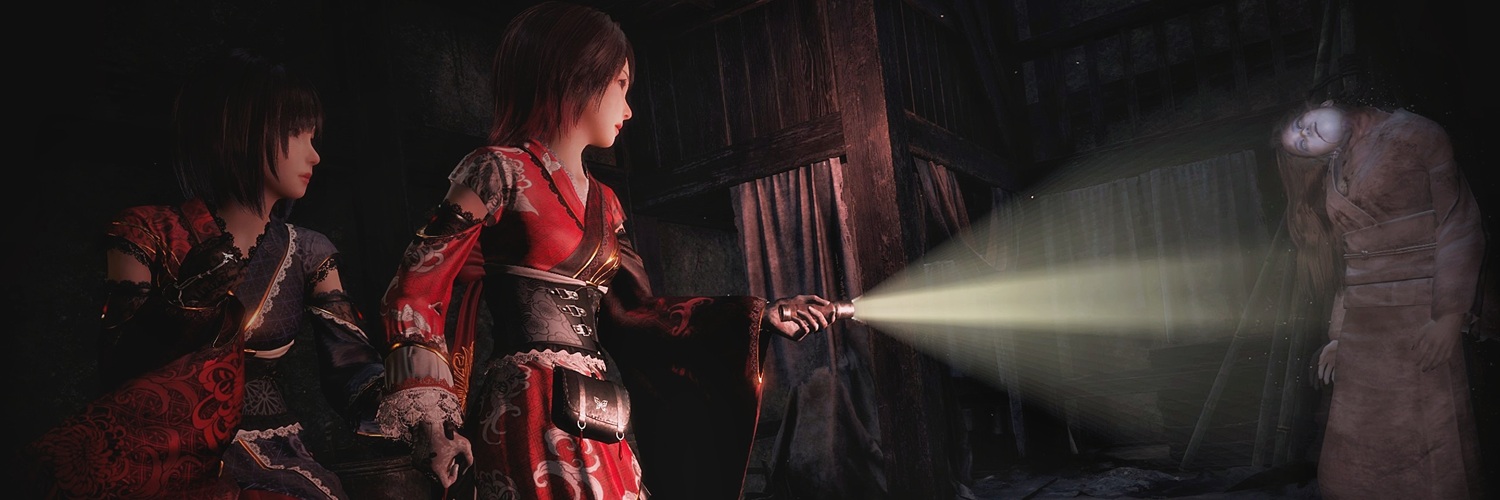
Fatal Frame II: Crimson Butterfly Remake PC Review
Well, this is somewhat interesting for UK fans, because normally when we talk about the horror series Fatal Frame, it is usually called Project Zero, as that’s the name the series has gone by here in the UK since its debut back in 2002. However, this latest release, a remake of Project Zero II: Crimson Butterfly done by the action gurus at Team Ninja, has dropped that EU name and is going by the US name Fatal Frame II: Crimson Butterfly Remake. The name Project Zero was the European localisation, likely chosen to better match the original Japanese title, Zero. Personally, I quite like the name Fatal Frame because it does a great job of describing the game.
Anyway, enough history, because we’re here to talk about a remake of one of the best entries in the series, and one that genuinely scared the hell out of me back when I first played it in 2004. I still consider it one of the spookiest games I’ve ever played, although Amnesia: The Dark Descent gave it a run for its money when that PC game terrified me back in 2010.
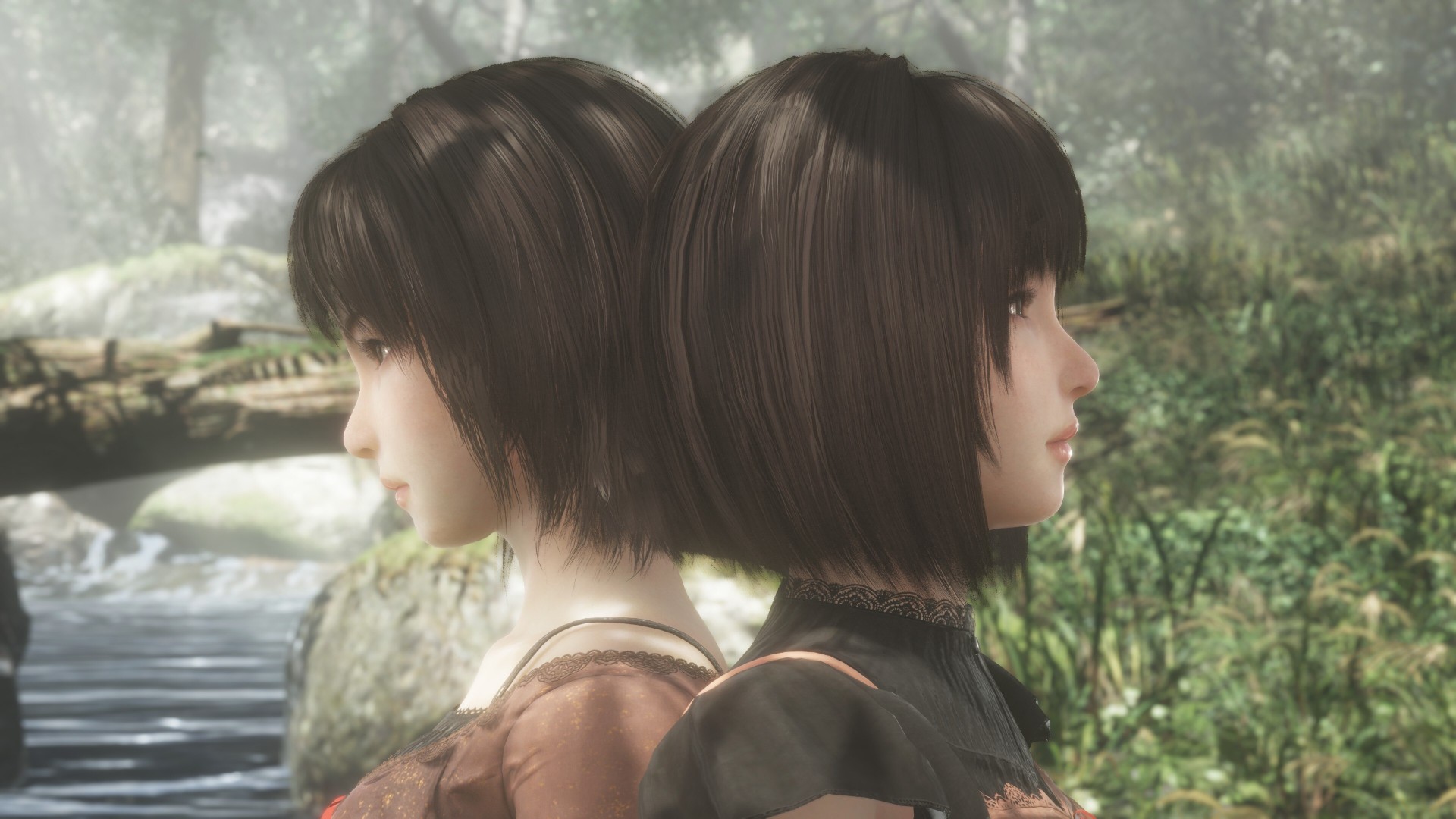
Being a remake, the main story is unchanged, faithfully following twin sisters Mio and Mayu Amakura as they return to a forest tied to their childhood. The area, once a quiet and meaningful place for them to play together, is implied to be on the verge of disappearing, prompting the sisters to visit it one last time. While resting near a stream, a crimson butterfly drifts past, causing Mayu to follow the butterfly deeper into the woods, while Mio is reminiscing of a memory where Mayu fell into a ditch causing her a leg injury. Noticing Mayu wandering off, Mio quickly follows, only for the two to find themselves overlooking an abandoned village known as Minakami Village, a mysterious place where those who enter are said to never leave. As they begin to explore, Mayu starts to behave strangely, often drifting away as if guided by some ghostly presence, leaving Mio to pursue and protect with the series’ iconic Camera Obscura, the only means of defending against hostile spirits.
What the developers at Koei Tecmo have done, however, is expand the lore of Minakami Village through additional optional story content. These are dubbed Side Stories, and they reward the player with deeper insight into supporting characters, the village itself, and its ritual. They are well implemented and never feel like disjointed additions. Many are discovered by encountering spirits that re-enact moments from the past which leave behind clues or items that lead to further investigations. Rather than being clearly marked, these moments need discovering to progress, requiring the player to pay attention to the notes and piece together where to go next.
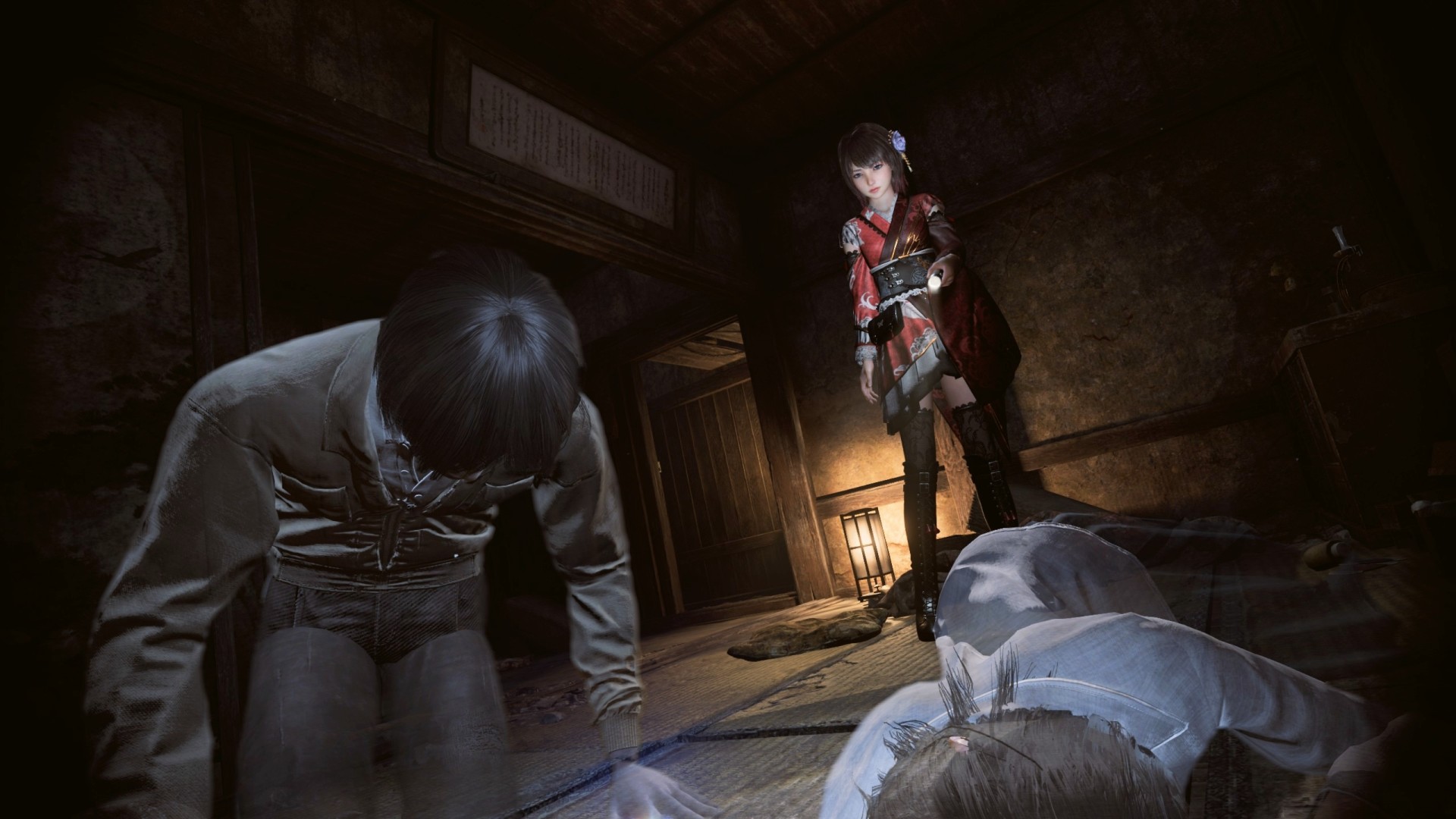
Some of these stories unfold over multiple steps, tracked through the menu and require revisiting locations already explored. This works particularly well given the compact design of Minakami Village, where exploration rarely feels overwhelming or tedious. It’s nice to play a game that isn’t telling me on map how to find a side event or location, and with the tense atmosphere in this remake the player still needs to explore with caution.
Fans already known the story, but if you have never experienced it, the story here is a great start for newcomers, as even though it is a sequel, the story is self-contained and requires zero knowledge of the first game. It’s a tale that boarders more on the psychological horror rather than gore, one that sets a dark and hellish tale about the village’s dark history and its crimson sacrifice ritual. It’s slow paced and slowly reveals itself over the course of the game’s 10-hour playtime, fitting more on the spectrum of Silent Hill rather than Resident Evil for story.
I find the choice of developer, Team Ninja, interesting. While the last two remaster releases, Fatal Frame: Maiden of Black Water and Fatal Frame: Mask of the Lunar Eclipse, were handled by Koei Tecmo, Team Ninja is a studio better known for fast-paced action titles such as Ninja Gaiden, Wo Long: Fallen Dynasty and the rather excellent Nioh 3. The Fatal Frame series, however, is rooted in slower gameplay, more focused on atmosphere, horror, tension, suspense, and an old-school design due to the age of their game design. Since this entry has been rebuilt rather than simply remastered, bringing in a team experienced in modern design probably helped update gameplay elements while preserving the horror experience.
One of the biggest gameplay changes is the move from the fixed camera perspectives and tank controls of the original Fatal Frame II. The remake instead adopts a close third-person perspective, with the camera positioned behind Mio with fully modernised movement that no longer requires rotating to change direction. This is one area where the original design arguably worked in the game’s favour, as part of the horror came from the fixed camera angles since ghosts would appear suddenly when the view cut, creating unpredictable jump scares. By modernising the controls and cameras, some of that tension is inevitably lost, even if gameplay is better controlling now.
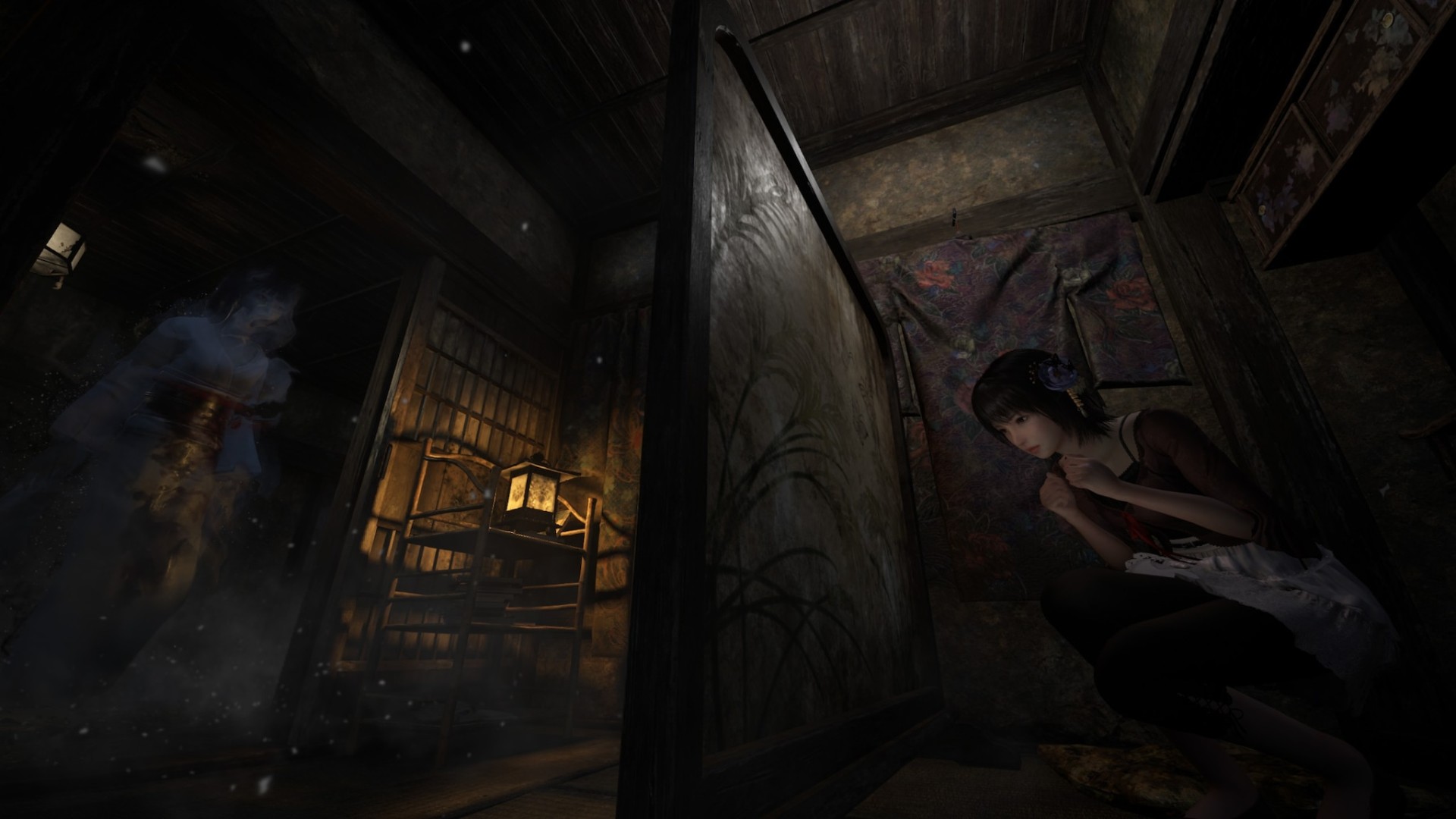
It’s worth noting, however, that this is still a slow-paced game. Mio doesn’t move with the speed or agility of someone like Ryu Hayabusa; her movement remains deliberately restrained. As a result, the overall pacing feels like the original, just now much easier to see what’s in front of you thanks to the new camera view.
Mechanically, the game makes some adjustments to its Camera Obscura gameplay. The core is still the same, as in raising the camera shifts the view into first-person, where the goal is to capture the best possible shot of a spirit as it comes haunting towards you. The more centred and fully framed the spirit is within the capture circle, the more damage is dealt, signalled by the little red dots on the screen. Different film types exist (think of this as various gun ammo types) with different damage and reload speeds, often the stronger film deals more damage but takes longer to recharge between shots, apart from the red film which has the best of both worlds. Ghosts would try to rush, dash, float to the side or vanish and reappear somewhere else or even hide behind walls and pop back up to give them an advantage over the player. This remains the same in the remake, but new additions have been introduced to expand the combat system and add more depth to encounters.
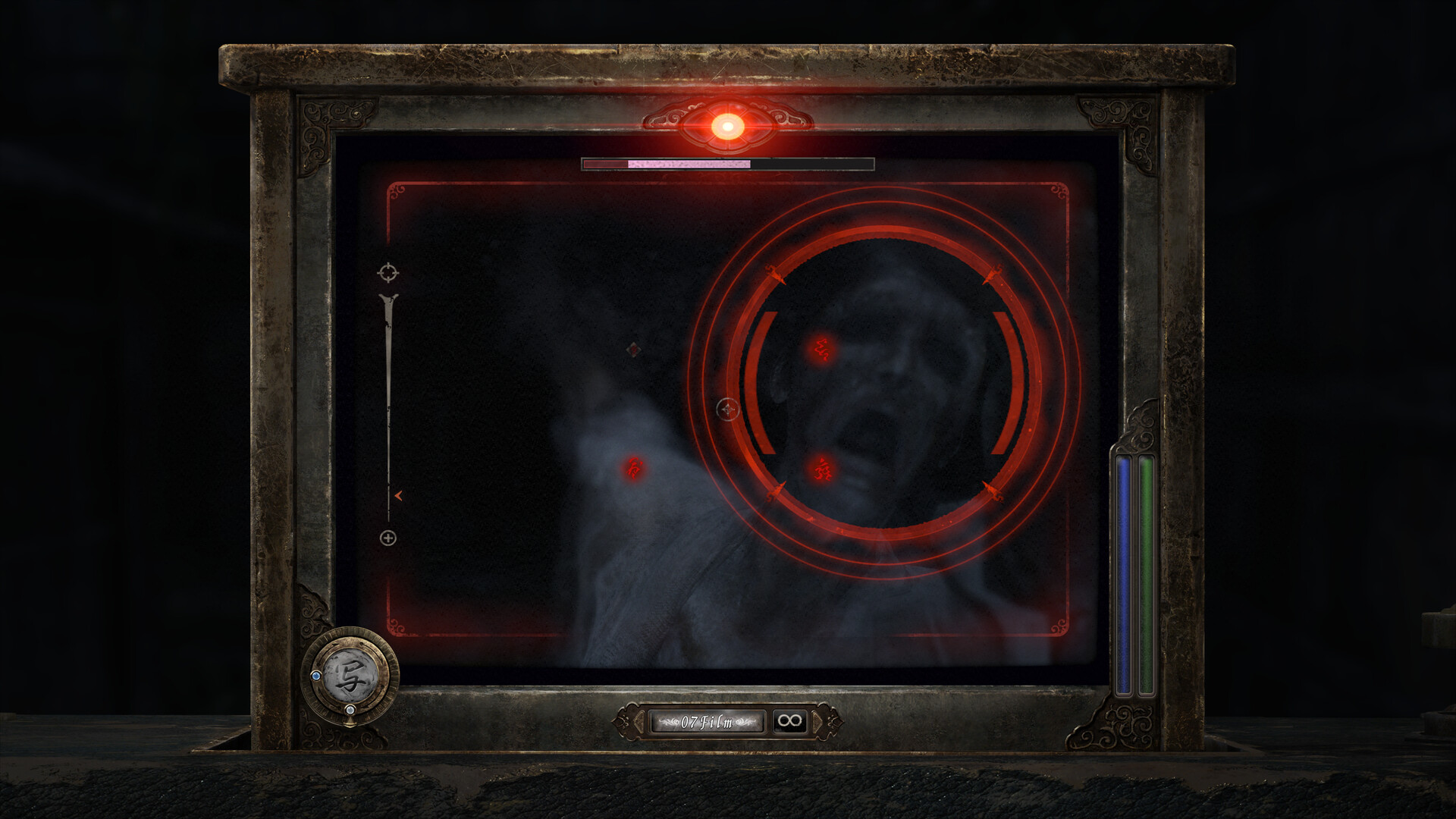
One thing noticeable from early encounters is that the ghosts seem to have more health in the remake. Battles feel longer than in the original Fatal Frame II, particularly in the opening few chapters. I wanted to make sure this wasn’t just my own experience, and it does seem to be a commonly noted issue, with some players pointing out that enemies take too much punishment before being expelled. There was a balance adjustment through a recent patch that targeting ghosts when they enter their aggressive mode, a state when the ghost becomes enraged shown by their red glow while regenerating some health. During these phases, they deal more damage and require repeated attacks to bring them back under control. As the game progresses and the Camera Obscura becomes more powerful, encounters do start to resolve more quickly. However, early on, they can feel somewhat oppressive, but in a way, it also adds to the game’s tension. Fans might hate the health changes, but it might not be as bad for newcomers who don’t have an experience to match it against.
The camera system also sees some changes with the introduction of camera filters, which act as a reworked version of the power-up lenses from the original. The standard lens is available from the beginning, while additional ones are unlocked over the course of the game. Each of these provides a special shot, functioning similarly to the power-up lenses, such as offering effects like stunning enemies, slowing their movement, or dealing heavy damage. They also have uses outside of combat, such as revealing hidden objects or helping to trace spirit trails that would otherwise be invisible. These lenses add additional combat mechanics and additional detective work with light puzzle-solving brought to the game through their functionality.
These abilities aren’t abusable, as they draw from a newly implemented blue willpower meter. This functions much like a stamina gauge, draining when abilities are used and when ghosts make contact with Mio. This ties into another returning mechanic from newer entries, where spirits can grab Mio as she reaches for items, something seen in Fatal Frame: Maiden of Black Water. If the player fails to pull away in time, the ghost will drain willpower and often trigger a fight.
Losing too much willpower puts Mio into an exhausted state. Her already limited movement becomes even slower, make her limp during movement, which makes it harder to escape the fight. It also limits access to defensive options like the dodge, a new addition that allows a quick backstep to avoid incoming attacks at the cost of willpower. While the dodge itself is minimal, its inclusion is a major change compared to the original, which relied on tank controls and positioning rather than a dodge button. This modernised combat is giving players a more reliable way to avoid damage. Whether these changes are for the better will likely come down to personal preference. I personally didn’t mind the changes from the original. I get that some fans just want a coat of paint on the classic PS2 version, but the changes make combat slighter faster, more fluid, and a bit more forgiving than it used to be. It strips away the clunkiness of the past, and while that might make it easier for fans, it results in a better flow that I think new players will likely appreciate.
Being that the two sisters care for each other, the developers decided to throw in mechanic to express this. This is the new feature for Mio to hold hands with Mayu. Mechanically, this allows players to gradually restore both health and willpower, offering a slow way to regenerate willpower and health as they move through the village together. It clearly aims to reinforce the bond between the two sisters, a theme that is explored throughout the game’s story.
The question most fans will inevitably ask is, well is the game still as scary as the original? That’s not an easy question to answer. I can only speak from my own perspective, having first experienced Fatal Frame II: Crimson Butterfly at 20 years old, and now revisiting it at 41, some of the impact has naturally changed over time. That said, there were still moments where I felt my heart race. The game continues to excel at building atmosphere, pulling the player into the mystery and dread of Minakami Village. Knowing that the Camera Obscura is your only means of defence, and that Mio can barely move at speed, creates a constant tension over you. The threat of ghosts emerging from walls or corners keeps you on edge.
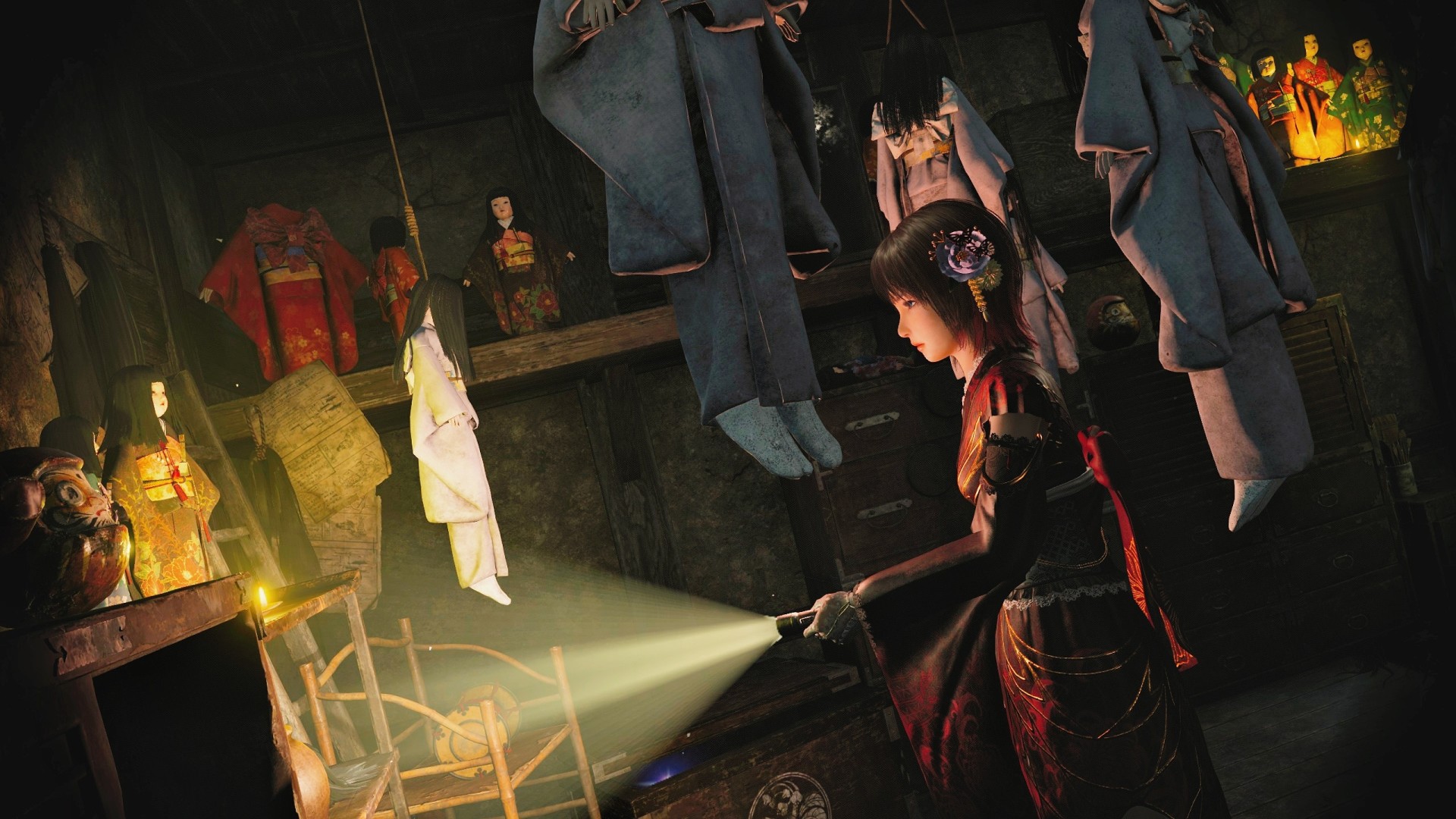
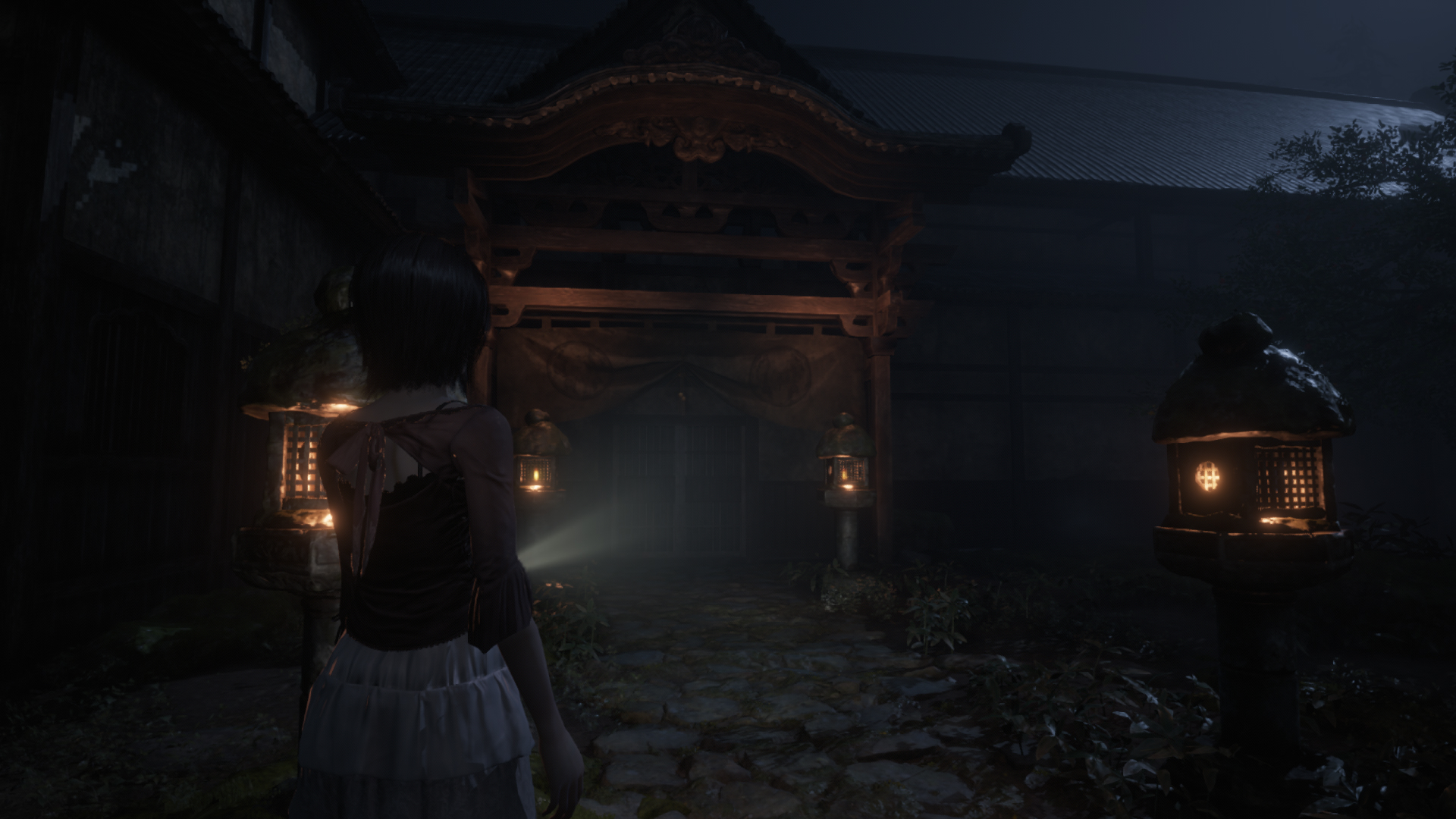
The sound design plays a huge role in this. Subtle noises echoing through empty buildings and abandoned streets create a persistent sense of unease, making the world feel haunted. Visually, the remake is equally strong as the sound design. Lighting and shadow are used effectively to enhance the oppressive atmosphere, with dark, decaying interiors brought to life in a way that feels both ghostly and immersive. It may not be industry-leading on a technical level, but the way it presents Minakami Village feels undeniably haunted.
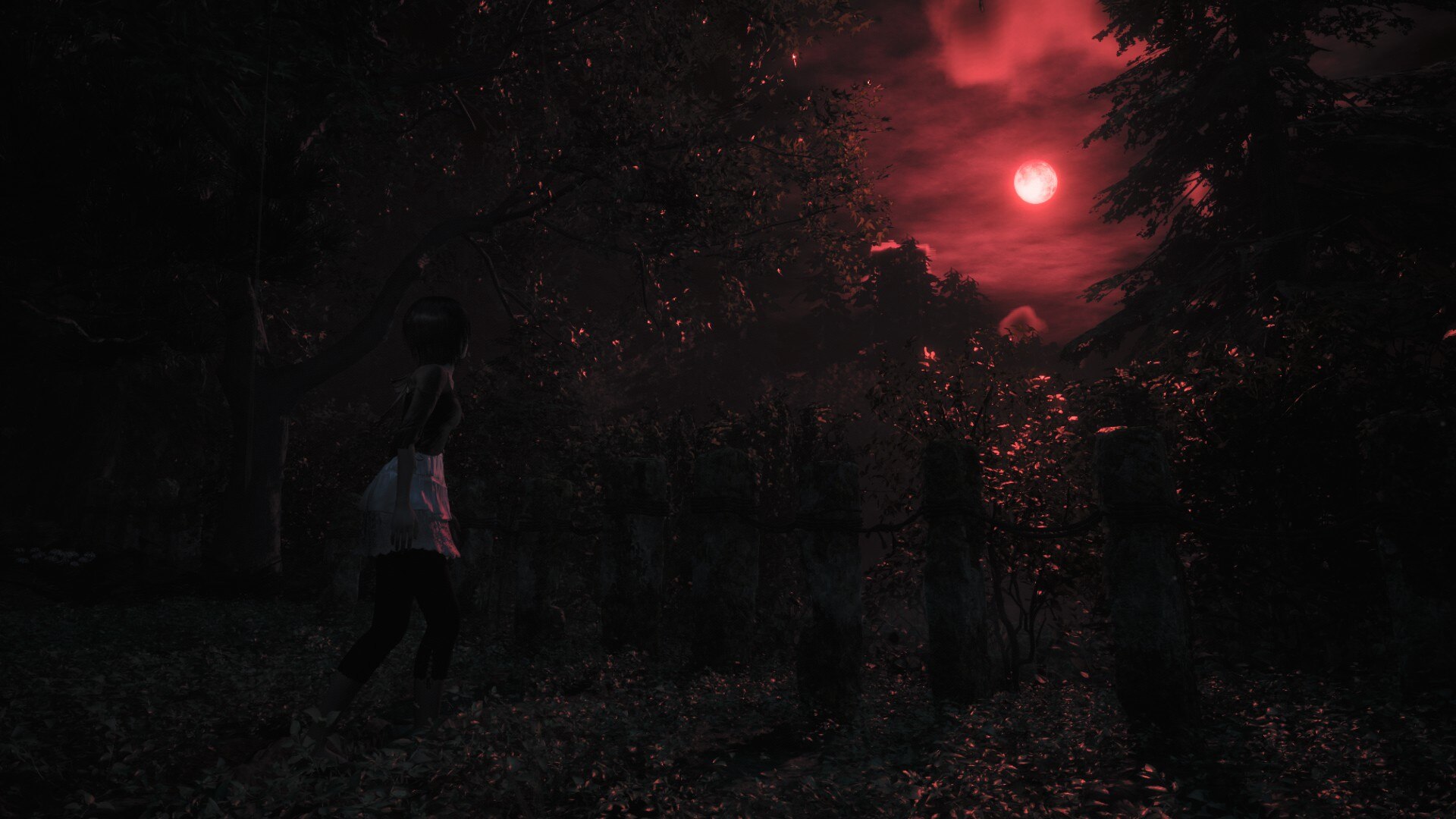
Testing the remake on a PC featuring a Ryzen 7 7800X3D and an Nvidia RTX 5090, I had no trouble maxing out every setting at 4K resolution. However, there is a notable technical caveat: the gameplay is hard locked to 60fps. While this is still a superior experience compared to the 30fps cap found on consoles, it’s a puzzling limitation given that the game runs on the same Katana Engine as Nioh 3, which supports 120fps. There is also an option to run the game at 30fps, though 60fps is clearly the preferred way to play. Cinematics, however, remain locked to 30fps, which can feel slightly jarring by comparison. On the control side, the game performs well across both controller and keyboard and mouse, with no noticeable issues, making it comfortable to play using the classic PC peripheral.
If you’ve never played a Fatal Frame game before, this remake is the perfect place to start. Fatal Frame II: Crimson Butterfly Remake is a well-done rebuild of a classic that I feel does well walking the line between preserving its identity and modernising its gameplay. While some of the original’s raw tension is softened by updated controls and systems, the core feel remains mostly there. What matters is getting that horror feel right, and Fatal Frame II: Crimson Butterfly Remake is an atmospheric, slow-burning horror that still manages to unsettle. It may not fully replace the original for purists, but for newcomers and some fans, it stands as a strong revival of one of the genre’s scariest games.