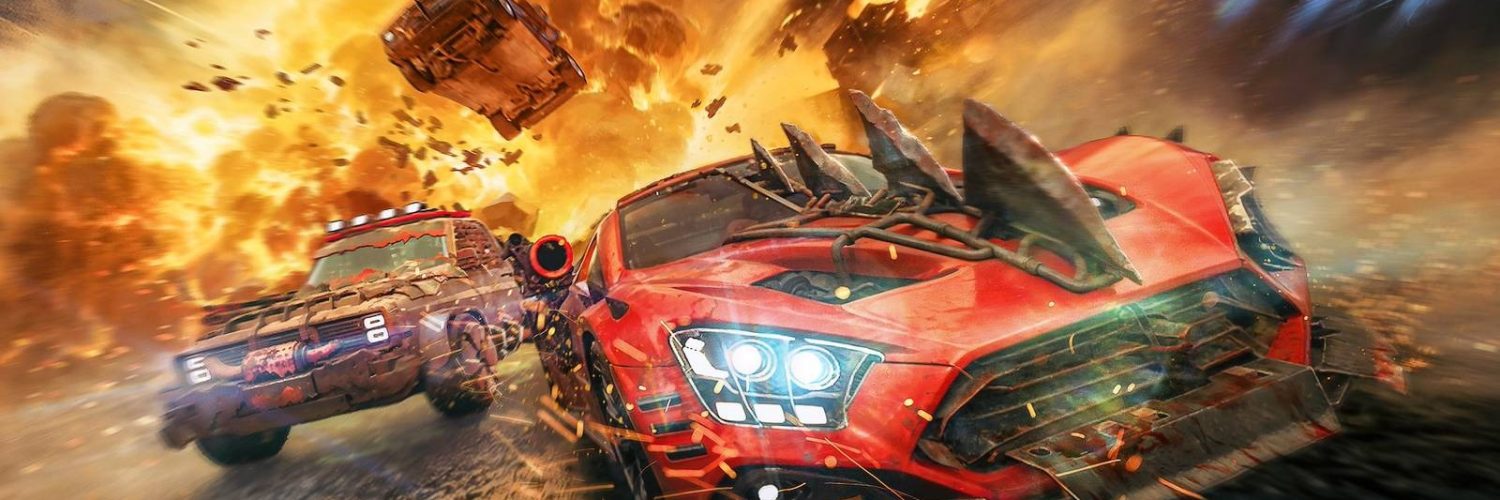
Carmageddon: Rogue Shift PC Review
The first two Carmageddon titles are a throwback to my childhood. It takes me back to my high school days and my first steps into PC gaming where I was grabbing whatever videogames I could from stores like PC World and GAME. In truth, I was not buying Carmageddon itself at that time (thanks for buying me it parents), given its adult rating, its infamous reputation due to the controversial focus on running over pedestrians for kills as an alternate way to win races.
I personally preferred the sequel, which pushed the series fully into 3D assets, offering larger and more complex tracks, and featured a genuinely banging soundtrack. I never really got into Carmageddon TDR 2000, and after its release in 2000, the series went on hiatus for roughly fifteen years before returning with Carmageddon: Reincarnation. That release was later expanded and reworked into Carmageddon: Max Damage when it made the jump to consoles a year later. I reviewed that title at the time and found it to be a rough and ultimately boring racing game. Now, after another long break, the series is back once again with Carmageddon: Rogue Shift, arriving around ten years later with a very different twist to what we know the series for.
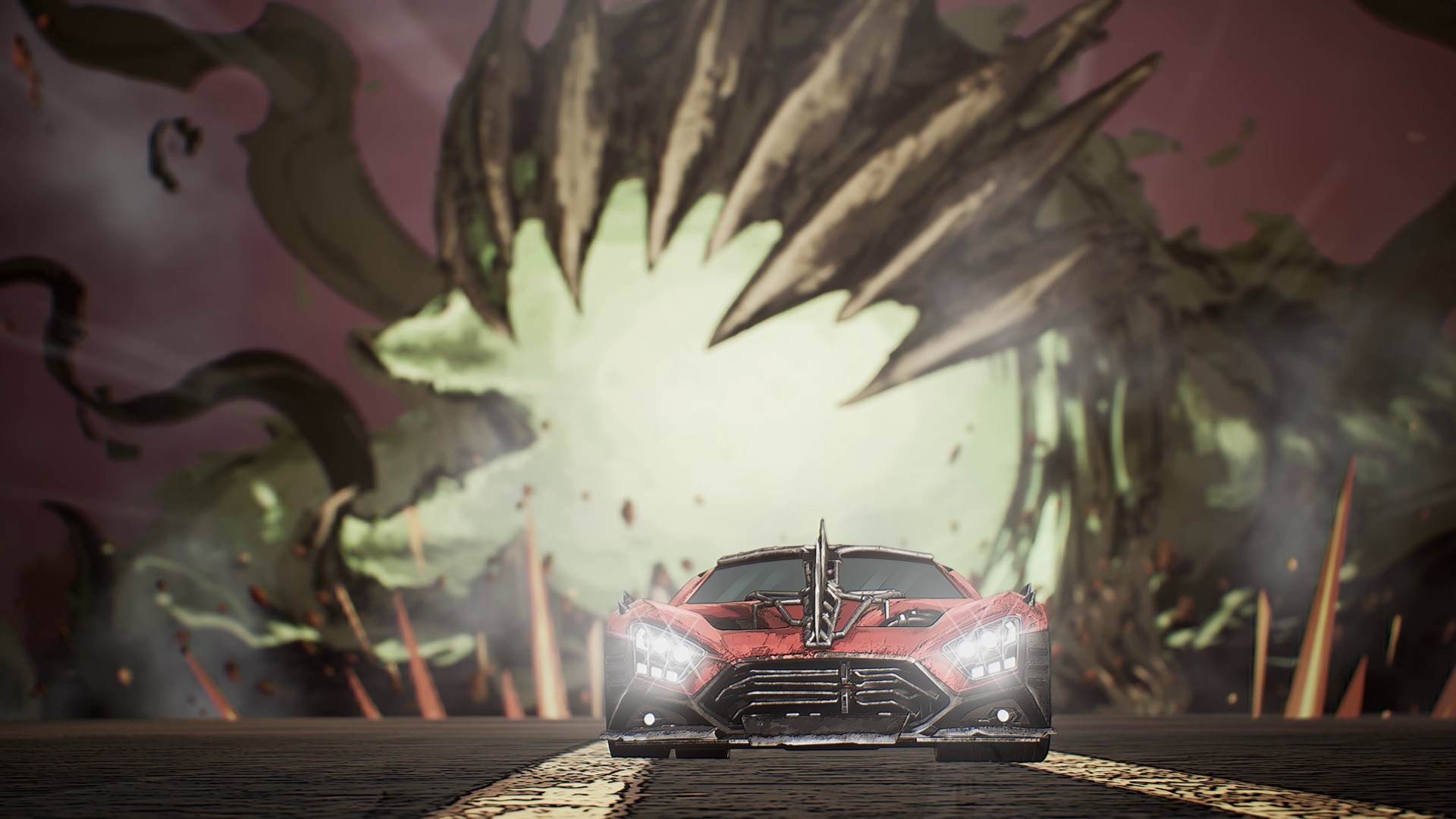
That twist is that Carmageddon has now become a single player, roguelite vehicular combat racer. This roguelite structure and weapon importance is one that some long-time fans may not be entirely on board with, especially given how long it has been since the series last saw a new entry. There is also a huge abundance of roguelike and roguelite games on the market right now. However, racing roguelikes remain relatively uncommon, and it is not a space I would describe as saturated when compared to other genres that have crossed into roguelike territory. A bonus for me was that the studio behind this new direction is 34BigThings, the team responsible for the rather good futuristic racer Redout. That gave me a positive feeling heading into Carmageddon: Rogue Shift.
The setting has moved to the year 2050, with the world once again portrayed as a post-apocalyptic wasteland, ravaged by natural disasters and a third world war. To keep humanity alive, a food supplement known as MiVis was introduced to combat severe food shortages and quickly became a ubiquitous part of daily life. However, long-term consumption of MiVis led to horrific cellular mutations, transforming people into the Wasted, monstrous and hollow husks created by the supplement’s side effects.
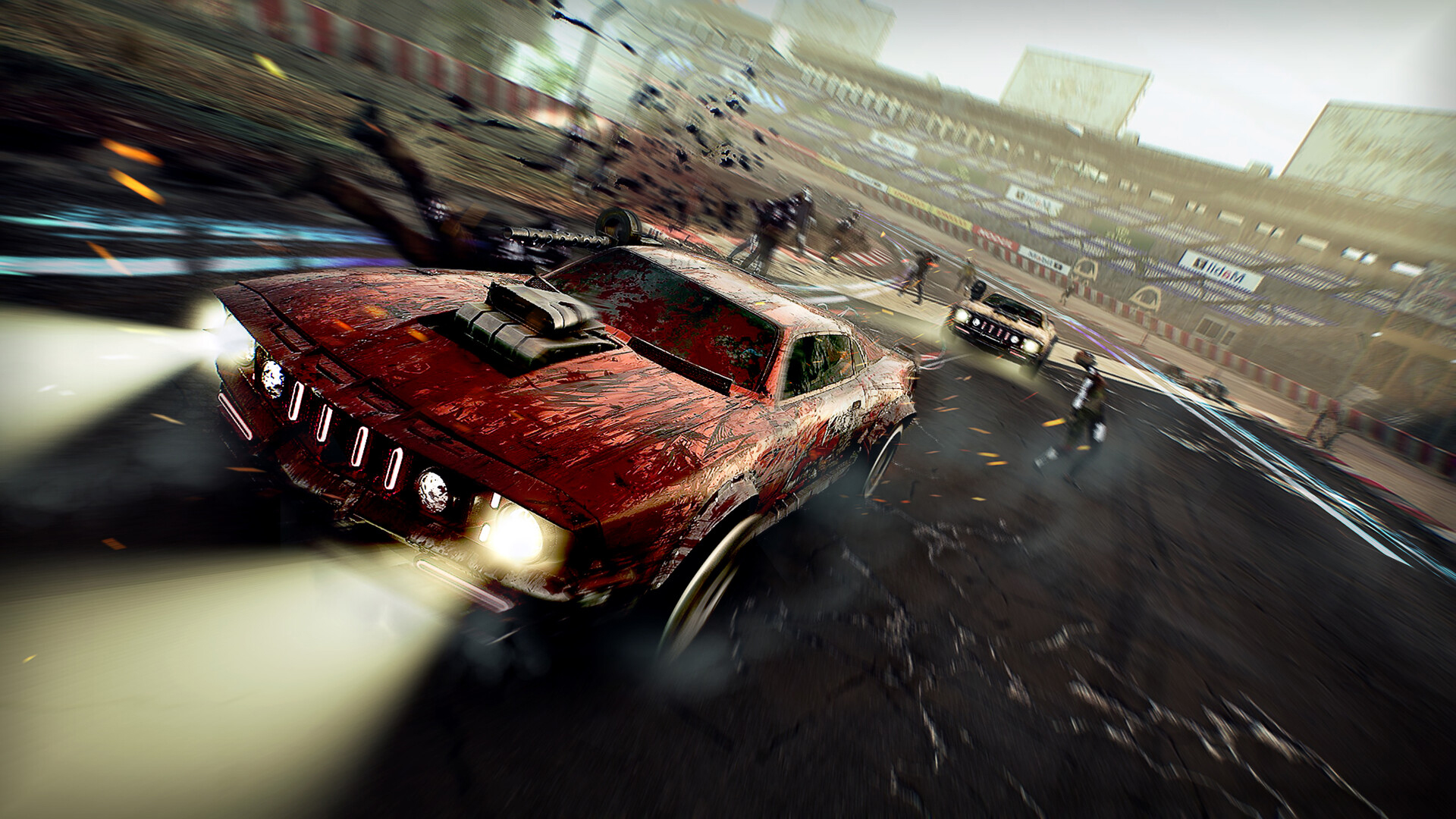
This means there are no longer traditional human pedestrians on the track. Instead, players mow down these mutated creatures, which are effectively the equivalent of zombies, similar to how earlier Carmageddon titles handled censored versions back in the late 1990s. The player enters Carmageddon as one of countless participants, all attempting to survive the gauntlet and escape the wastelands. That is largely the extent of the story. Aside from the boss introductions presented through comic-book style cinematics, the game places its full focus on gameplay rather than narrative. This also means that there is no dialogue between racers, so what was once a series about silly, adult humour has now become more sterile, losing some personality and the colourful cast of character portraits that displayed on screen, as now all you see are names above cars.
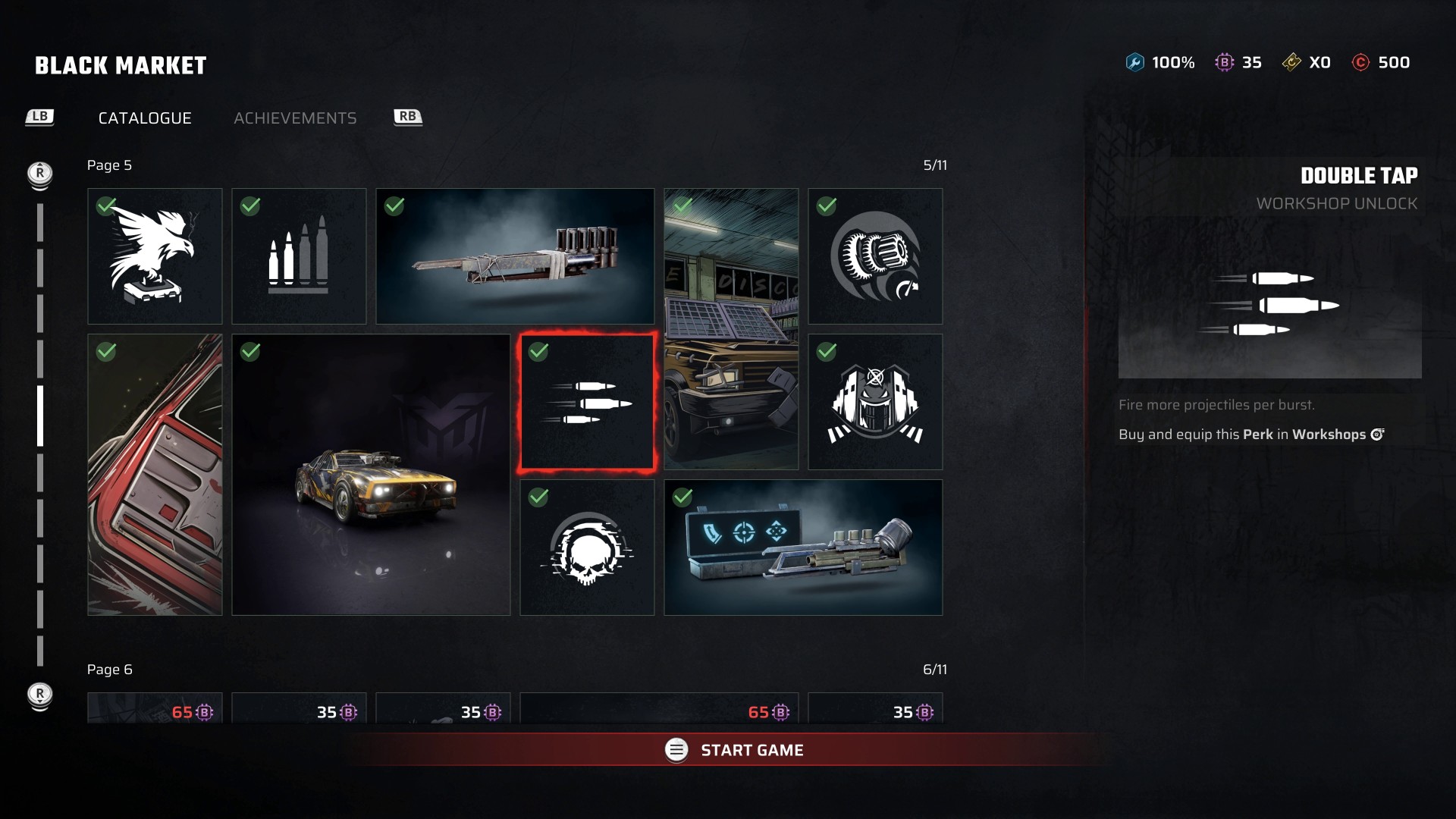
Being a roguelite, Carmageddon: Rogue Shift is no longer about racing through tournaments and chasing a trophy. Instead, the focus is on runs and surviving as long as possible through a series of events until reaching the end. Each run begins by spending Beatcoins, a purple currency earned by completing events. This currency is account-based and is only lost when spent on permanent unlocks and upgrades through the Black Market.
The Black Market is structured in a way that is comparable to Helldivers 2’s Warbonds or Killing Floor 3’s battle pass system. There are ten pages of unlocks available, offering new vehicles, weapons, perks, and other upgrades. These are priced reasonably enough that each run generally results in unlocking a few new things, giving a steady sense of progression from one attempt to the next until all of them are unlocked.
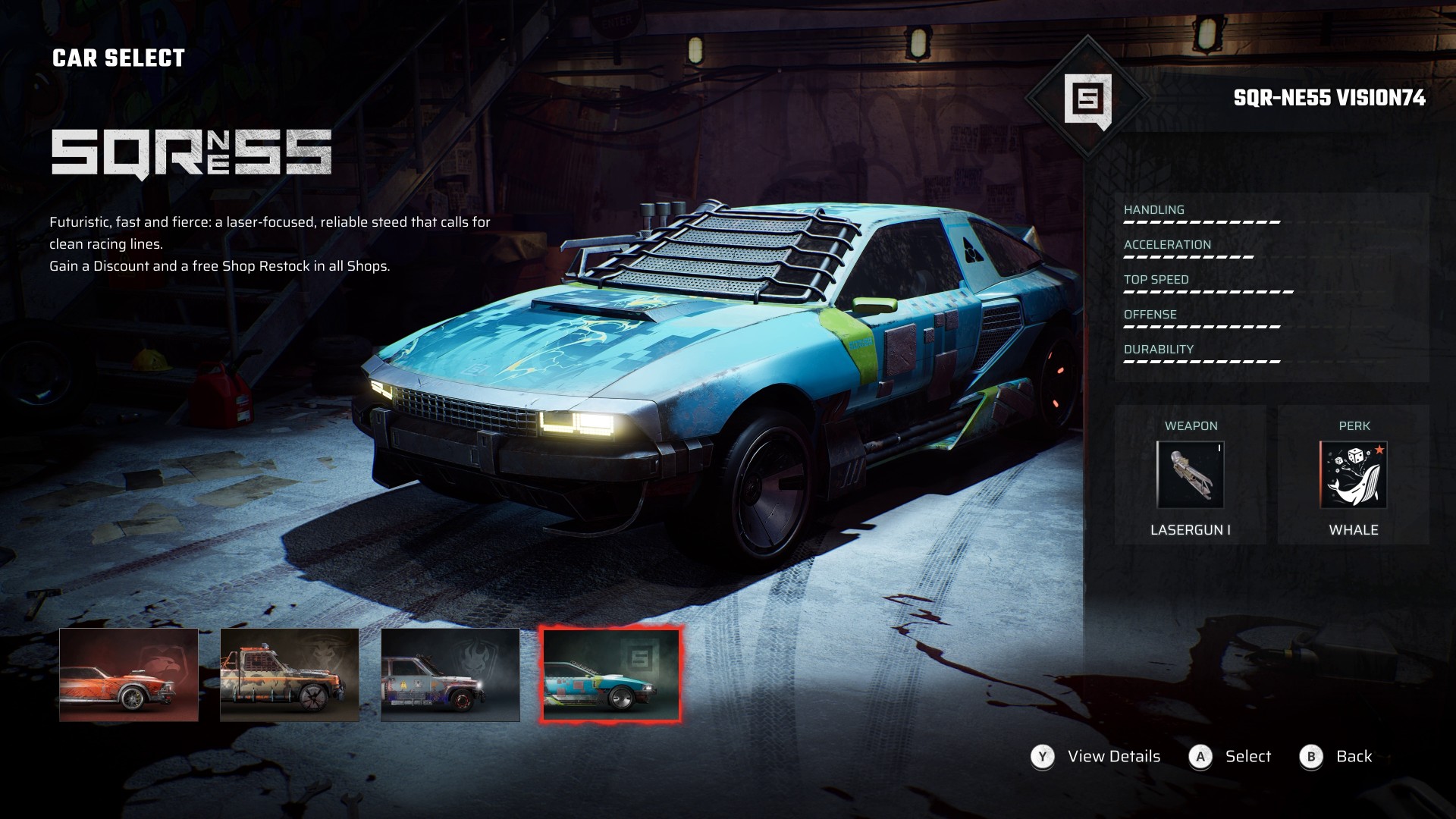
Next up is choosing which car to tackle a run with. At the beginning, only the Eagle GT is available, but as Beatcoins are earned, additional vehicles can be unlocked as mentioned. Each car features five base stats covering Handling, Acceleration, Top Speed, Offense, and Durability. They also come equipped with a default weapon, such as a shotgun or machine gun, along with a unique perk. For example, the Eagle GT begins events with full boost bars, while the Vision 74 offers discounted upgrades and a free shop restock during a run. Each car feels different to drive. The Eagle GT acts as a well-balanced all-rounder, whereas something like the Firecracker 5 Turbo, which boasts strong acceleration and rear-wheel drive, tends to oversteer and spin out. Let’s just say I was not a fan of that handling style.
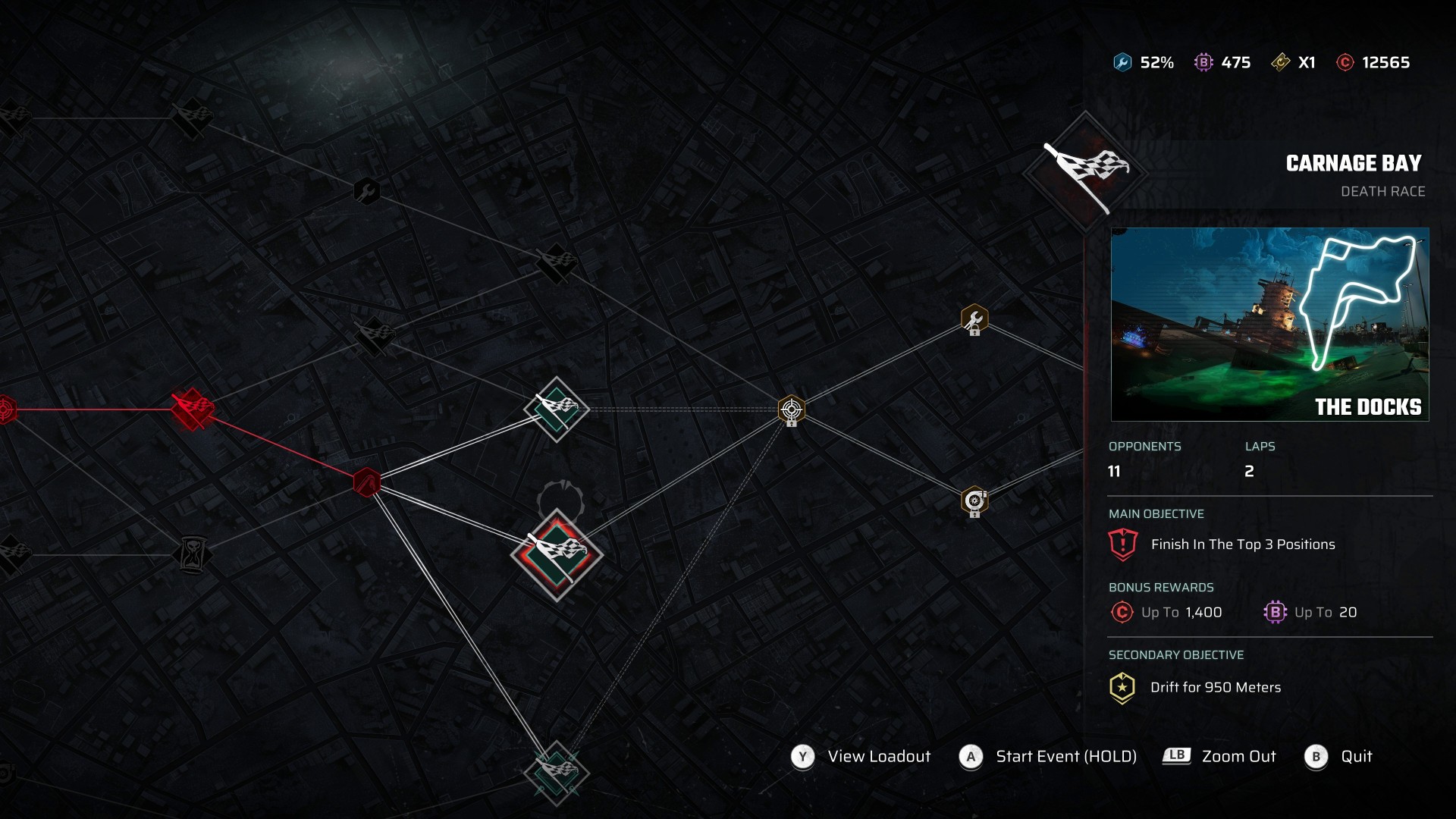
From the start of the mandatory first event progression is done by moving through the map and selecting events to complete. Early on, the pathways are straightforward, with only occasional branching options. As the run progresses, the map opens further, offering more split paths and greater choice over which events the player wants to tackle. Each event outlines an opponent count, lap count, a main objective, a secondary objective, and any bonus rewards on offer. The main objective must be completed, as otherwise the event is classed as a failure and the run ends.
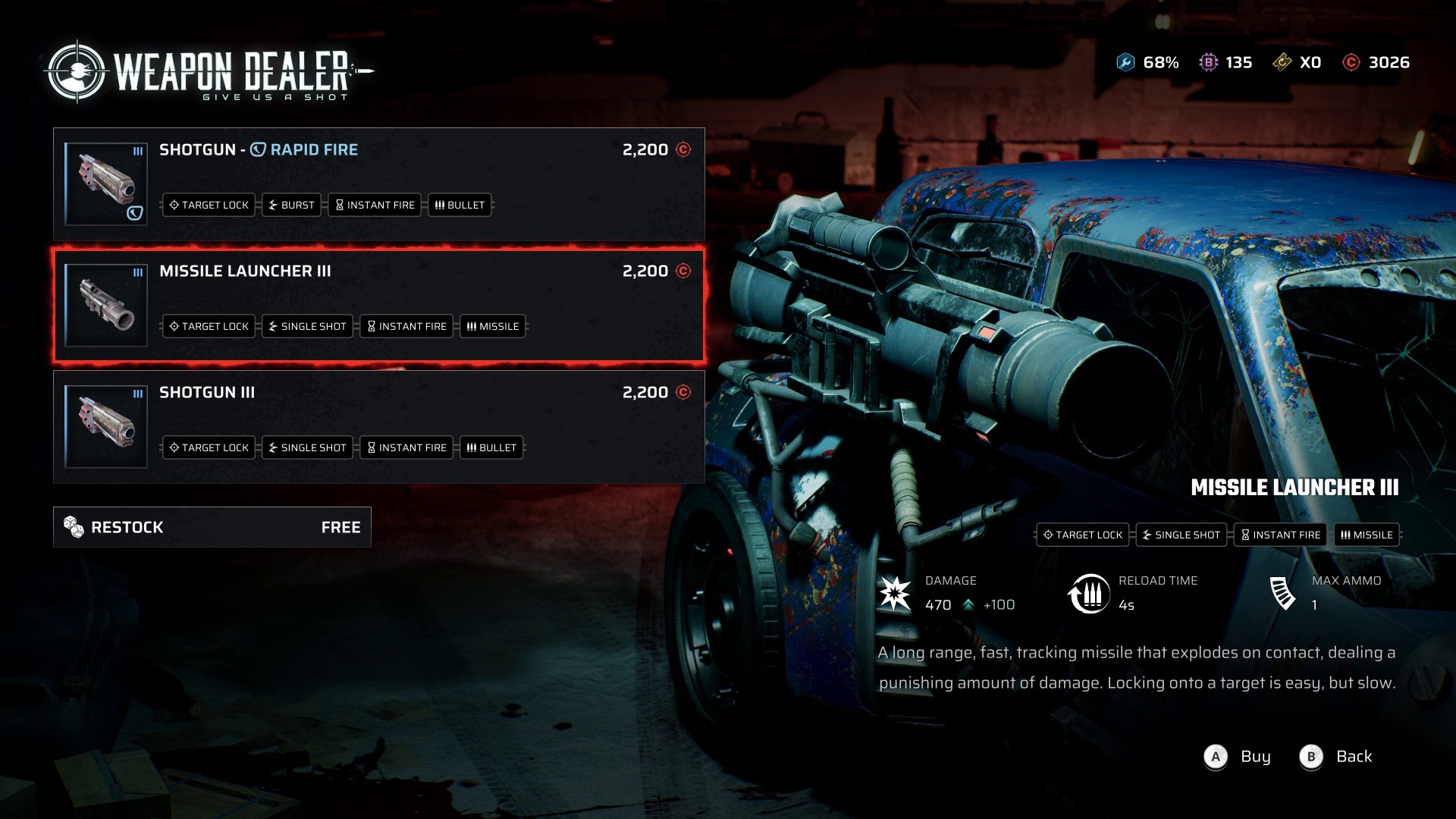
Normally, for a roguelite, this structure would be a great way to spice up each run and introduce meaningful variety. Unfortunately, Carmageddon: Rogue Shift does not make full use of this potential, and the experience suffers from repetition as a result. The main events available fall into just two categories, Death Race and Survival, each built around familiar objectives such as finishing third or higher or completing a set number of laps before the timer expires. Alongside these, there are several non-combat events that serve as support stops during a run. These include shop events that allow players to purchase weapon upgrades, loadout and perk upgrades, and repairs for their vehicle. Weapons can be changed within the weapon store from the vehicles default, so that machine gun can be converted into a rocket launcher or a laser. There are around 13 weapons to unlock throughout the game that get added to the store over time.
There is also the Scavenge Hunt event, which tasks players with opening up to six storage containers to uncover random loot used to improve their vehicle mid-run, but pick the wrong one with Wasted in them and all bonuses are lost, offering a risk-reward mechanic if the player is willing to take the risk. While these events provide useful progression and breathing room between races, they do little to break up the core gameplay loop, as the primary challenges still rely heavily on the same two event types.
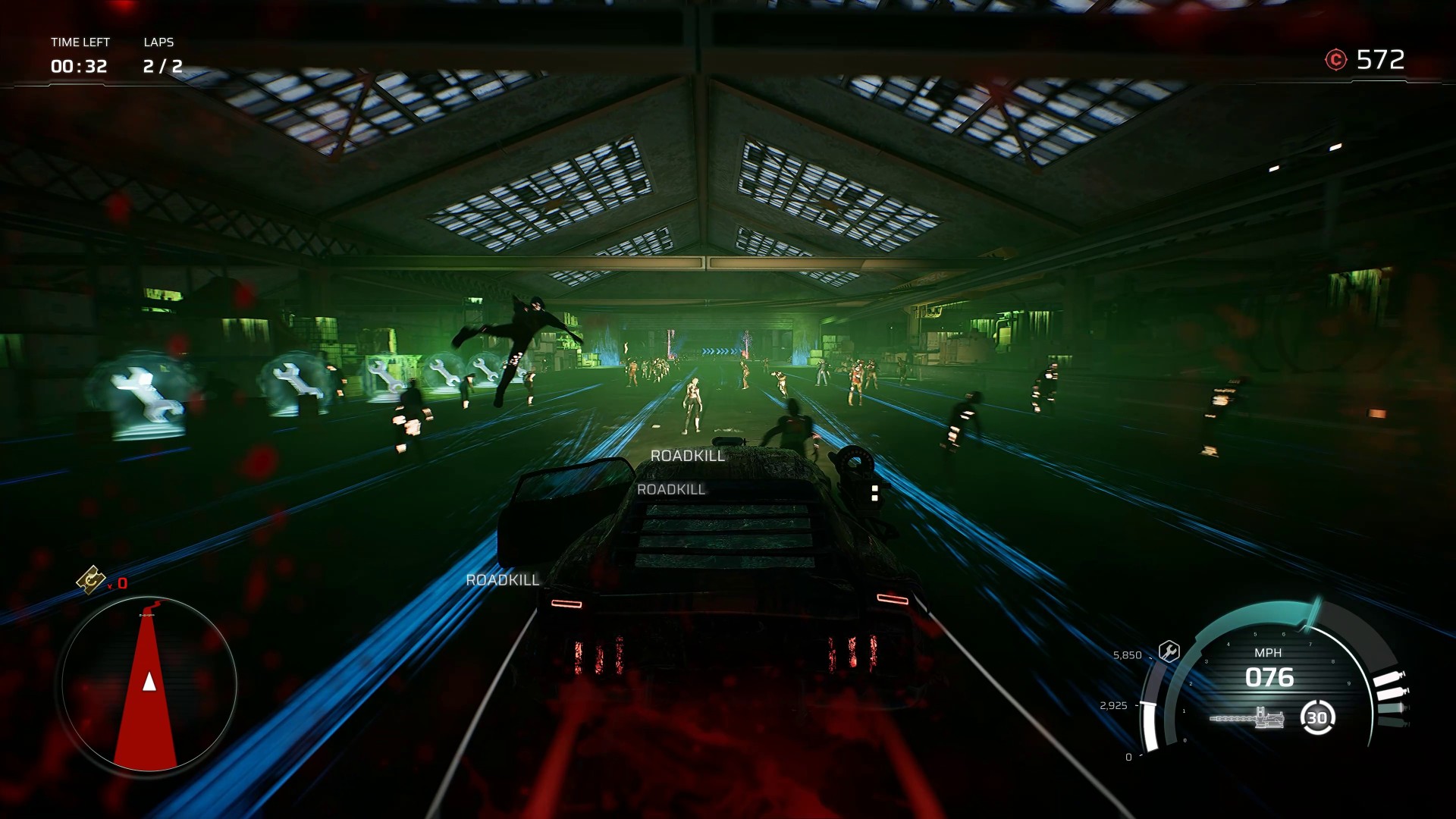
Also featured in a run are boss encounters. These typically involve destroying the boss before time runs out, with one exception in the form of JetAss, who can be beaten either by winning the race or by destroying them outright. Secondary objectives add extra challenges to standard events, such as dealing a specific amount of damage, wrecking a certain number of vehicles, running over a set number of the Wasted, or holding first place for a set amount of time. Completing these rewards bonus credits, which is then spent in shops on upgrades.
While these systems work just fine, the lack of event variety makes repeated runs feel too familiar. Elite versions of events raise the difficulty, such as requiring a first-place finish instead of third, but do little to change how those events play. Unlocking new cars, weapons, and perks through the Black Market is nice, but these additions are ultimately used against the same limited selection of events and bosses. Additional event types such as pure destruction challenges, knockout races, or last-car-standing modes could have helped break up the monotony. Even expanding secondary objectives into fully fledged event variants or adding race modifiers would have added much-needed diversity. As it stands, the repetition sets in faster than it should.
Just to note: the developers have already confirmed that a patch is planned for 2026 to add modifiers to the game, currently referred to simply as Patch 2, although no exact date has been announced. Within this pace it states that “Enter Challenge Mode, which will layer on game modifiers to shake things up; tougher opponents, scarcer resources, no second chances, deadlier Wasted, a more challenging driving simulation. We are exploring these and more options. We are already working on this new mode, and we plan to release it in Patch 2.” Which is a good sign that the game will be improved over time, as it needs this to keep things interesting as right now it’s a tad barebones for a roguelite.
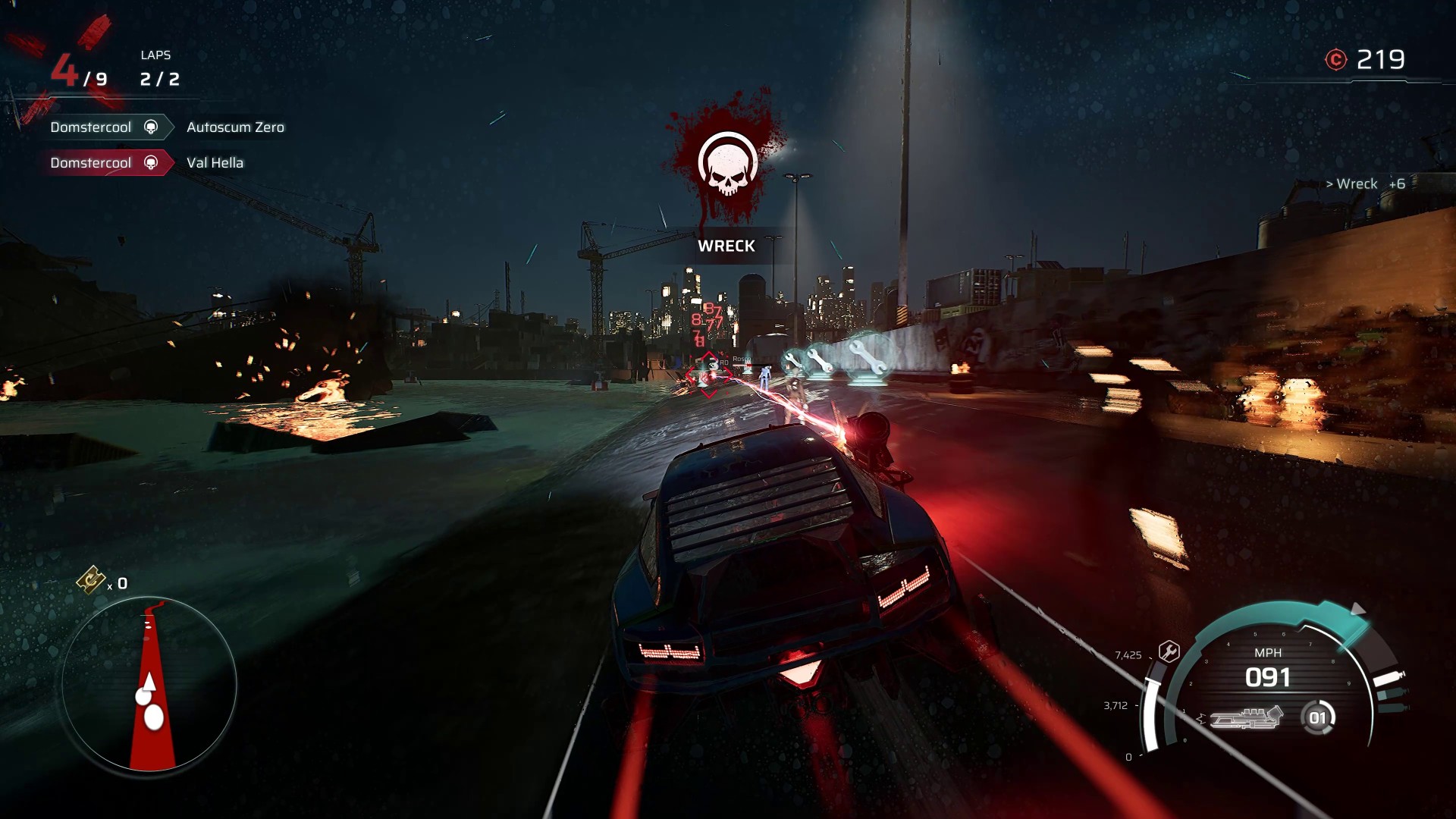
On track, things feel much more familiar for a vehicular combat racer. Alongside the standard acceleration, braking, and handbrake controls, players must also manage vehicle health, boosts, and ammunition for their equipped weapon. One neat addition is the ability to sideswipe using the left and right shoulder buttons, allowing cars to ram into opponents and send them exploding in spectacular fashion. Enemies generally do not have much health, so a handful of rams or weapon shots are often enough to spoil their day. Cars frequently explode into fiery balls of twisted metal before respawning back on the track moments later. This keeps the chaos constant during events, with racers blowing up, environmental obstacles being smashed apart, and police vehicles getting destroyed as they attempt to intervene.
If there is one area where the gameplay works, it is in maintaining constant player engagement. Whether you are pushing for first place, splatting the infected or scrapping with other racers, there is always something happening. Racers and police continually respawn to keep events competitive. There does appear to be some rubberbanding at play, as at times I found myself far ahead, only to see opponents suddenly reappear behind me. I don’t mind it too much in a game like this because a good player can ram or blow that threat and send them back to the shadow realm for a few seconds.
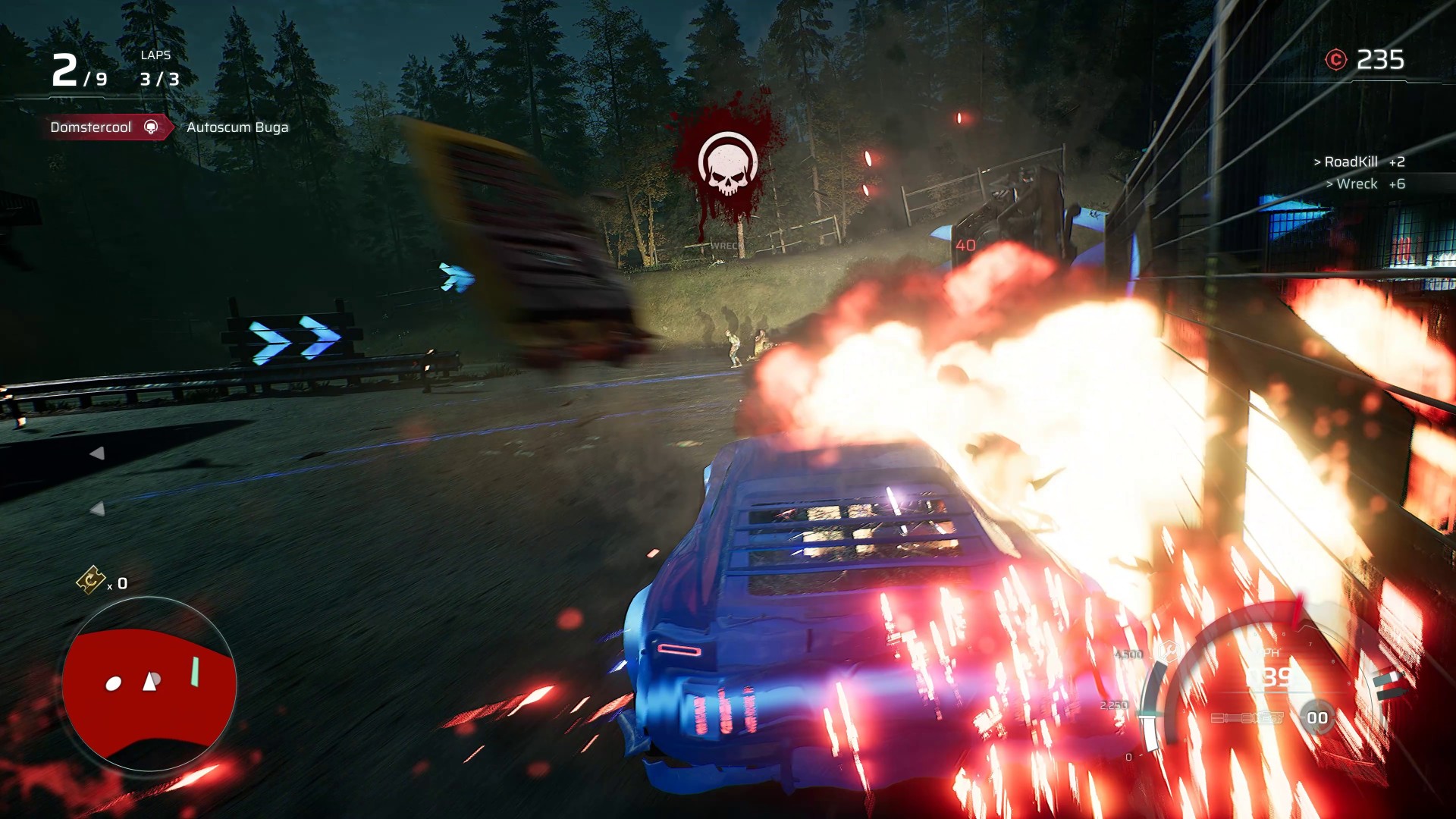
Tracks are set within various environments, such as city streets, storm drains, airport terminal, wasteland, junkyards and some rural areas with hills and forests. These tracks are littered with ammo pickups and repair icons that restore small amounts of health. This is important, as running out of health results in game over. There is, however, a lifeline. If a final hit would kill you, the game triggers a short countdown timer, giving you a chance to stay alive by collecting a health pickup before the timer expires. Health can also be regained by blowing up other racers or police vehicles, providing multiple ways to extend this second wind before finally succumbing to defeat. This encourages aggressive play and keeps the carnage flowing, even when the player is on the brink of blowing up.
I mentioned earlier that each car has its own handling characteristics, and that the rear-wheel-drive vehicle is prone to oversteer, which was something I struggled to gel with. In truth, the handling across the game is awful. Even cars that feel marginally better are easy to push into oversteer, often snapping into a spin and killing all momentum. There is little sense of feedback when trying to drift. Cars tend to either go straight, turn slightly, or suddenly lose control altogether. The handling feels overly loose and simply spoils the game. I constantly found myself fighting against it, which made the experience often frustrating. Vehicles also struggle to turn at low speeds, and if another car gets in front of you collisions have a habit of stopping you dead. In many cases, the only practical solution is to respawn. Thankfully respawns are unlimited, and it often better to respawn than to wrestle with the handling to recover.
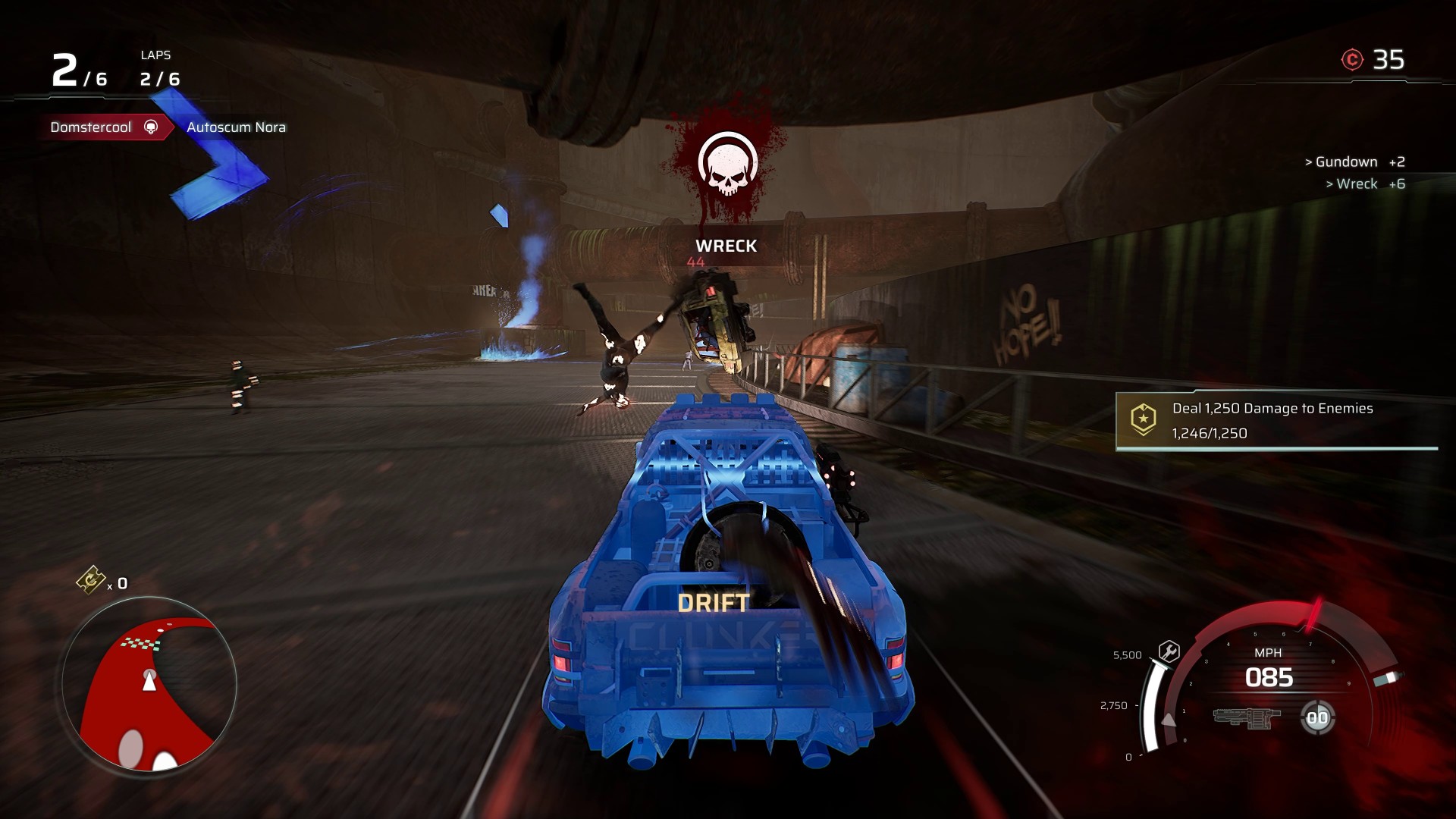
Simply put, the handling is not suited to the game’s arcade carnage. It is too unresponsive, too prone to sudden loss of control, and too awkward to recover from once momentum is gone. I was genuinely ready to score the game lower purely because of how much the driving frustrated me. However, something changed, because the developers clearly recognised the issue, as a Steam beta branch appeared over the weekend just before I was ready to publish this review. Included in that beta was a crucial point: “We’ve reworked our friction curves to mitigate that cliff’s-edge feeling of instantly losing control. Tires now have a generally more progressive grip loss, allowing you to catch slides and drift more predictably instead of snapping into a spin.” Given how much the handling was souring my experience, I had to try this beta to see whether it addressed my biggest issue with Carmageddon: Rogue Shift.
I am happy to say that it did. The handling has been transformed and is now much improved, feeling like a night-and-day difference compared to the release version. Cars are far more controllable, spins are easier to prevent, and responses feel snappier and more predictable overall. There are now additional tweakable options in the menus, allowing players to adjust steering rate, steering curvature, and low-speed acceleration curves. This is a great start, but I do hope the developers do not push things too far from here, as the handling feels to be in a good place. That said, there is still room for improvement when it comes to surface feedback, as driving on tarmac does not currently feel all that different from lumpy mud tracks. Even so, this update represents a substantial improvement and has changed my score for the game.
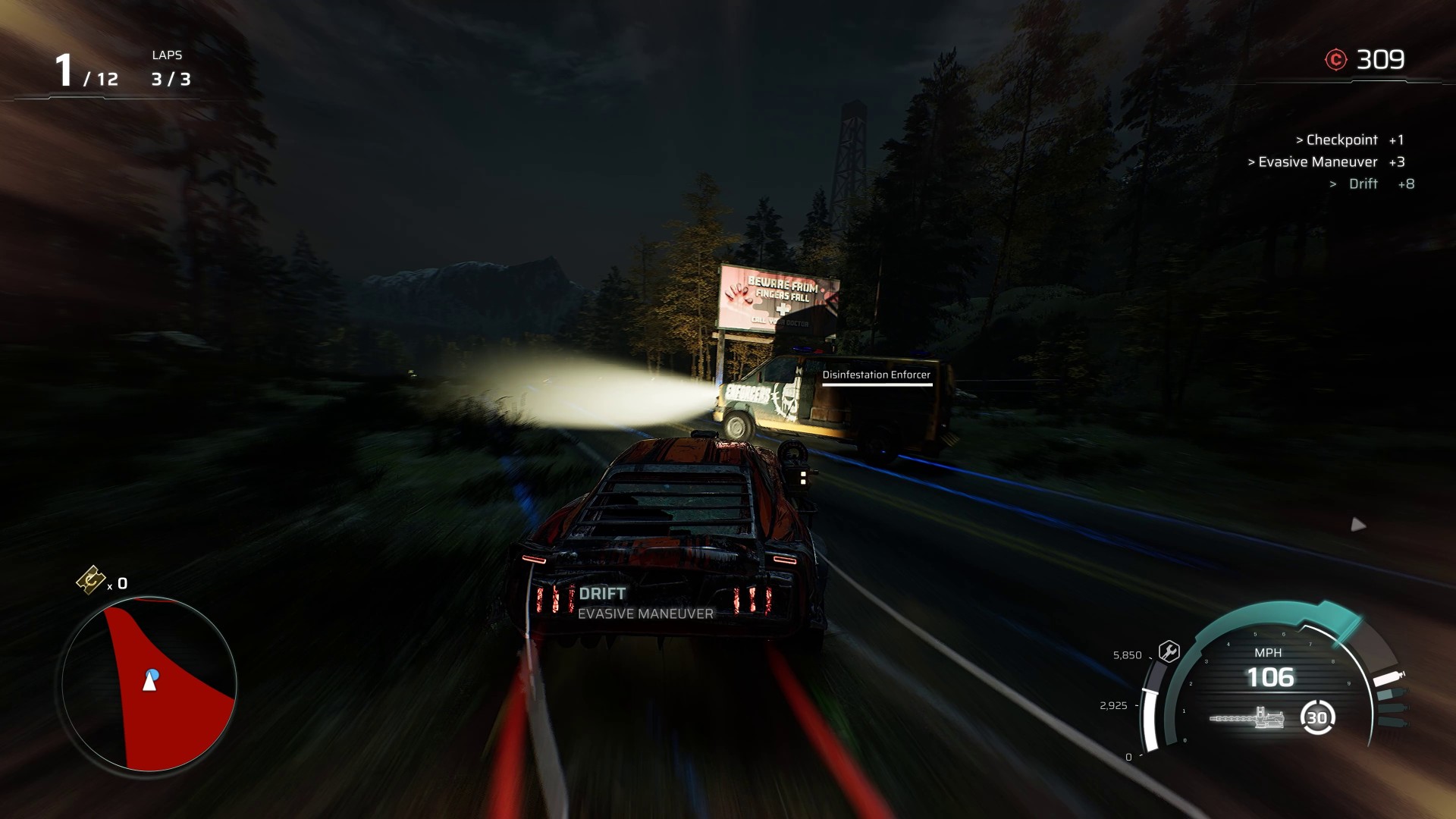
It took me around five hours and seven runs to eventually beat the game. I could have finished it sooner, but the launch-day handling model caused issues during my final boss attempts. That encounter pits you against a giant mutated snake-like creature with weak points positioned along its sides, requiring awkward angles to land hits. As you can imagine with the handling, this often resulted in erratic spinouts and moments where my car was dragged sideways by the monster’s tail. It looked silly, but it was far from an ideal way to experience the fight.
One major disappointment is there is nothing gained for beating a whole run. There are no new modes, no additional challenges, nothing substantial to work towards beyond repeating runs to earn more Beatcoins and eventually unlock everything in the Black Market. I am surprised the developers did not include even a basic New Game Plus option to increase difficulty, or something similar to extend replayability. Other genres that intersect with a roguelite often introduce additional mechanics, modifiers, or story elements over time, but here it feels like those ideas were either left out or the game simply needed more development time. As it stands, the game feels undercooked. For the content currently available, the asking price of £39.99 feels a little too high. It may become better value over time if more content is added or runs are expanded, but right now it is hard to ignore the missed opportunities. An endless mode, leaderboards, or additional post-game challenges would have been good to include.
Carmageddon: Rogue Shift is built on Unreal Engine 5, and for the most part it ran consistently well. On my high-end test PC with a Nvidia GeForce RTX 5090 paired with a AMD Ryzen 7 7800X3D, the game easily hit 120 fps and above and frequently bounced against the 144 fps limiter without any crashes or noticeable stutter throughout my sessions. Performance was rock-solid on that setup. On a Steam Deck, the game runs relatively well too, usually around 40 fps, and with some graphical tweaks and a lower internal resolution it’s possible to push closer to 60 fps if you’re willing to sacrifice image clarity. In terms of visuals, Carmageddon: Rogue Shift looks fine. It does enough to establish its twisted, post-apocalyptic world, but nothing here looks amazing. I would have liked to see more detailed vehicle destruction and debris effects. Given the series’ history of over-the-top vehicle carnage in the classic titles, that kind of exaggerated feels right for a game that thrives on chaos and carnage.
Despite taking Carmageddon in an interesting new direction, this game did not need to use the title, since its mechanics are more a spin-off entry. The beta handling changes were a step in the right direction, as I was ready to give this game a 4 until those changes came, which means hopefully the team at 34BigThings keep improving what they have here. The core loop is occasionally fun and the carnage is great to be a part of, but repetition sets in far too quickly and the lack of endgame content leaves little reason to return once beat. The handling fixes help, but they cannot disguise a thin roguelite built around a narrow selection of events. There is potential here and future updates may yet realise it, but for now, Carmageddon: Rogue Shift is spinning its wheels, struggling to get to the finish line.