Still Wakes the Deep PC Review
The combination of isolation, limited resources, and an oil rig’s harsh conditions can be a perfect setting to deliver fear and terror in a horror game. The vast ocean surrounding the rig can amplify feelings of helplessness. Yet I don’t know why I never initially thought of it that way. I guess I blame action films, such as my memories of Bruce Willis in Armageddon knocking golf balls at protestors. Once I had seen that, I did not think I could take my mind anywhere else. But, this is precisely why we have teams like The Chinese Room, the developers known for titles such as Amnesia: A Machine for Pigs and Everybody’s Gone to the Rapture. In their latest game, Still Wakes the Deep, they successfully encapsulates the dread and desperation of surviving on the Beira D oil rig amidst unfolding horrors. The game’s protagonist, along with the rest of the crew, must survive or die fighting off an unknown discovery that threatens them.
Still Wakes the Deep is set during the festive season of December 1975. As Christmas approaches, the crew on the Beira D oil rig in the North Sea continue with their daily work routines. Players assume the role of Cameron McLeary, known as Caz to his friends. Caz has temporarily left his wife and two children behind to allow tensions from a recent altercation to subside. He hopes that his time on the isolated oil rig will help calm the situation down so that the victim will drop the charges. However, Caz’s plans take an unexpected turn when his superior, Rennick, discovers the predicament Caz is facing. Rennick summons Caz to his office one morning and delivers the news that he is just been slapped with his P45. As Caz prepares to depart from the rig and head back to mainland Scotland via helicopter, a sudden shake affects the rig as the drillers strike something deep below and awaken an unknown entity that starts threatening the very lives of the people on Biera D. Chaos soon ensues as the creature begins to infest the halls of Beira D, altering the very beings within.

Still Wakes the Deep shines in maintaining an engaging narrative, whether through unravelling the mystery or interacting with the workers, who authentically embody their Scottish values by making sure they typically offend each other using terms like “cunt”, both as an insult or endearment. The developers have successfully captured the essence of this band of true manly Scottish sea workers, who must coexist despite the harrowing circumstances. The portrayal of the mid-1970s on the rig is thorough, from the detailed environment around the rig to small touches, such as the breakfast scene that opens the game to introduce us to a few of the core characters, or the details in people’s rooms that give an insight to their personality and life away from their camera persona. This detail is commendable, even going as far as offering subtitles for the almost extinct Scottish Gaelic language, which offers that little bit more towards creating an authentic experience.
While the visual aesthetics are undeniably stunning, courtesy of Unreal Engine 5, the linear nature of movement within the environment can sometimes feel restrictive. The game carefully guides players along a predetermined path, with locked doors and limited exploration options until specific triggers are met. I can see this helping to give the game a focus on maintaining a snappy flow of momentum by restricting the player’s exploration within a constrained environment. However, the use of yellow markings to signal direction and ledges seems unnecessary in such a linear experience. The areas are intentionally limited in size to prevent players from straying off the intended path. A recent patch for Still Wakes the Deep has reduced the emphasis on yellow markers, aiming to create a more natural-looking environment. This change may appeal to players who are good at flowing through linear progression without the need of signposting at every corner.

One area of weakness in the game lies in its basic level of interaction. The puzzles within Still Wakes the Deep are notably simplistic, often involving actions as straightforward as pulling objects in a specific order or searching for switches within a confined space – this highlights just how badly the oil rig has been maintained. Everything is falling apart! Additionally, the platforming elements are minimal, with occasional instances of jumping that may trigger quick time events to prevent the player from falling into the depths of the North Sea. Much of the gameplay involves navigating between different sections of the Biera D, allowing scenes to unfold between characters and the ominous threat. This often takes place in dimly lit environments requiring the use of a flashlight and stealthy movement through narrow passages and vents to safely avoid the dangers.
The game does not involve any combat mechanics, so when the monsters start to appear the player’s only options are to hide, sneak, or run. It reminds me of other horror games like Outlast. The tension reaches its peak when the player encounters these unearthly human transformations. They furiously bounce around the room with their elastic-like extensions making an unnerving blend of human voice and alien anger. The developers have placed the enemies in specific scenarios, some of which are scripted while others are more free-flowing, albeit only in small sections where the foes can roam around as they search for their next victim. The scripted scenes often involve chasing, while others involve sneaking around a few rooms. It is relatively easy for the player to determine when they are safe, as the monsters will stop chasing or return to patrolling their designated area. The sounds of the monsters are eerie yet fascinating to listen to. It is like the human side is trying to fight off against the infection, but the anger of the unknown being is forcing its way through them. It is unsettling. Their behaviour is one of aggression and mystery. In one scene, one of these beasts is entertained by how a washing machine door will not close, constantly trying to shut it as it keeps bouncing back. Weird, yet somehow perfect in capturing how these monsters adjust to the combination of humans and monster.
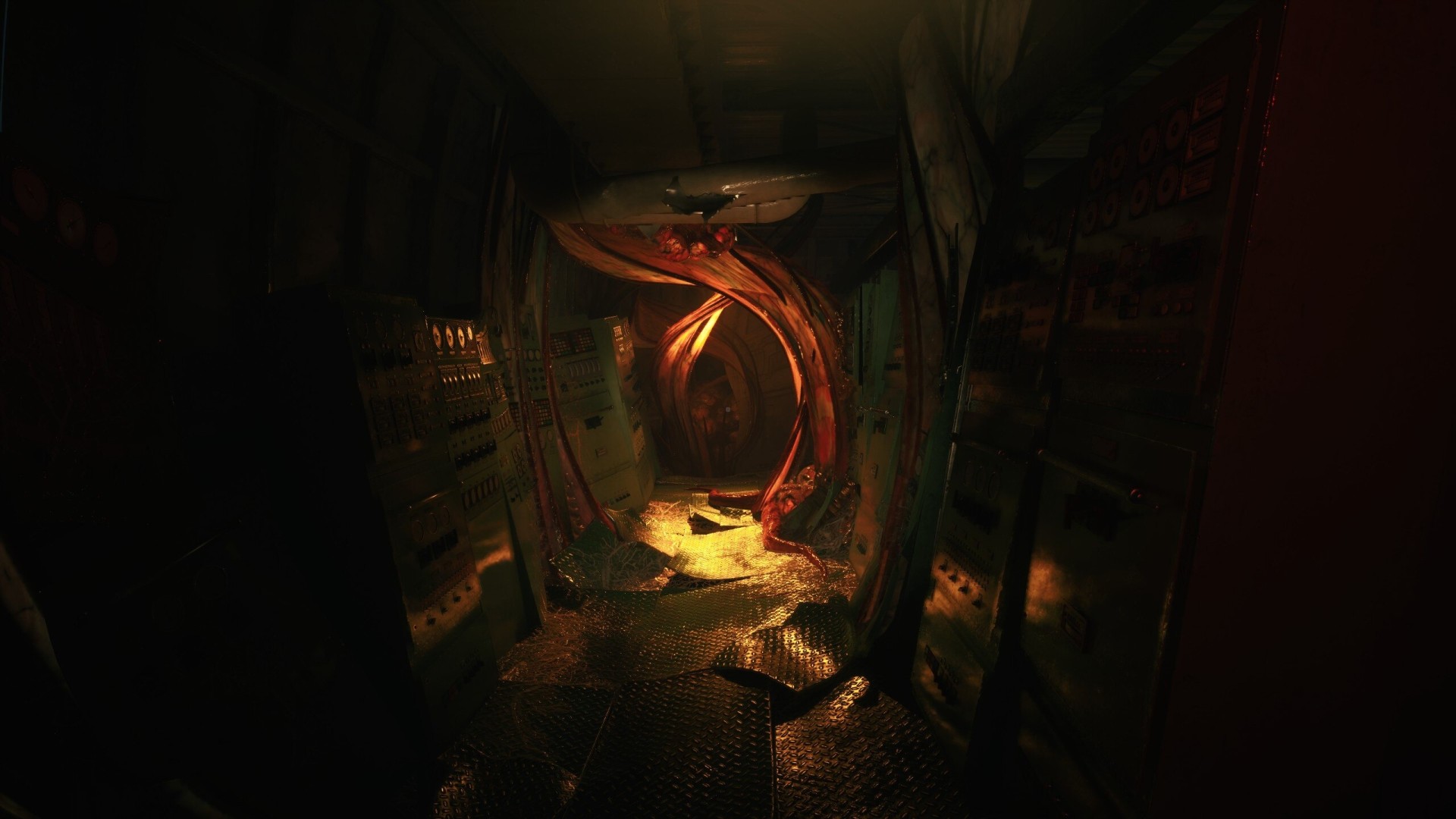
A single touch from an enemy results in death. However, the game’s checkpoint system is generous, ensuring that death is not as frustrating as it could be, as reloading usually occurs less than a minute behind any interaction with the enemy. The game aims to keep the player fully immersed in its horror, minimizing any disruptions to the gameplay experience ensuring that the player remains engaged and does not get pulled out of the game’s atmosphere for an extended period. Still Wakes the Deep exhibits a common issue found in horror games where the enemies tend to conveniently forget about the player once they run into hiding. This outcome reduces the immersion. To address this problem, the game could have implemented more interactive environments that allow players to navigate around enemies more strategically by creating flowing spaces that offer multiple paths for players to crawl around and outmanoeuvre enemies. This would have prevented the enemies from suffering from short-term memory lose.
Despite the shortcomings in interaction and gameplay complexity, Still Wakes the Deep has an appeal through its linear, but high-quality set pieces and engaging storytelling. The game’s ability to draw players in and keep them invested in the unfolding narrative is a testament to The Chinese Room’s proficiency in creating immersive experiences. By focusing on the development of compelling characters, a wonderful and personalised environment with the oil rig that is mysteriously engulfed in unknown biological matter, combining it with an appealing plot helps succeed in delivering an entertaining game. Players will find themselves engrossed in the eerie atmosphere and suspenseful moments that Still Wakes the Deep has to offer, even with the limitations of its linear structure and simple gameplay. Plus the game’s splendid visuals are a bonus that adds to the overall atmospheric setting.