
Reanimal PC Review
It’s wild to think that it was nearly nine years ago when I played Little Nightmares. I remember covering the small puzzle-platform horror game quite vividly as it was a title I rather enjoyed thanks to its twisted, unforgettable setting: the Maw, a massive structure floating in the ocean, inhabited by grotesque, obscenely wealthy guests driven by pure gluttony to consume children through child trafficking. Watching the Twin Chefs preparing children as “delicacies” for their customers was disturbing, which is made even more unsettling in this modern age by how uncomfortably close it feels to real-world theories considering the recently resurfaced Epstein files and their implications of elite indulgence and exploitation hidden from the world.
Rather than relying on cheap jump scares, Little Nightmares thrived on psychological horror and suffocating atmosphere, a philosophy its sequel upheld. Following the sequel, Tarsier Studios was acquired by Embracer Group and lost the Little Nightmares IP to Bandai Namco, forcing the team to move on to an original project. That project is Reanimal, a game that feels like the next step in their puzzle-platform horror adventure game design.
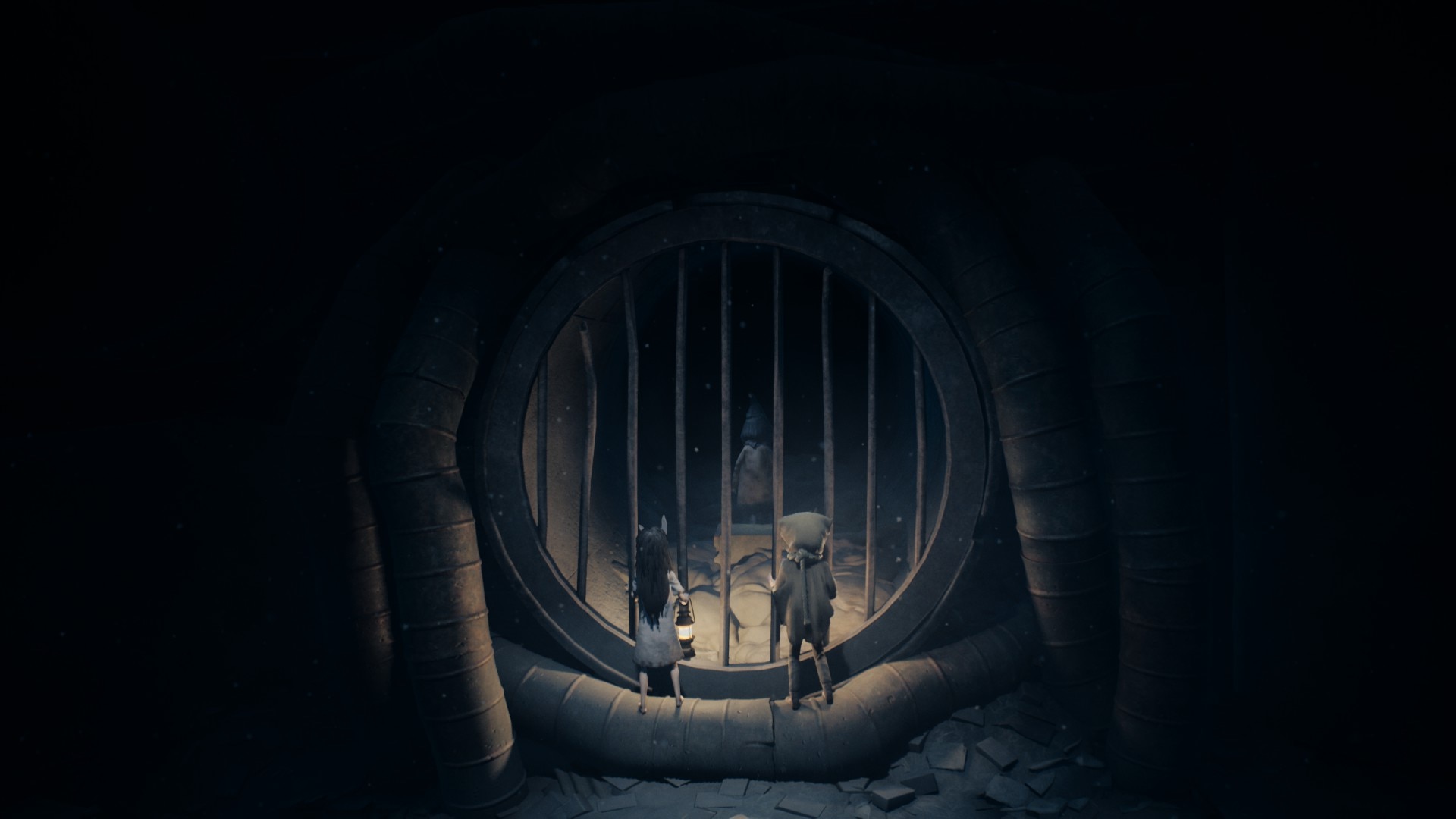
Reanimal’s story centres on two main characters, a brother and sister called Boy and Girl, whose personalities are defined by their masks. The sister is identified by a pale, rabbit mask, while the brother wears a brown burlap sack. Reanimal feels like it was advertised as a cooperative game, but it can easily be played solo. In co-op, each player controls one sibling, while in single-player the brother is player-controlled and the sister is guided by the CPU to assist with solving the game’s cooperative puzzles.
The siblings arrive on boat and are tasked to travel through a mysterious island in search of their missing friends, a place that was once their home is now a decaying and hostile environment filled with danger and war. The world and its horrors are designed to make sure the two characters rely on one another as they navigate its many threats in the hope of reuniting with those buddies.
Just like Little Nightmares, Reanimal’s story gradually unravels as the player progresses through the game’s roughly four-and-a-half-hour adventure, which in my playthrough made it slightly longer than the original Little Nightmares. Reanimal is ambiguous and bizarre in a way that plays to the game’s strengths as many times it surprises. It gets you to think about what you are seeing rather than simply moving from one set piece to the next and not caring about it.
What stands out is how far Reanimal is willing to push beyond the familiar confines of Tarsier Studios’ previous work. The locations and scenarios the game explores are ones I did not expect from the studio’s spiritual successor to Little Nightmares, showing an effort to broaden its scope. The story has once again primarily come across through its visuals, but the characters do speak short lines of dialogue in rare moments. These exchanges never clarify the full picture and instead add to the mystery, as it leads to its unsettling conclusion. The psychological horror remains consistently effective, never fully explaining even as the credits roll, leaving the player to piece together from its bizarre revelations. For players who need every answer, the narrative may feel frustrating. For those who just want to go with the flow of the unexplained horror experience will like trying to piece together what has just happened.
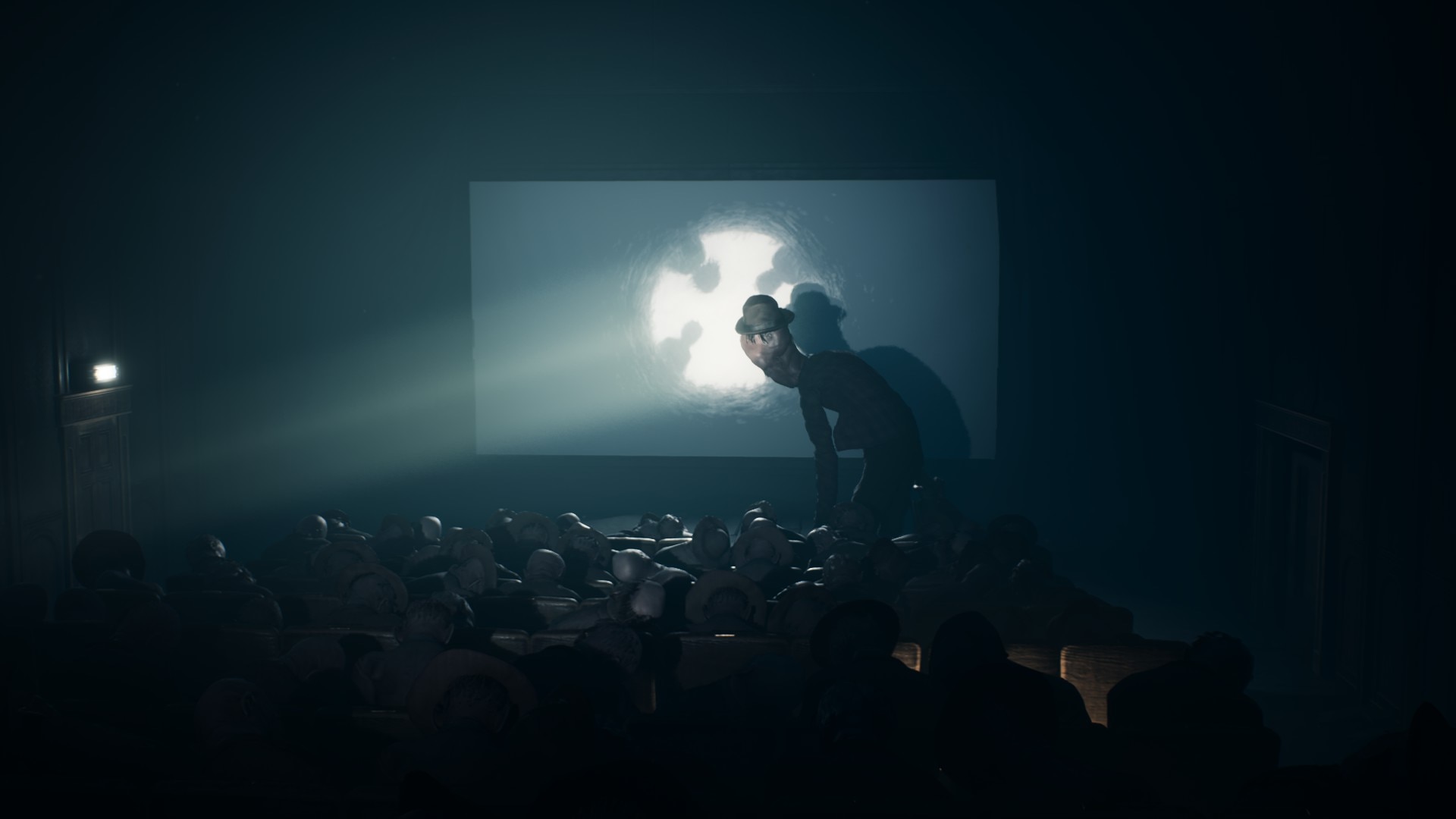
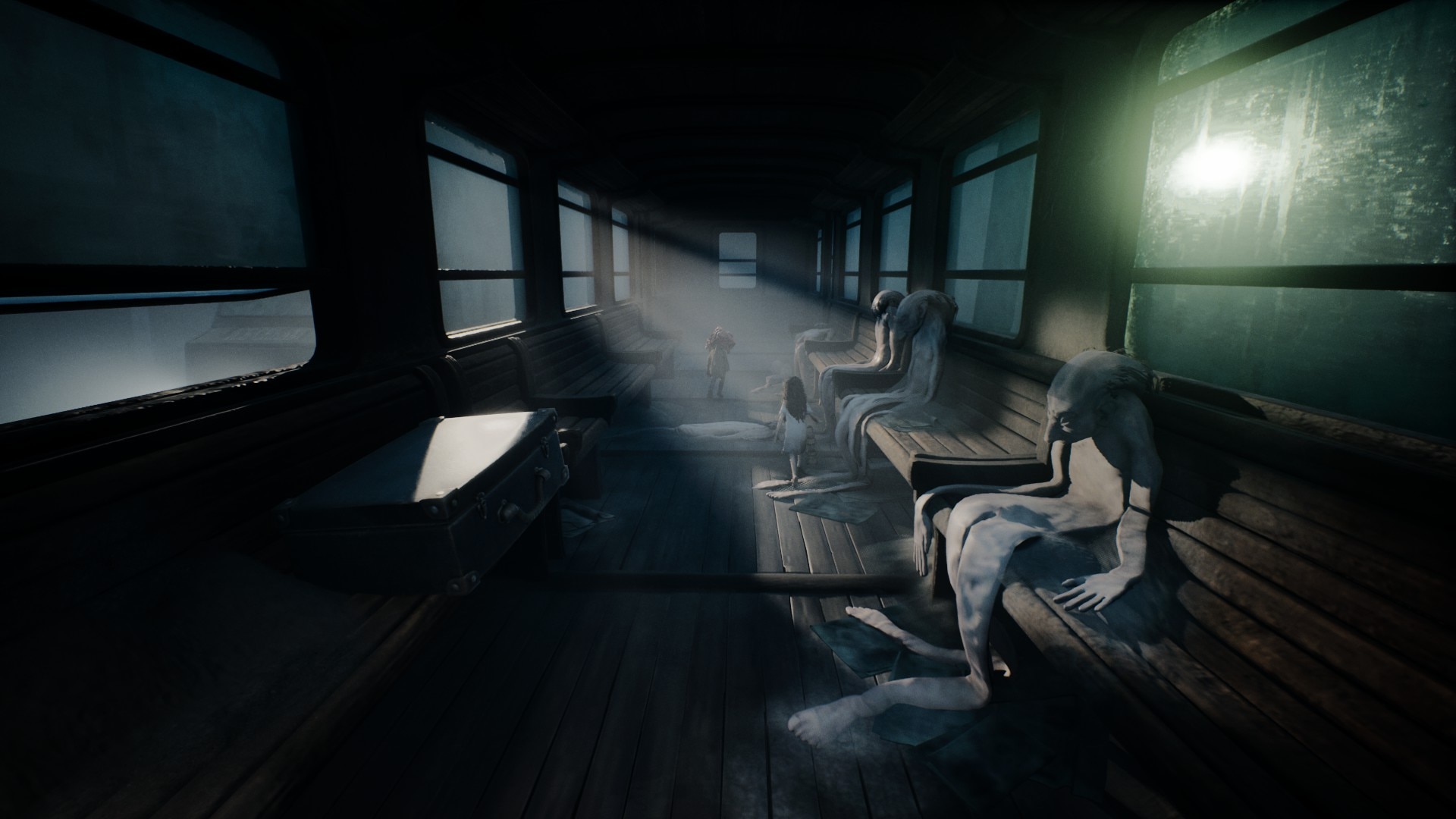
Using the same player character size as in Little Nightmares, Reanimal places the player in an unfamiliar and deeply unsettling world where everything feels far larger and more powerful than you. That imbalance in scale plus the move to a more 3d space, rather than the linear left to right of Little Nightmares, does wonders to apply a presence of anxiety as you move through surroundings that seem actively filled with ghastly foes out to end your life. The game moves between abandoned buildings, warehouses, underground sewers, railyards, forests, towns, and cinemas, and even ventures into deep-sea dives and trench-like environments reminiscent of World War I. Each area is distinct and well-designed showcasing how great the artists are with visual detail that supplies this fantastic presentation.
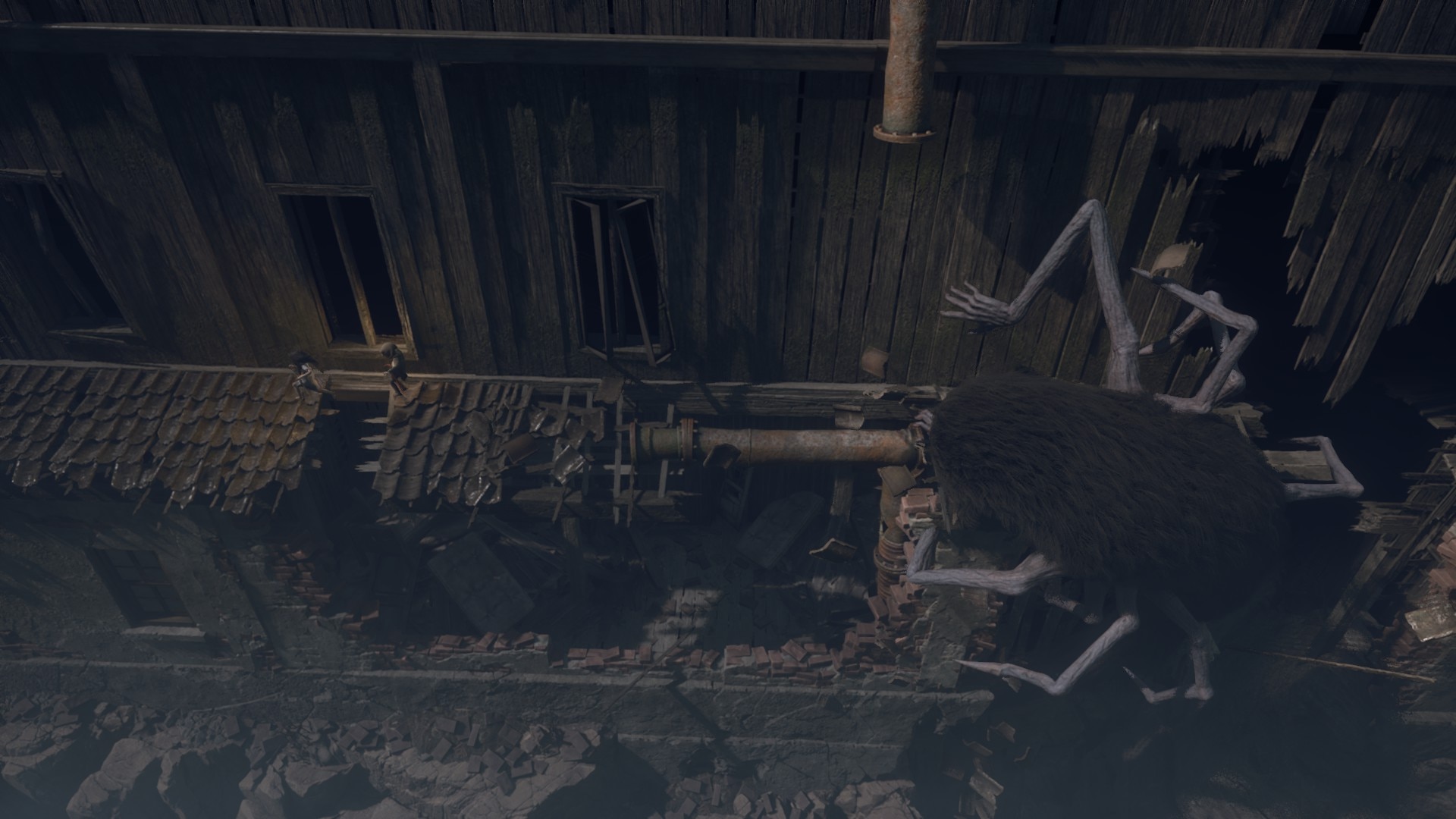
Some of the most striking moments come from how enemies are introduced within these spaces. A fog-dense street becomes a nightmare when an elongated humanoid figure suddenly charges toward the player at speed, its distorted proportions recalling the unsettling view when I was a kid of that alien disguising as a human messing with his face in Men in Black. Elsewhere, the game shifts into something even more troubling, such as what seems like an abandoned school stalked by ash-like children that spawn from a massive, black furred, faceless, six-legged creature. It is in moments like these where Reanimal stands out, using environment and enemy design to put the player into a few uncomfortable moments.
The threats in Reanimal are not limited to encounters on foot, as the game does introduce vehicles that change how players interact with the world. One such example is the boat sequence, which makes up a portion of the mid-game. Here, the siblings must work together to navigate a fog-shrouded lake, with one player steering the vessel while the other shines a light to cut through the darkness and uses harpoons to fend off approaching enemies. The boat is also used to get the players into different themed environments on the island.
Reanimal also introduces limited weapon use, allowing the siblings to wield tools such as a crowbar or a knife depending on which character you are controlling. These are not powerful but are means of survival against smaller enemies or as part of specific boss encounters. One standout moment involves an ice cream van, initially driven cooperatively with one player steering and the other operating the pedals, before hosting a frantic boss fight where the enemy repeatedly thrusts its head through the side panel in an attempt to grab and devour the child and the players must fight back by dodging his arms and smacking him in the head, a funny scenario looking back on it, but at the time makes for a tense scene. These moments where the characters are briefly able to fight back or are within a vehicle help add new additions to gameplay. Reanimal continues to experiment with these ideas in later sections, introducing tools like a rifle and a final vehicle that thematically fits the story and plays a key role in the game’s closing boss encounter. The result is a welcome switch in power roles and makes for entertaining conclusion to the game.
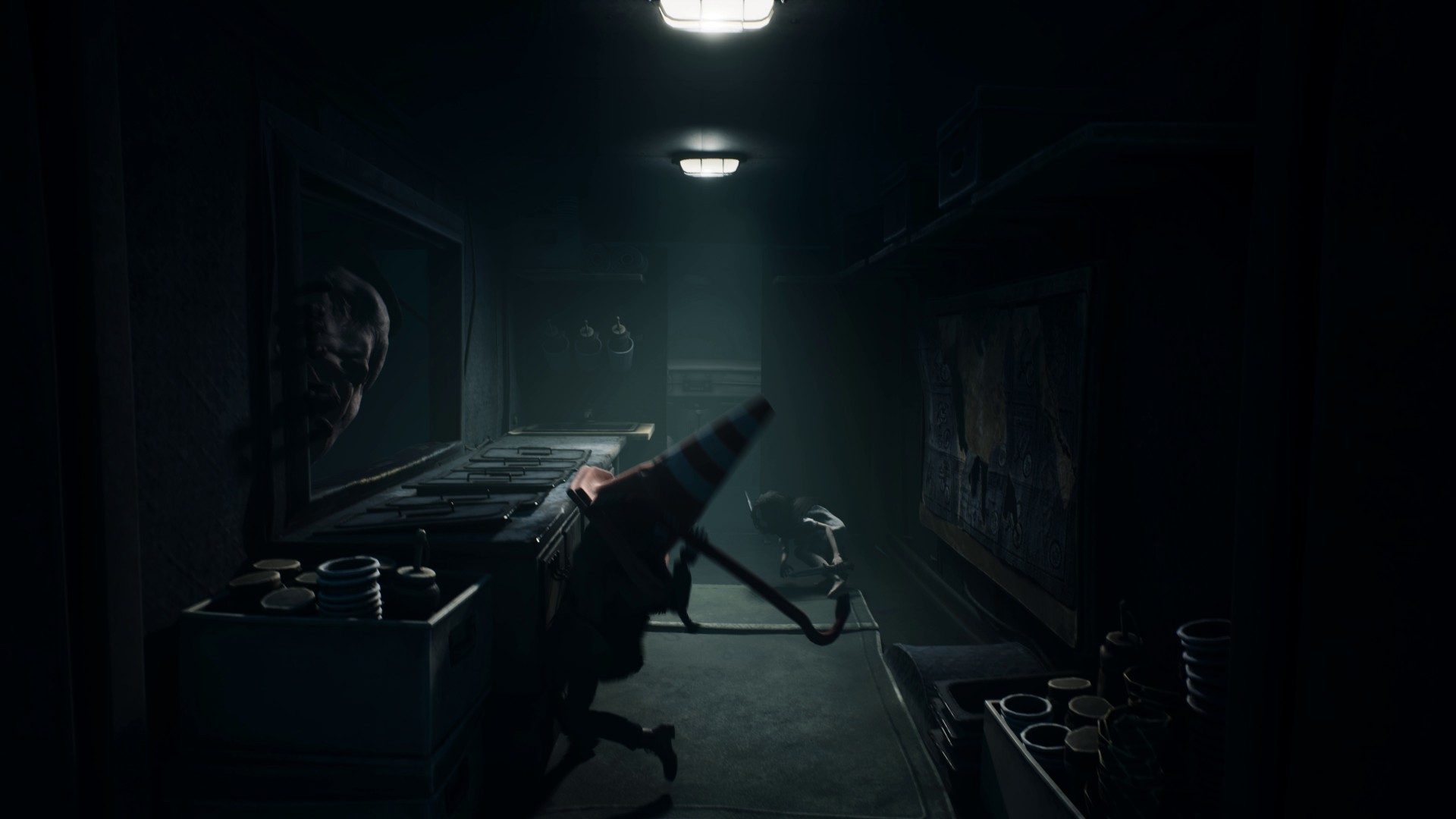
While the horror and atmosphere are well crafted, including familiar stealth elements that require hiding from enemies, the puzzle design is where Reanimal falters slightly. This is not entirely unexpected, as it mirrors an issue also present in Little Nightmares. Puzzles are consistently simple and never present a meaningful obstacle. At no point did a puzzle cause me to feel stuck or stalled. In fact, I spent more time repeating sections due to enemy encounters than the puzzles themselves.
Most of these interactions boil down to basic environmental tasks such as locating an item and placing it in the correct spot. This includes moving carts to create steps, attaching wheels to rail carts so they can function, or using bolt cutters to break chains on doors. While these simple puzzles help keep the pace moving, they rarely ask the player to think beyond the obvious. There are moments where urgency is part of the puzzle, adding tension, but even then, these won’t be testing the players. That simplicity is not entirely a weakness, more an imperfection, as it keeps the focus firmly on atmosphere, the main feature the game does best. Still, better puzzle design would have helped, and I am sure could have been made to incorporate some of the game’s horror themes rather than used to unblock ledges and barricades.
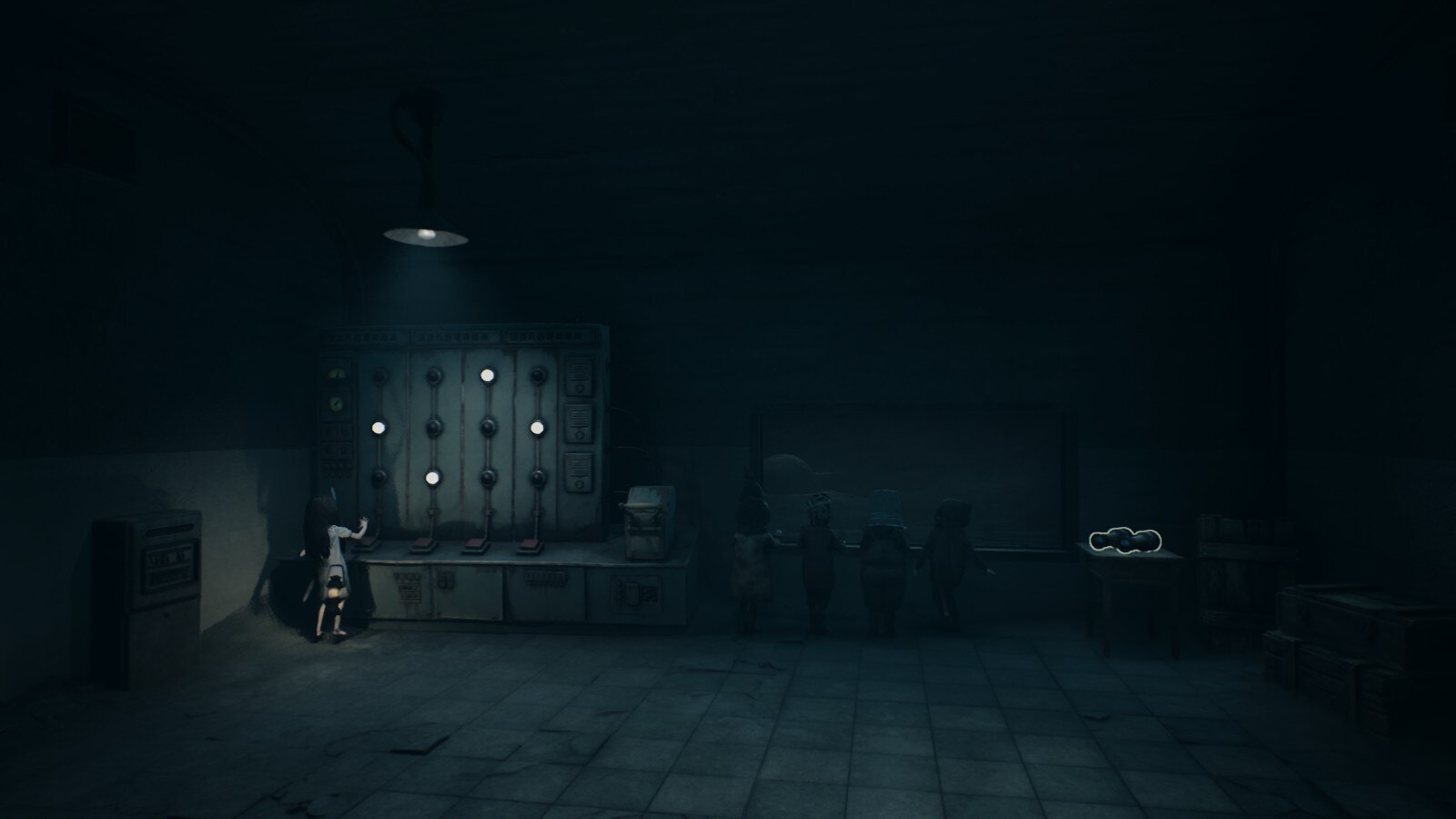
Presentation is one area where Reanimal absolutely excels. Visually, the use of Unreal Engine 5 helps bring its atmospheric world to life, delivering environments that are dripping with detail and dread. The locked camera positioned behind the characters allows the developers to control what the player sees, being a way to showcase the game’s excellent lighting and dark corners. Supporting these visuals is a mostly ambient score that knows when to stay restrained and when to kick into gear when danger lurks by.
The controls are one area where Reanimal falls into familiarity with Little Nightmares. At times they can feel finicky, particularly when character movement collides with the environment, occasionally causing the models to snag and interrupt movement. These moments are not constant, but they are noticeable enough to break immersion. Weapon handling is completely auto aiming, which can make it snap to the wrong target at times. Movement overall carries a sluggish, weighty feel, which I guess is the developers trying to say that small children in messed up places are not agile, but this becomes a hindrance in sections that demand quick reactions, especially during chase sequences that move toward the camera, where this can lead to awkward deaths.

The use of Unreal Engine 5 can bring performance concerns, so I was curious to see how Reanimal would run. On PC with an AMD Ryzen 7 7800X3D and an Nvidia RTX 5090, I had no issues running the game at 4K on Ultra settings with DLAA, often hitting around 100 fps. Performance was smooth and stable after the initial shader cache on game load, with no noticeable stutters or frame drops. I did experience two crashes related to an Unreal Engine error, but this was during a pre-release build and will likely be addressed in a patch before launch. For other hardware, DLSS support helps improve performance on mid-range cards like the RTX 3050, allowing solid framerates even at higher settings. Lower-end GPUs, such as the GTX 1650, may struggle to reach 60 fps on 1080p even at low settings, though a 30fps lock can help maintain consistent performance on these weaker cards. Overall, the game performance for modern Unreal Engine games seems like a decent implementation here.
As the credits rolled after my four hour and 30-minute journey, I found myself a little lost trying to decipher exactly what had happened, but the experience getting there was the compelling next step of the gameplay seen in the previous Little Nightmares titles. Even if the puzzles remain simple and the controls occasionally stumble, these minor flaws hardly detract from the overall package, which includes striking visuals, tense encounters, and richly varied environments. Reanimal delivers a grim, beautiful, and unsettling time. Whether played solo or in co-op, this game proves Tarsier Studios are able to keep delivering little nightmares time and time again.