OPUS: Prism Peak PC Review
I’ll be clear with this review: OPUS: Prism Peak is my first foray into SIGONO’s story-based series. Despite these games frequently popping up on my Steam feed, and despite my enjoyment of visual novel/adventure games, I’ve somehow let the previous titles pass me by. Having been given the chance to cover this fourth entry for review, I’m pondering why I didn’t jump on the games sooner. Anyway, for those in the same boat, OPUS: Prism Peak is a great place to start since this is a standalone experience. while I can’t confirm 100% if there are any links or easter eggs to the other games, the emotional journey through the Dusklands requires absolutely no prior engagement with the series.
We are first introduced to the main character, Eugene, as a young boy learning photography from his grandad, a core mechanic that the game is built upon. We then jump to the current day, where Eugene is now 40 years old. He reflects on his life, telling us his highs and lows in which we can gather how he is feeling about his current mood. Eugene was a talented photographer who found joy in capturing meaningful moments in his life. However, this life gradually began falling apart. His career collapsed, and his marriage, though once happy, ultimately failed. He became emotionally withdrawn and stuck in a cycle of regret. He even attempted to open a café, which failed, leaving him struggling for cash.
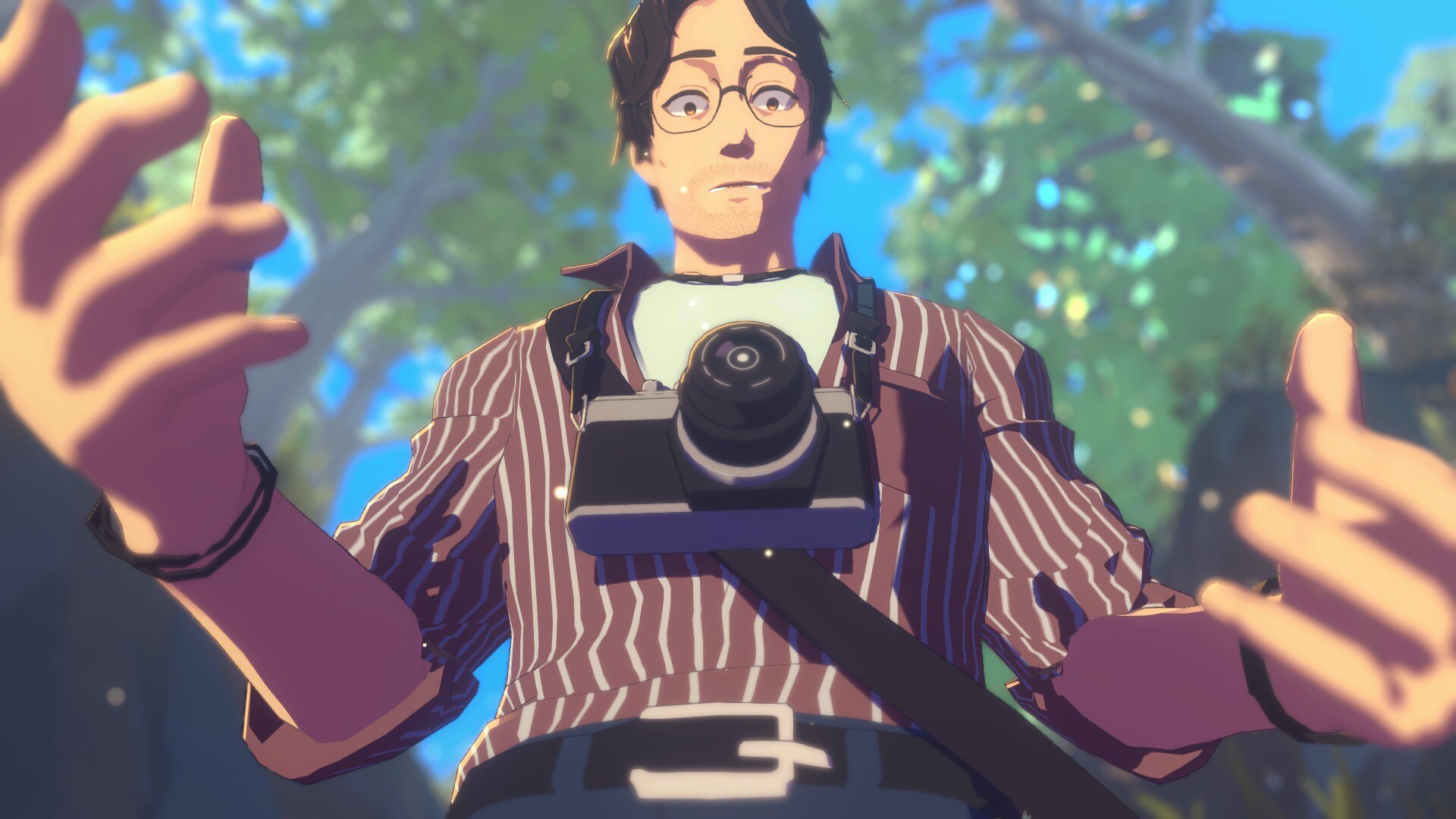
Now on his way to his grandfather’s funeral, Eugene reflects on how far he has fallen. He recalls how he was forced to sell the camera his grandad gave him, something he once deeply treasured, just to afford rent. During the drive, he becomes distracted and is involved in a crash. He later wakes up in a foggy, surreal version of the tunnel, filled with strange carvings and an eerie sense of something feeling off.
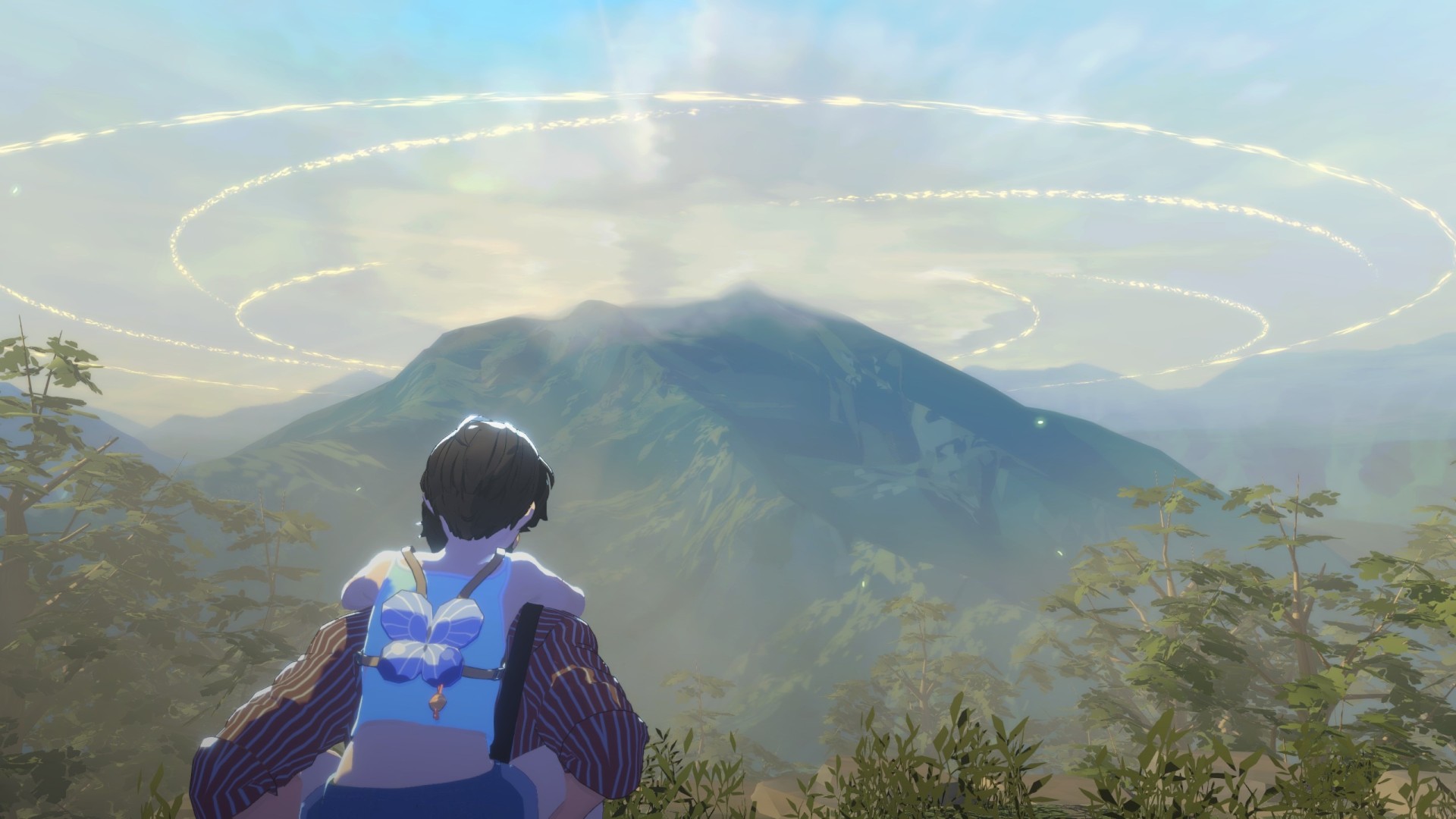
This world, known as the Dusklands, is where the game takes place. It is not long before Eugene encounters a young girl with no memory of who she is, only that she has a strong desire to reach a distant mountain peak. Eugene names her Ren, and the two set out on a journey together, remaining side by side for the rest of the game as they search for answers and uncover the mysteries that inhabit this strange land. Along the way, Eugene comes across the same camera his grandad had given him, the one he had previously sold. Its return just magically lying in front of him, as if waiting for him. The camera becomes central not only to the gameplay, but also to the themes and story the game is trying to convey.
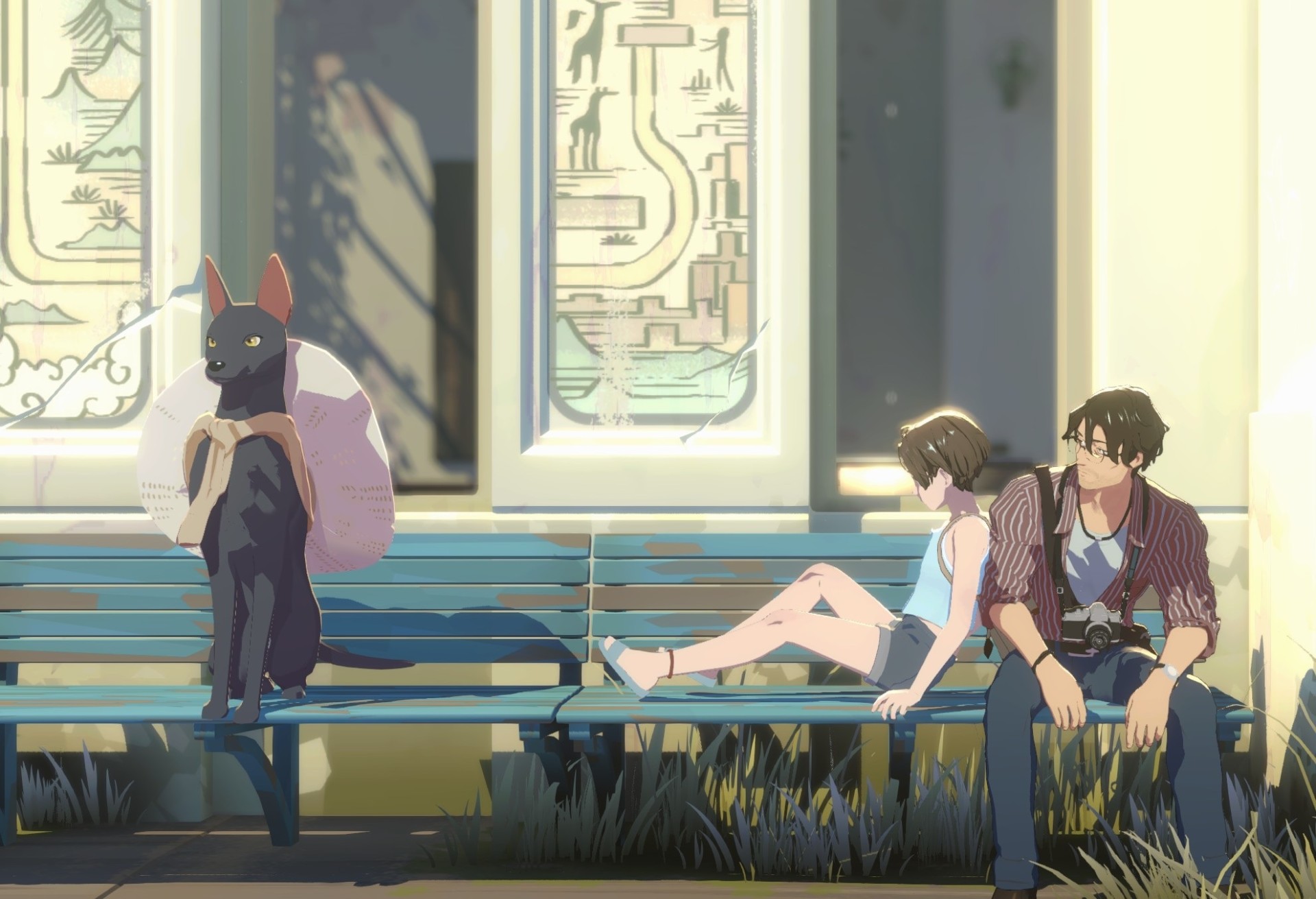
OPUS: Prism Peak touches beautifully upon themes of survival, love, loss, and self-discovery. We follow Eugene on a journey through the Dusklands alongside the girl Ren. By meeting and helping the realm’s animal inhabitants, Eugene is forced to look inward, confronting his failures through his camera lens. Without spoiling the narrative, a massive part of the experience is watching Eugene gradually piece together his past and understand exactly how he got to where he is. This storytelling is seamlessly delivered through the central photography mechanics and the game’s extra investigative elements. What I appreciate most is how respectfully Eugene’s character is handled. The game is never preachy about it. It allows you to naturally uncover the emotional weight of the story at your own pace across this 7+ hour adventure.
As a game, OPUS: Prism Peak is a 3D narrative adventure played primarily from a third-person perspective. It shifts into first-person during flashbacks and when using Eugene’s camera. Players control Eugene as he explores the mysterious Dusklands, interacting with its talking animal inhabitants, examining points of interest, and taking photographs. These photos serve as both a core gameplay mechanic and a narrative tool, feeding into puzzle-solving and story progression.
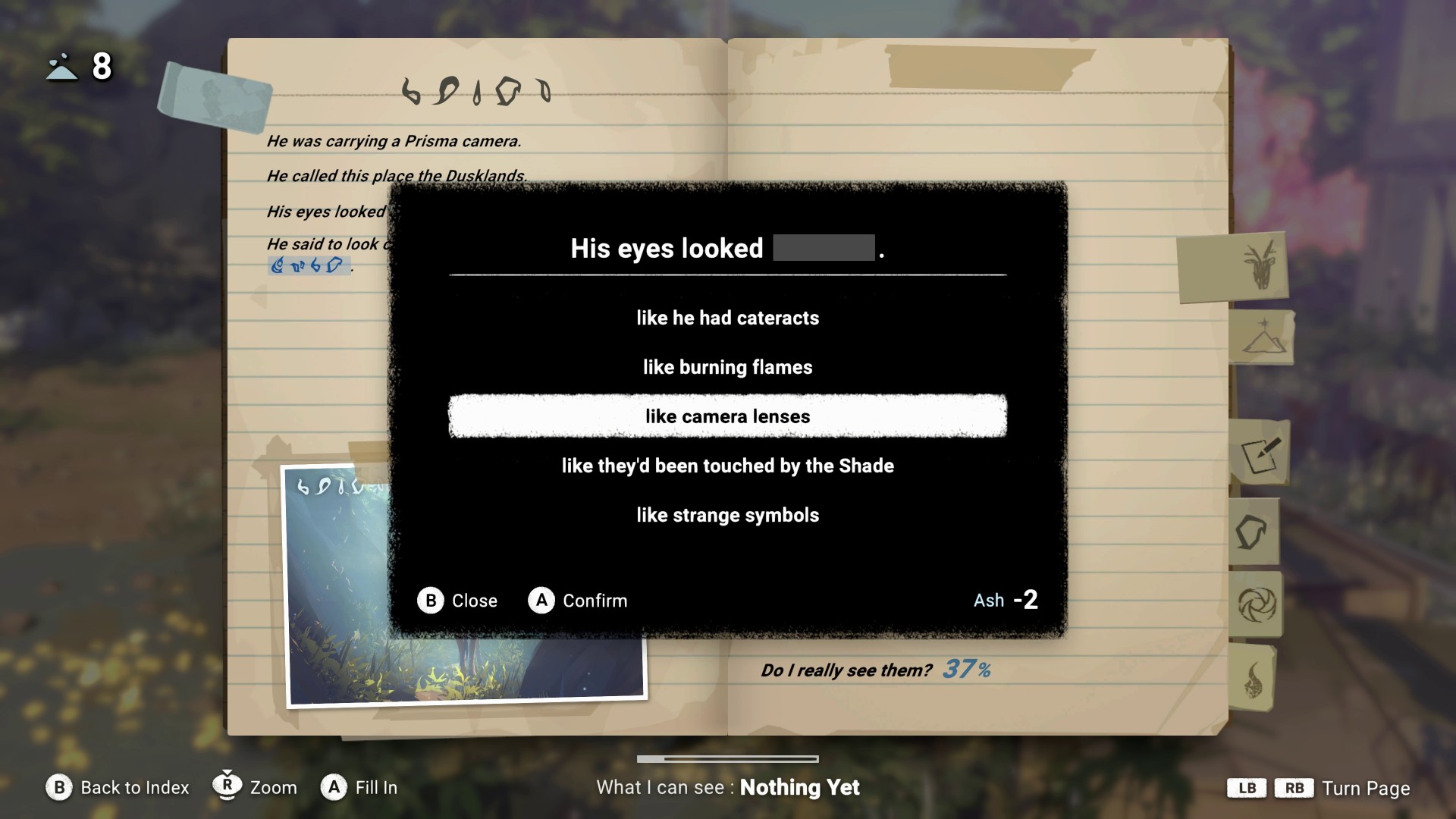
Much of the mystery unravels through Eugene’s Field Notes journal, where he records discoveries, sticks in photos, deciphers Dusklands’ language with symbols, and connects the dots about the world and its people. Its emotional, character-driven storytelling feels reminiscent of Life is Strange, while the anime visuals give the narrative even more emotional weight and charm like a good animated Japanese film.
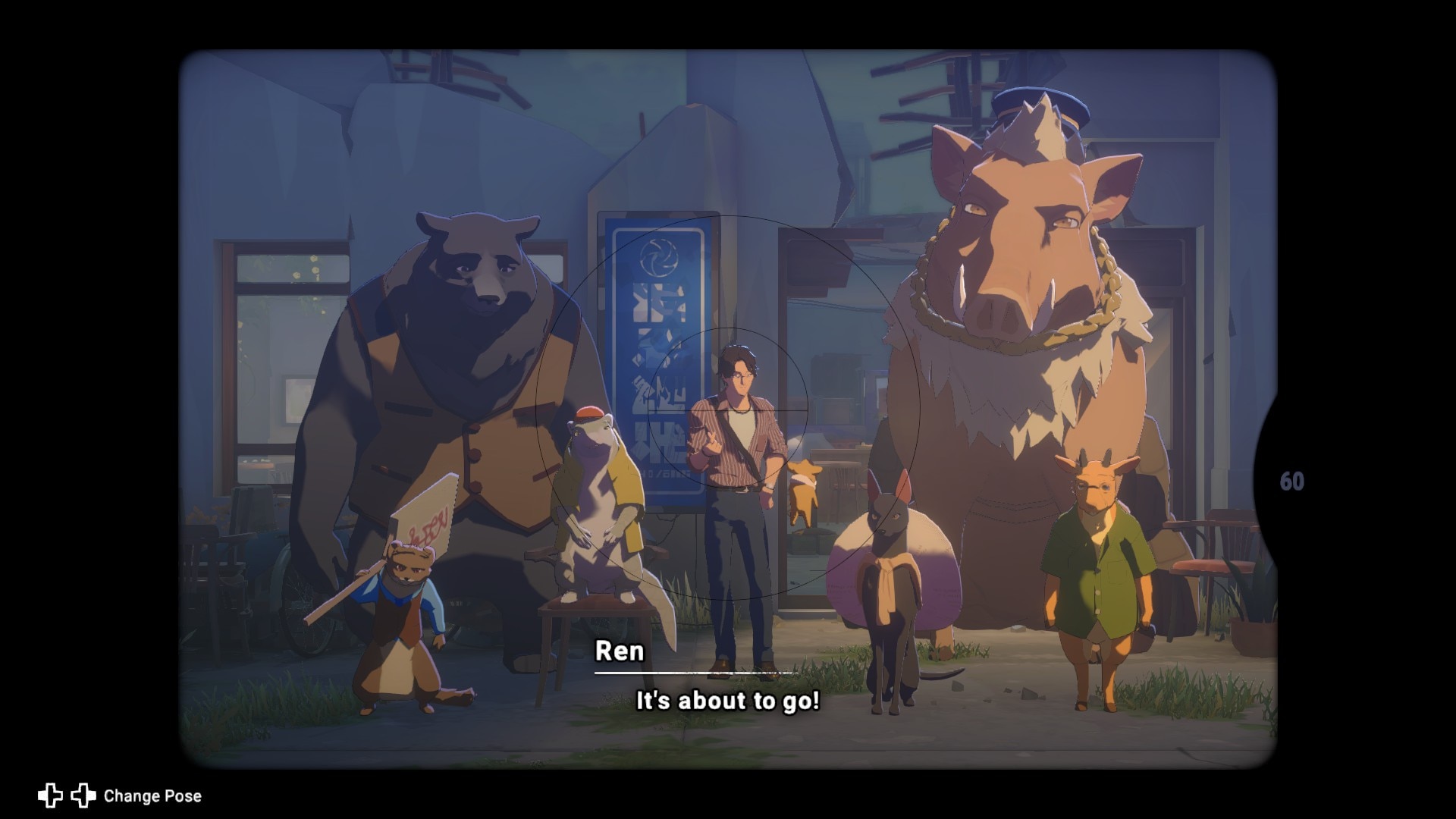
The camera serves as your main tool to capture the world, which then gain descriptions and feed into your notebook. Sometimes it’s a beautiful landmark, other times it’s something as simple as a poster on the wall. If it’s important, photographing it will add useful text after it reveals the picture. If it doesn’t get anything, it’s probably not worth keeping around in the limited storage, which can be upgraded by offering Embershine Seeds in exchange for camera goodies. For example, taking pictures of strange symbols on decoder stones lets you match them to letters of the alphabet, slowly translating what initially looks like gibberish.
Eugene is often called the new Seer, a figure spoken highly by the animal spirits that inhabit the Dusklands. This is largely because his camera mirrors the Seer’s ability to perceive and preserve what others cannot naturally see. The spirits call it the Seer’s eye, the tool the previous Seer used to help spirits remember their names and identities. The spirits that Eugune meets are slowly fading as they lose their memories and sense of self, and the camera plays a role in helping them hold onto what remains. With the Seer gone, Eugene ends up taking on that responsibility, aiding these spirits and helping them feel whole again.
Scattered throughout the world are Firebowls, which serve as both mandatory puzzle blockers to the story and optional challenges. Solving them often involves interpreting clues about what kind of photograph is needed through the cryptic text. Completing these puzzles can unlock new content, while the required ones push the story forward. While the camera initially feels simple, just point, auto focus, capture, as you progress, more functions unlock: new lenses that reveal hidden details (like faded murals), different viewpoints, cleaning kits, extra film storage, and shutter speed control for exposure in bright or dark environments. The shutter speed is probably the most advanced element, but the game gives clear feedback when a photo is too dark or too bright, making it forgiving and never confusing to know what the game is asking of the player. It’s just a little frustrating that you have to bring the camera up, then press a button and slowly notch the dial between its various settings.
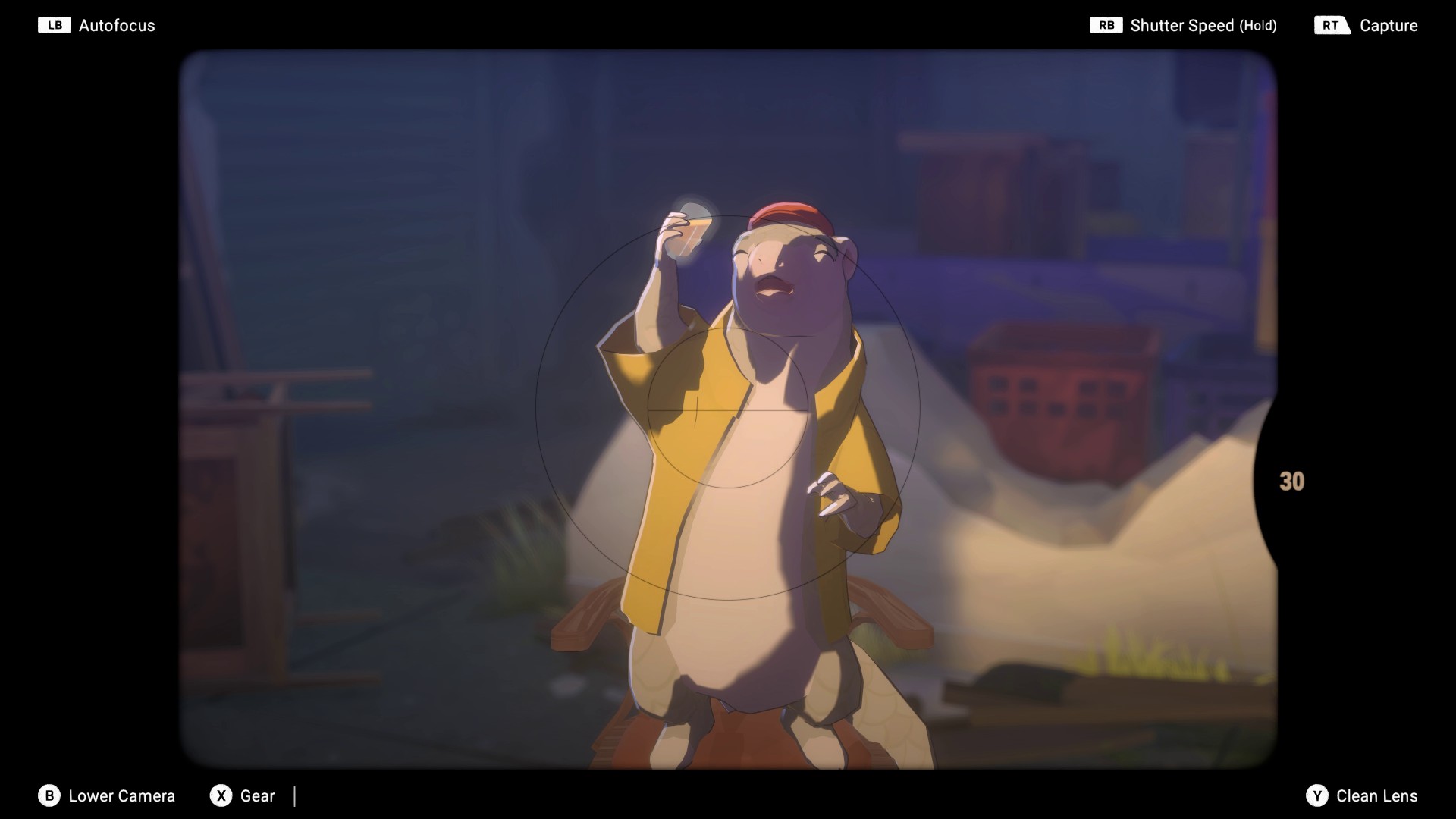
What I really liked about the investigative camera mechanic is how it encourages players to solve things through observation and deduction rather than handholding. You genuinely feel like you are uncovering the world’s story yourself. Progression is tied to a bond threshold based on how much of the notebook you uncover. This directly affects the game’s endings: lower completion leads to “Bad” ending, while higher levels of completion gradually unlock more complete and emotionally fulfilling resolutions. Reaching 100% unlocks the True Ending. A lot of these deductions are based on the animal spirits, trying to figure out who they represent and how they are part of Eugene’s life.
I strongly recommend playing in the default mode first. It keeps the experience immersive and rewarding as you play detective. If you feel like you’re missing things on a second playthrough, Comfort Mode is available. It shows hints and blurry previews of important photos, acting as a fantastic anti-FOMO (fear of missing out) feature to help you reach 100% completion. This mode wasn’t in the game at launch but was added in a patch shortly after release in late April, and I think it’s an excellent addition.
Most of the game unfolds at a peaceful pace, giving players ample time to explore each area and move on only when they feel ready. However, occasionally there are moments of danger, as Eugene is pursued by the Shade, a supernatural entity that seeks to devour both him and the fading animal spirits he encounters. These sequences are on-rails, requiring the player to aim the camera at the Shade’s weak points to fend it off. After sustaining enough hits, the entity dissipates, allowing Eugene to continue his journey until the next scripted encounter. Failure carries little penalty. Rather than a traditional game over, a short cutscene plays in which an animal spirit encourages Eugene to keep going, and the player is placed back just before the Shade encounter to try again.
Visually, OPUS: Prism Peak makes a strong impression from the outset. Its anime-inspired presentation is clean and vibrant, with colours that feel deliberately pushed to give each scene a vivid, almost fantasy look. The cutscenes stand out, featuring beautifully animated sequences that are rich in colour. That said, I wasn’t a fan of the soft glow around characters. A subtle rim of light traces their edge creating a faint halo that separates them from the environment. While this stylistic choice reinforces the game’s tone, it can occasionally feel a touch overdone. That aside, the overall presentation is consistently impressive. The art style remains consistent between gameplay and cutscenes, ensuring smooth transitions that never feel visually disjointed. The audio and voice acting also deserve praise. The soundtrack is subtle yet emotionally tied to the scenes on screen. The voice work further strengthens those emotional scenes, helping the player feel more connected to what is happening, whether it be joy, sadness, or light-hearted amusement.
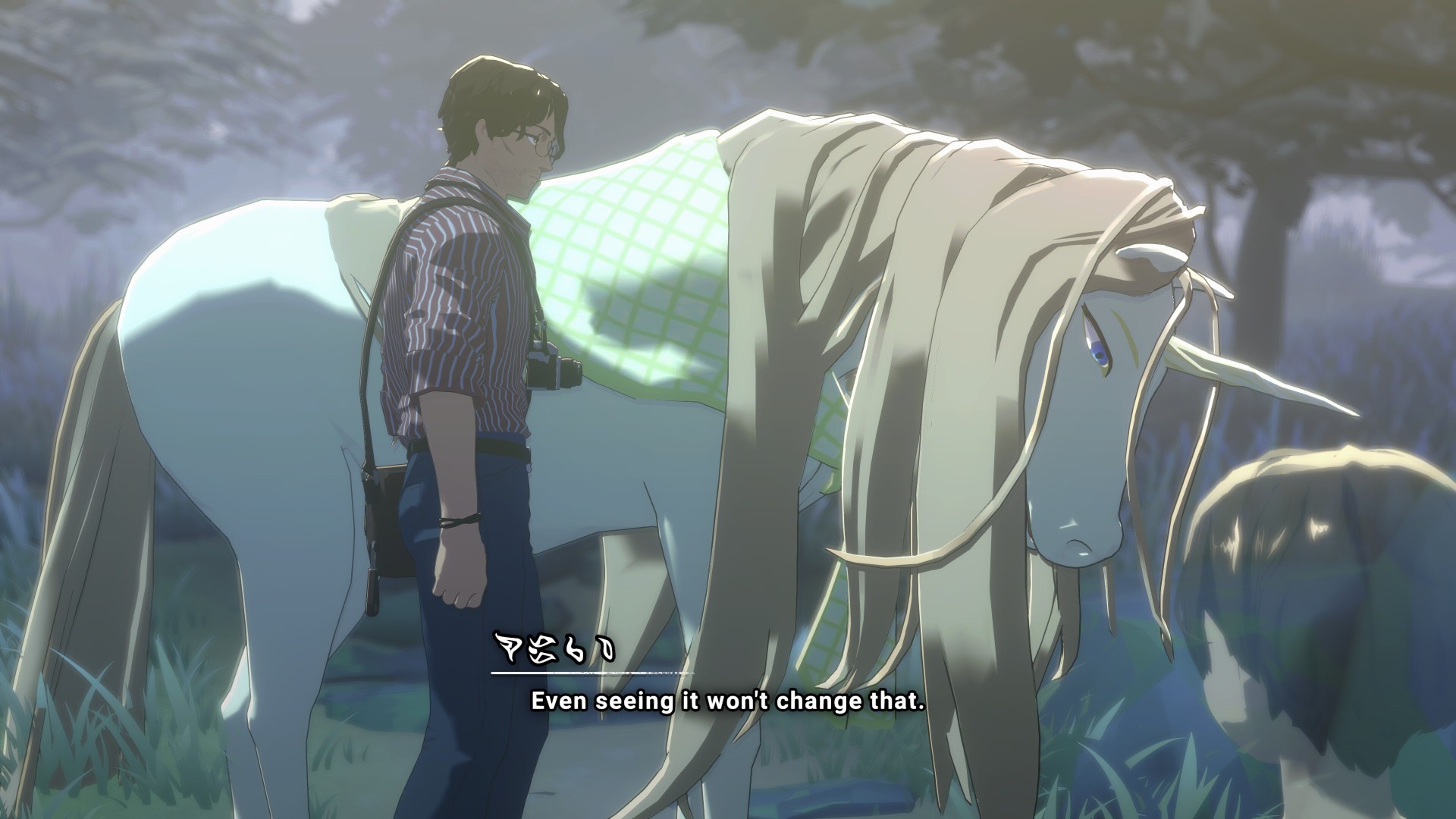
OPUS: Prism Peak is an atmospheric narrative adventure that blends photography-driven gameplay with a heavy story-based adventure. Eugene’s time in the Dusklands invokes themes of loss, self-discovery and reconciliation. Its mechanics feel rewarding, encouraging players to piece together the story through observation and deductive skills. While its pacing is deliberately slow, its beautiful presentation, wonderful soundtrack, and solid voice performances create an engrossing experience. OPUS: Prism Peak is a thoughtful, emotionally driven adventure for people who want to take the time to invest in its themes.