FBC: Firebreak PC Review
When I heard that Remedy Entertainment was releasing FBC: Firebreak, a three-player cooperative first-person shooter set in the world of Control, I was thrilled. I love cooperative PvE (Player versus Environment) games, having sunk countless hours into titles like Left 4 Dead 2, Zombie Army 4, World War Z, Warhammer 40,000: Darktide, and Vermintide 2. Additionally, the world of Control is captivating. The Federal Bureau of Control’s paranormally infested headquarters, the Oldest House, provided unforgettable set pieces and a fascinating narrative. The concept of strange, Altered Items infused with supernatural energy, behaving in bizarre and often dangerous ways (killer fridge, anyone?), is full of potential. Naturally, I was eager to dive back into this universe and see what Remedy had cooked up for this spin-off that was based on a gameplay formula and setting I am a fan of.
One of Remedy’s strongest qualities is their ability to craft compelling narratives, a hallmark seen across their titles like Alan Wake 2, Control, and Quantum Break, the latter even featured TV-style episodes between acts to expand the story. FBC: Firebreak takes a very different approach. Here, the narrative is not the central focus and is instead delivered in small fragments, such as loading screen text and brief character dialogue. It’s a far cry from the filmic storytelling the studio is known for. While the game is set within the Control universe, there is little here that meaningfully expands upon the lore that first captivated us in 2019’s Control. This will most likely disappoint fans expecting deeper storytelling. While this lighter approach suits the genre, it feels like a missed opportunity to enrich the Remedy Connected Universe within a PvE style game to make it standout more.
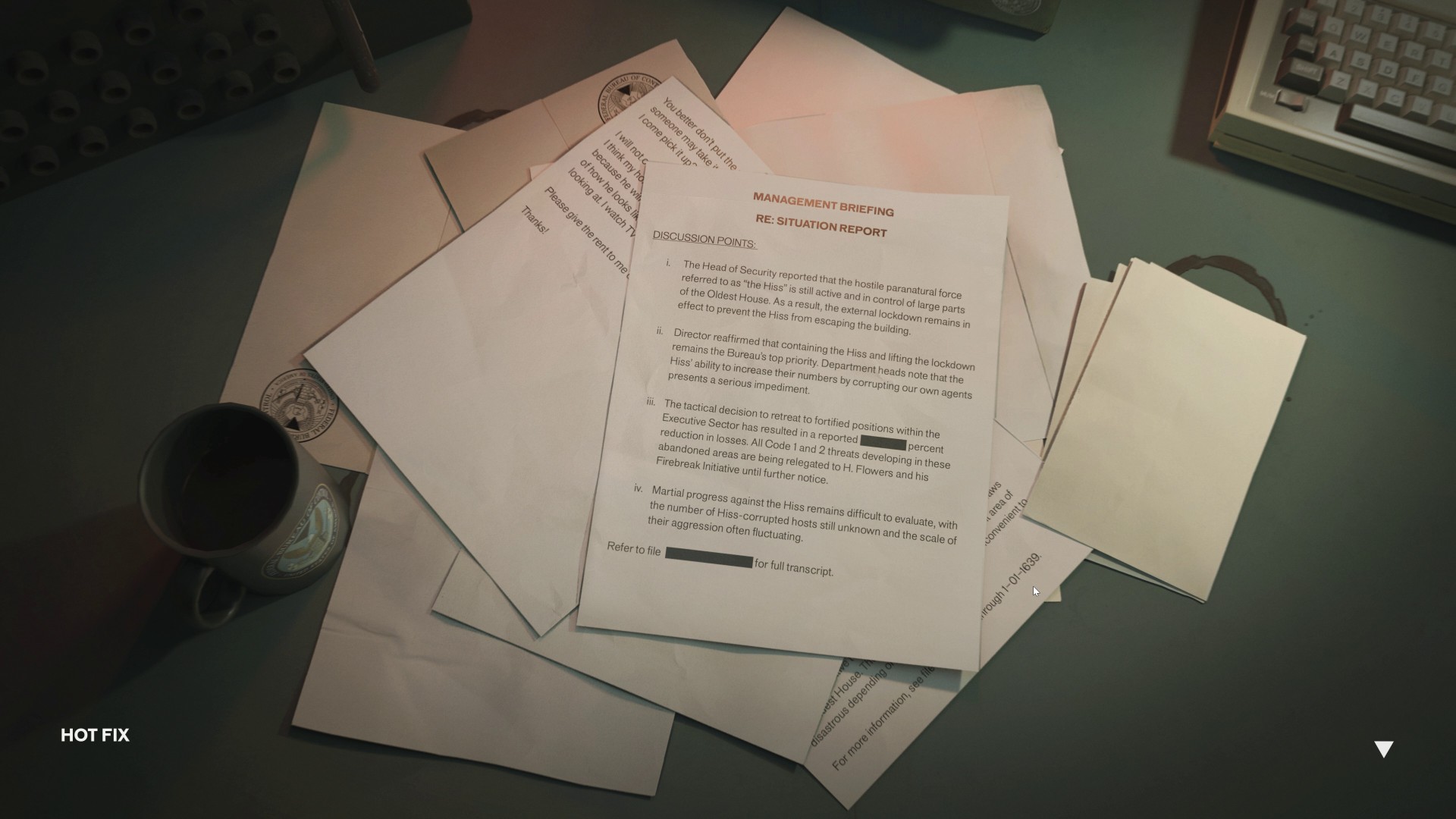
The premise here is that the player is part of a team of newly hired Firebreakers; up to three players at once are sent down an elevator to a section of the Oldest House to solve and calm the current problem that could spiral out of control. These are known as jobs, which are in essence the game’s levels. There are five jobs to pick from at launch, which is one of FBC: Firebreak’s major problems: the lack of content for players to participate in.
Before I continue, I wanted to slot in this quick note because something amusing happened while I was writing this review. Just a day before I was about to publish it, Remedy released patch v1.2 for FBC: Firebreak. This patch addressed some of the issues I had with the game, which left me with a decision: should I rewrite everything or find a way to include both perspectives?
I’ve decided to keep my original comments intact so you can see what I initially had concerns about, followed by updated notes explaining what the patch fixed and how those changes affected the experience. I think this approach makes sense, as it gives you a look at how the game launched and where it stands now. The encouraging part is that it seems the developers are listening and moving quickly to improve FBC: Firebreak. That said, a few issues remain, which I’ll get into shortly.
What happened at launch was that in FBC: Firebreak, the jobs were initially restricted, with each job divided into three sections. At first, I assumed these stages would resemble the multi-part episodes in games like Left 4 Dead 2 or Zombie Army 4, expecting 15 total stages across five jobs. However, this isn’t the case. Players must complete a job’s first Level 1 to unlock Level 2, and then beat Level 2 to access Level 3, which offers the full scope of that job. Unlocking each level essentially opens previously sealed doors, granting access to new sections within the same environment.
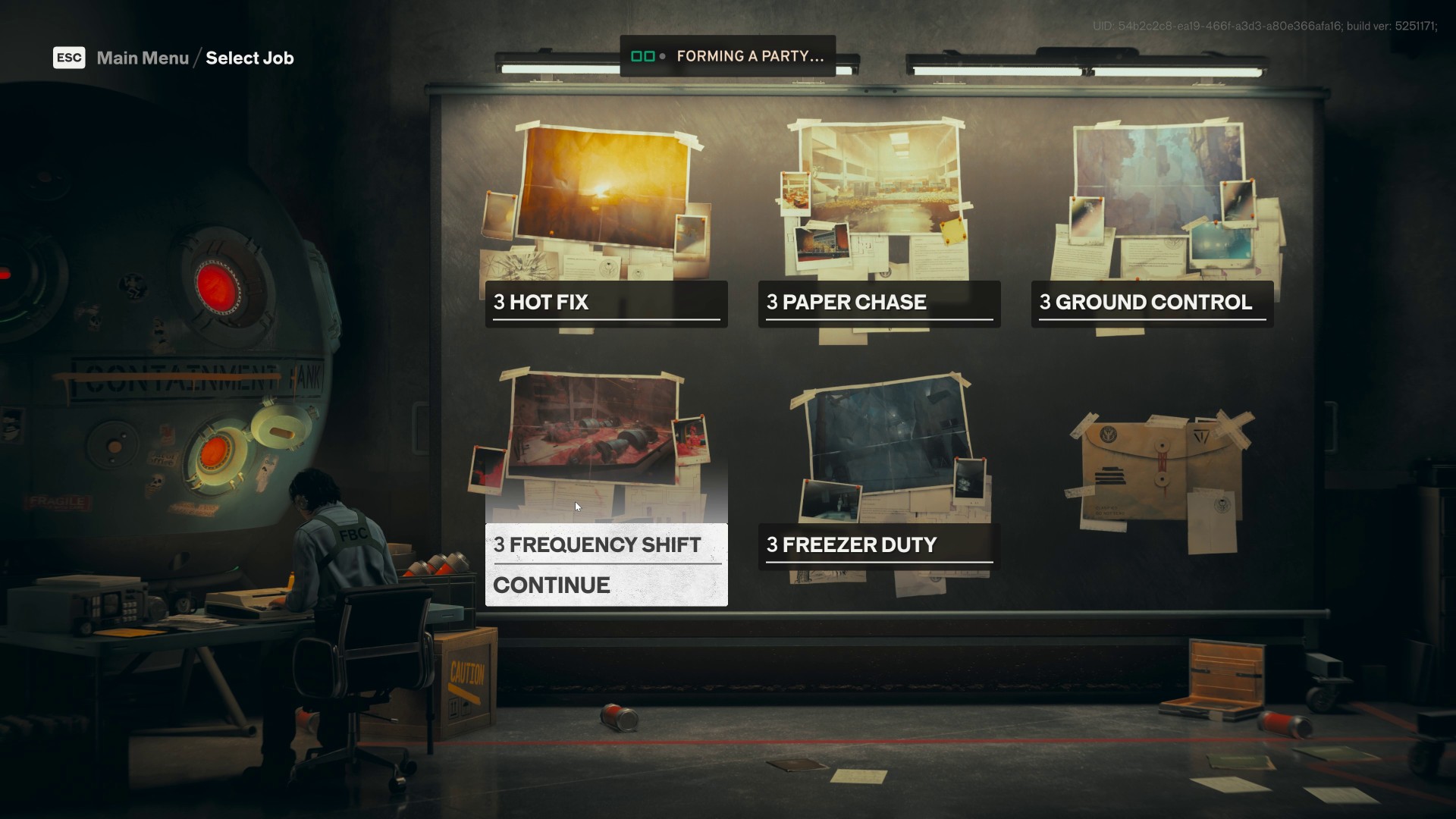
However, with mentioned patch v1.2, Remedy has changed this process significantly. New players now begin at Level 3 for the first job, Hot Fix, removing the need to grind through Level 1 and Level 2 just to experience the full mission layout. While the option to play at the lower levels still exists for those who want it, it’s no longer mandatory. To unlock the next job, players now only need to complete the run at Level 3. This not only speeds up access to the game’s core content but also improves the feeling and flow of missions for new players coming to the game.
Level 1 jobs are quite short, often taking 10 minutes or less to finish. Presumably, this structure is intended to gradually introduce players to FBC: Firebreak’s mechanics and gameplay. However, this feels unnecessary, since Level 1 and 2 contain the same objectives, just set in slightly different sections of the same area. I felt all of it should have just been unlocked from the start, since the difficulty for each of these is controlled by the four on offer, easy, normal, hard, extreme. And looks like this is what the developers felt as patch v1.2 has altered this to how it should have been.
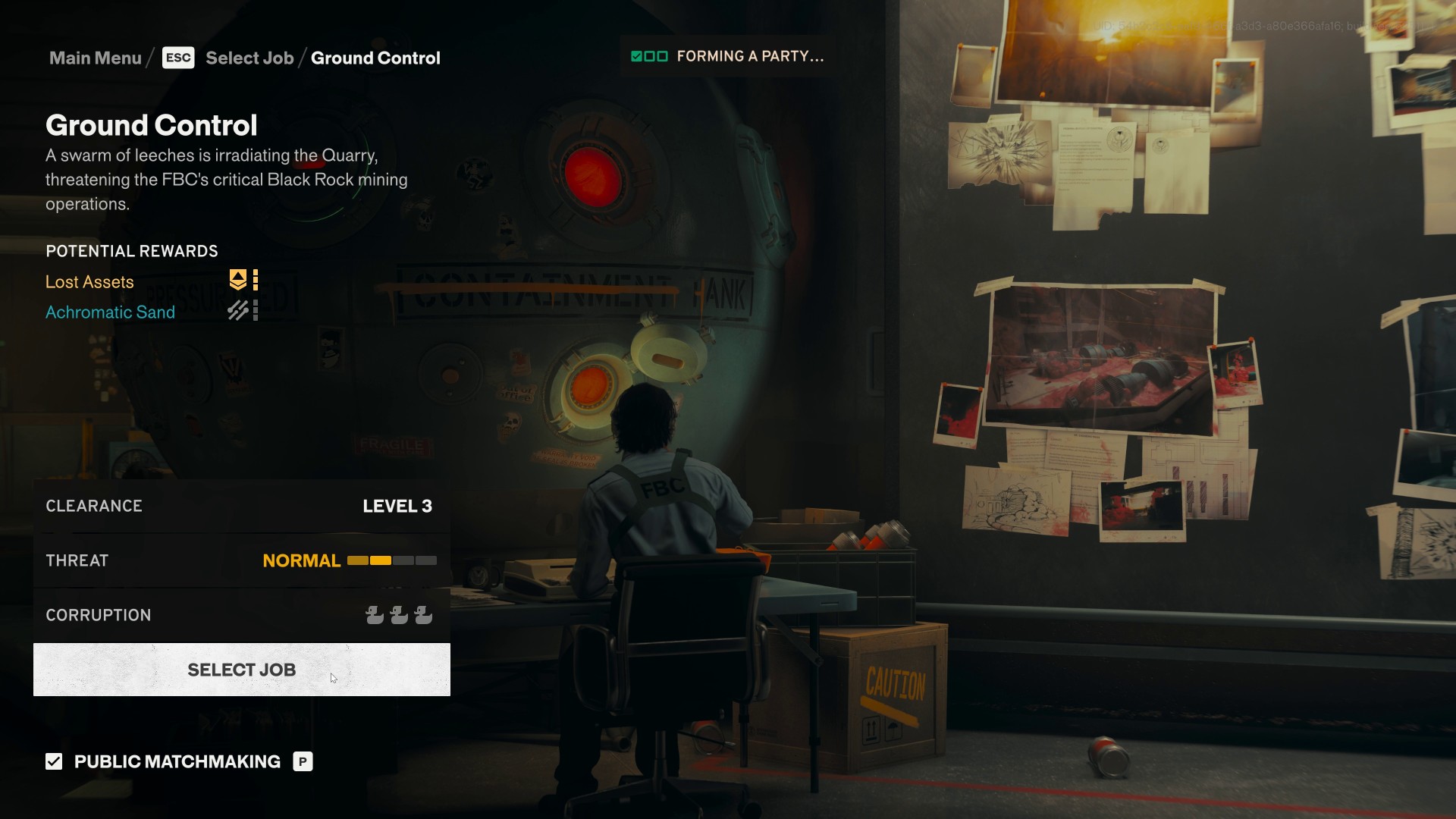
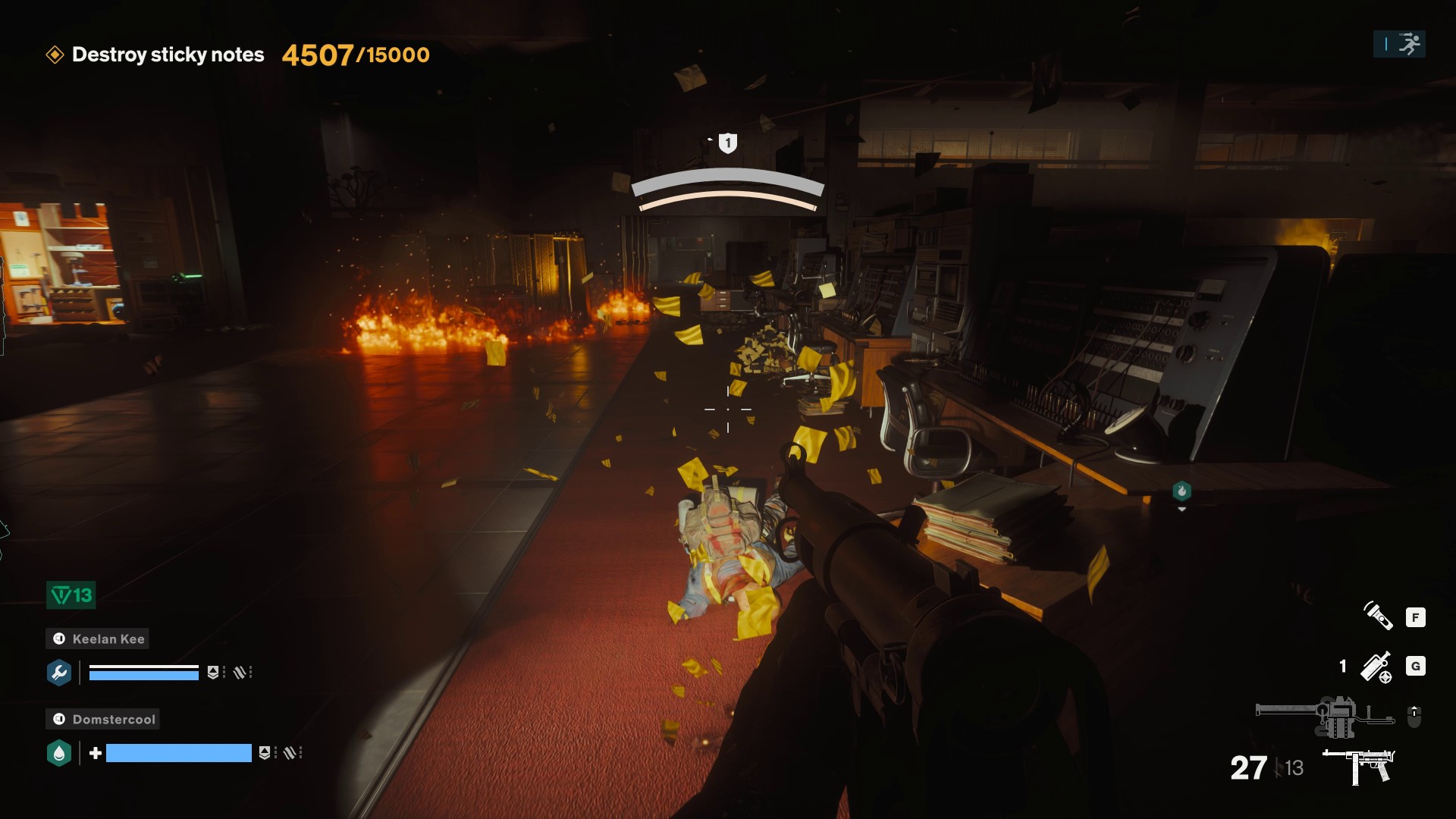
In theory, there are ten unique objectives, since the first two levels of each job repeat the same tasks with increased quotas. Take Hot Fix, for example: early on, players are tasked with repairing fans within the sector. Advancing to level 2 simply means doing more of the same in a slightly expanded area. It’s not until level 3 that the objective meaningfully shifts. Here, Firebreakers must now fill barrels with Black Rock and feed them into the furnace, all while dodging its explosive, raging fire flares. This process repeats until the flames are subdued and the furnace can be sealed. Once the objective is complete, players must backtrack all the way to the job’s starting point to reach the elevator. These final stretches are often the most intense, with waves of enemies spawning in to try and stop your escape.
Each job in FBC: Firebreak follows a fixed, scripted sequence of objectives that always occur in the same order and zones at every Level. This feels like an area that could have been much stronger with relatively simple design changes. Repeating the same objectives across levels 1 and 2 comes off as a padded way to extend job length without adding variety. Even when playing level 3, which adds the more needed change in objective, you’ll run through the exact same sequence every time, regardless of difficulty.
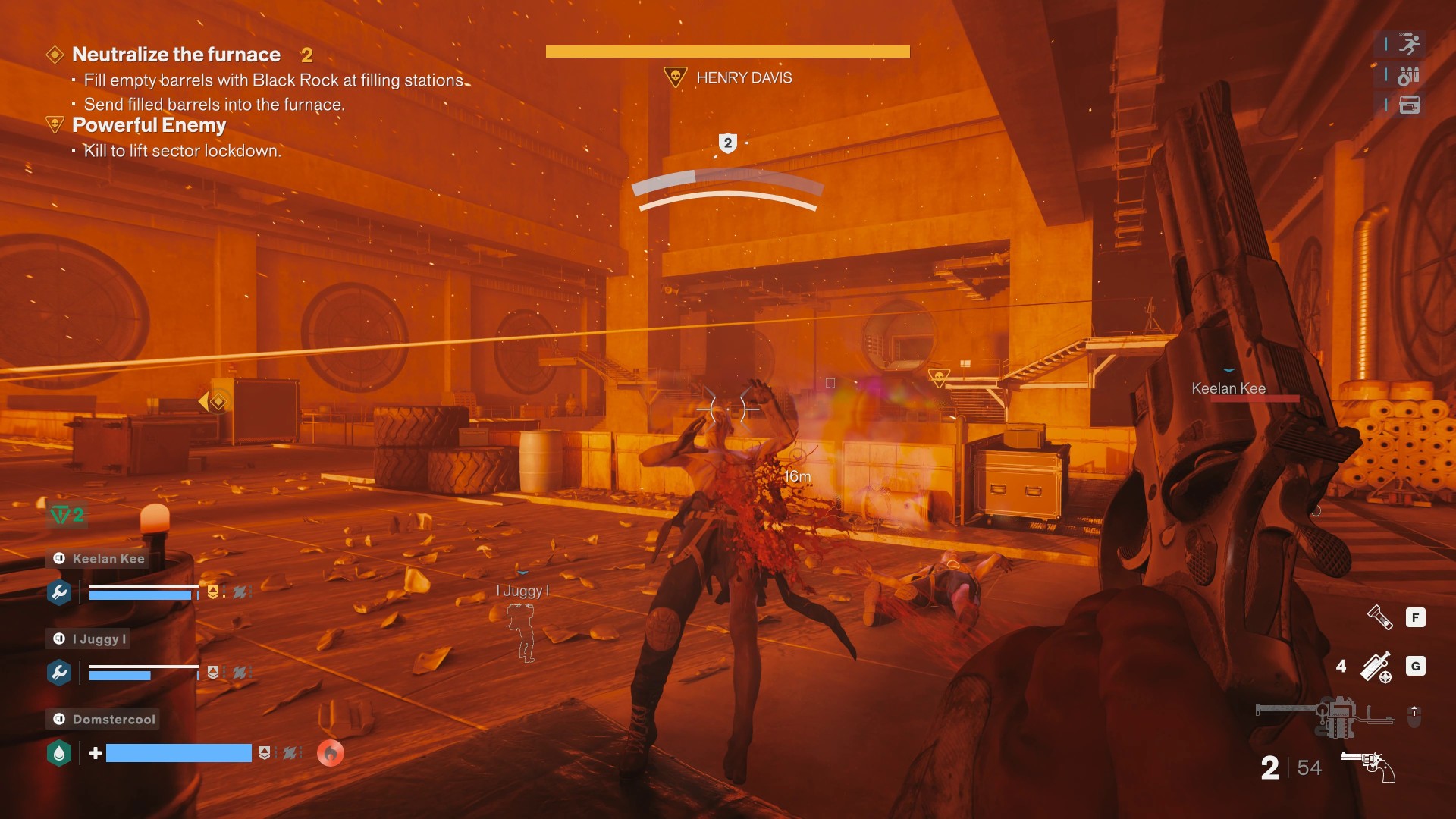
One of FBC: Firebreak’s biggest missed opportunities is just how rigid the job structure is. There’s no deviation or variation in objectives, which could’ve easily been addressed by creating a pool of tasks for each job and having the game randomly select from them. This would’ve gone a long way in making repeat runs feel fresh. As it stands, players will likely memorise each job after just a few playthroughs, which makes the experience lose its novelty quickly.
The only randomised elements I noticed were item placements (like health and ammo), enemy spawn locations and counts, and occasional environmental hazards, such as fire zones that not only obstruct areas but also buff enemies who pass through them. These bits help bring some change to gameplay, but they’re not enough to keep the core structure from feeling stale after multiple runs.
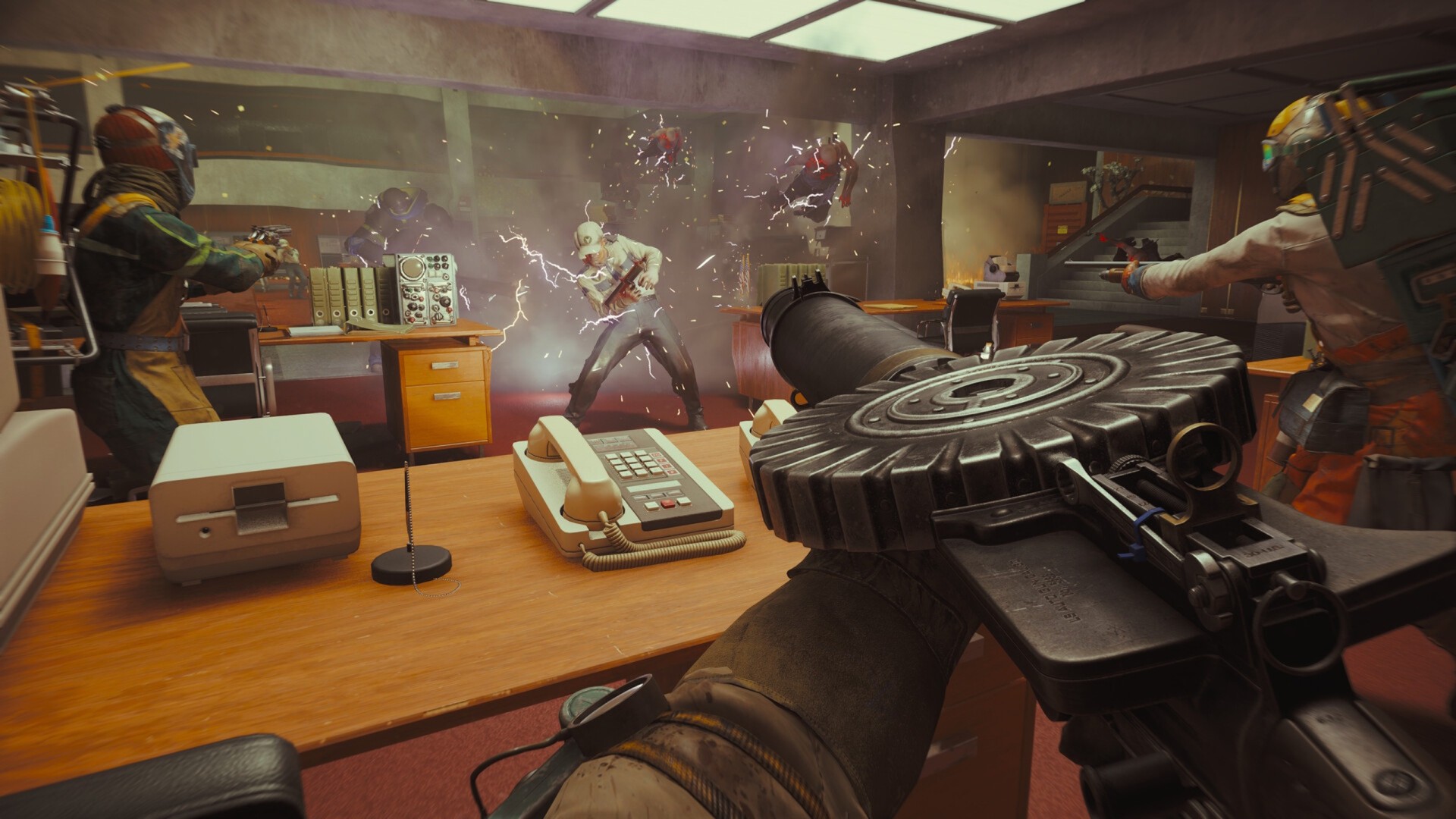
There are three playable classes in FBC: Firebreak, referred to as Crisis Kits. Each kit comes equipped with a default set of gear. Splash Kit uses a hydro pump that drenches enemies, making them vulnerable, and extinguishes fires across the environment. It also cleanses debuffs like radiation poisoning or burning, making it the game’s primary support class. The Jump Kit uses an Electro-Kinetic Charge Impactor to power up devices quickly, like shower systems or ammo closets, bypassing their minigames. It also stuns enemies with electricity, triggering chain reactions on wet foes, perfect for pairing with a Splash Kit. Fix Kit specialises in mechanical repairs. Like Jump Kit, it skips the mini game when interacting with repairable objects, but it focuses more on structural fixes, such as breaker boxes or fans.
Each class shares the same shield mechanic, which functions similarly to the toughness system in Warhammer 40,000: Darktide. It encourages players to stay close to their squad mates during missions by enabling shield regeneration only when within a specific range of at least one teammate. Stray too far, and shield regeneration halts, leaving you more vulnerable to damage. Once the shield is depleted, any further damage goes directly to your health. Health can only be restored at showers, tap water sources in Shelters, or through the healing device available exclusively to the Splash Kit.
Which brings me to what was once another frustrating issue with FBC: Firebreak: the speed of progression. I say once because, thankfully, patch v1.2 significantly improved this, making core progression much faster and less grindy. The game uses a system like Helldivers 2, where players collected Lost Assets during missions and spend them in the Requisitions menu to unlock gear and cosmetics. Both types of rewards were mixed within the same 9-page unlock tree, and each page required a certain amount of Assets spent to access the next.
The main issue? Key abilities – such as the Splash Kit’s Humidifier, which summons a healing spray that restores ally health and debuffs nearby enemies, or the Jump Kit’s ultimate, the lightning-summoning Garden Gnome – were locked behind later pages. This meant that kits didn’t come with their full core abilities out of the gate, and their potential wasn’t fully felt until much later. Weapons and upgrades were also gated behind this system. At one point, I was stuck using a level 2 revolver for around six jobs, which just doesn’t feel right for early progression. Another problem was that Lost Assets could be easy to miss, making it easy to overlook them during missions.
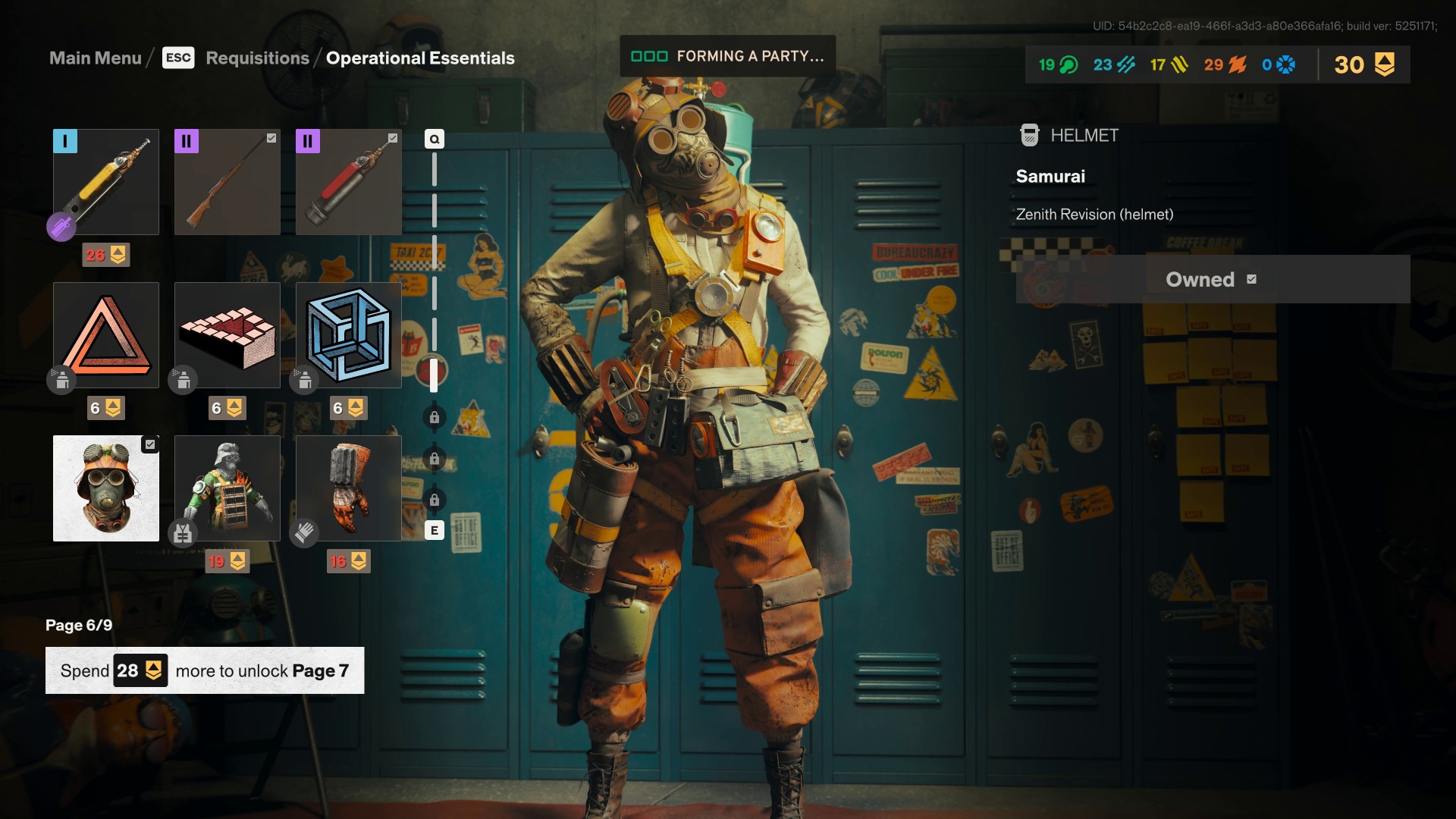
As mentioned, patch 1.2 overhauls FBC: Firebreak’s sluggish progression system by splitting Requisitions into two clear categories: Essentials (weapons, kit upgrades, ultimates) and Expressions (cosmetics). This shift helps players prioritise meaningful unlocks over purely visual ones. The update also lowers Lost Asset costs and improves pickup visibility, making progression feel far less grindy. Players can now access key gear (pump-action shotguns, machine guns, and rifles), much earlier, speeding up the process of powering up their Crisis Kits or testing out new weapons. It’s a welcome and much-needed fix. That said, the game still suffers from repetitive job objectives, which can lead to fatigue during longer sessions despite the improved unlock pacing.
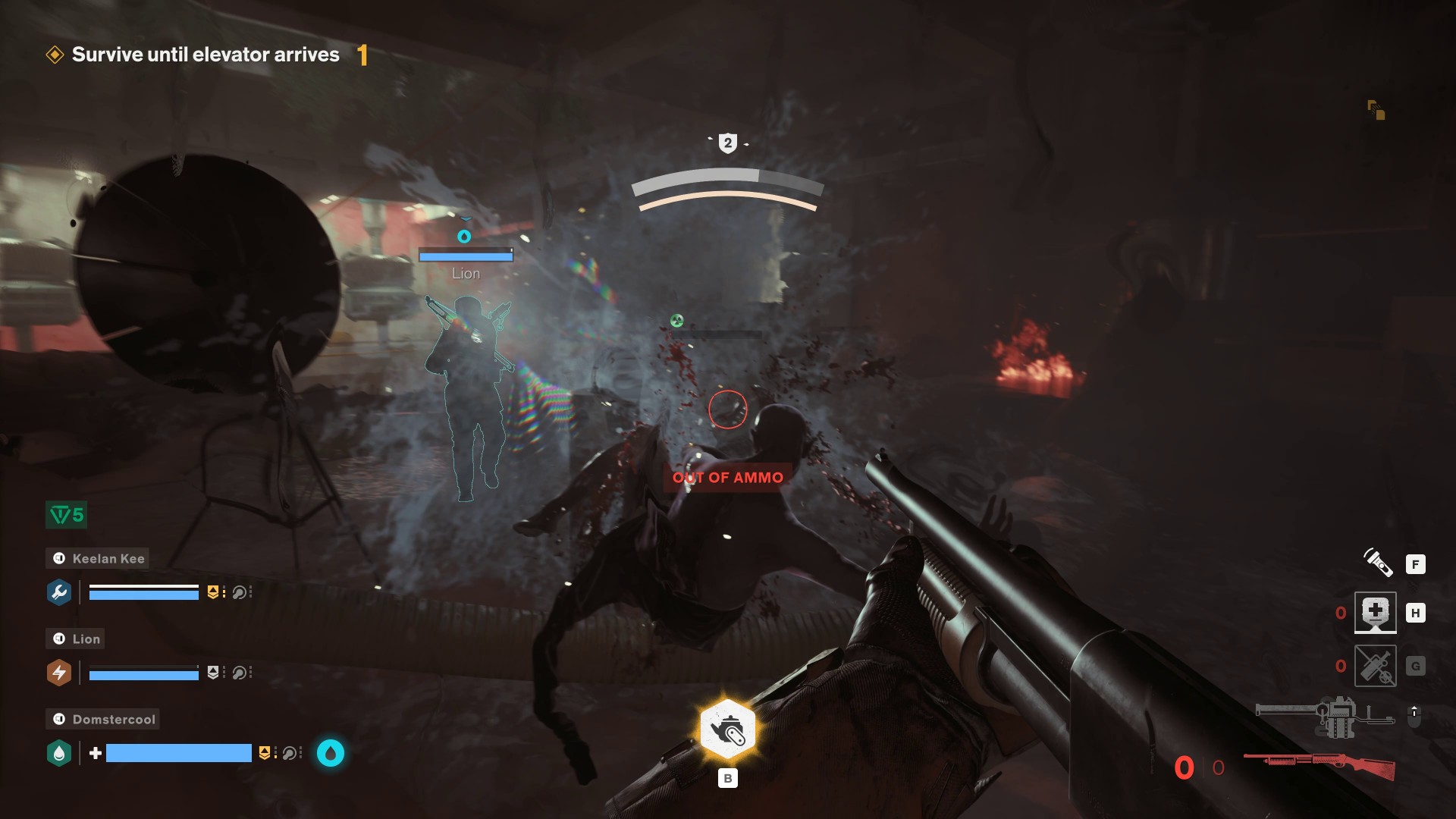
One of the saving graces that helps keep jobs feeling less repetitive for a while is the introduction of Corrupted Items. Jobs can feature zero to three of these as picked by the hosting player, and they become available after you’ve cleared level 3 at least once on that job. Corrupted Items act as modifiers offering unpredictable anomalies that alter the mission in weird ways. My first encounter was with the Snare Drum, a corrupted item that cranks up enemy movement speed dramatically. It must be at least four times faster, and it amps up their attack rate too. I remember opening a door for my team and BANG, a wave of enemies came turbocharging at us. It was a pure panic and laugh out moment.
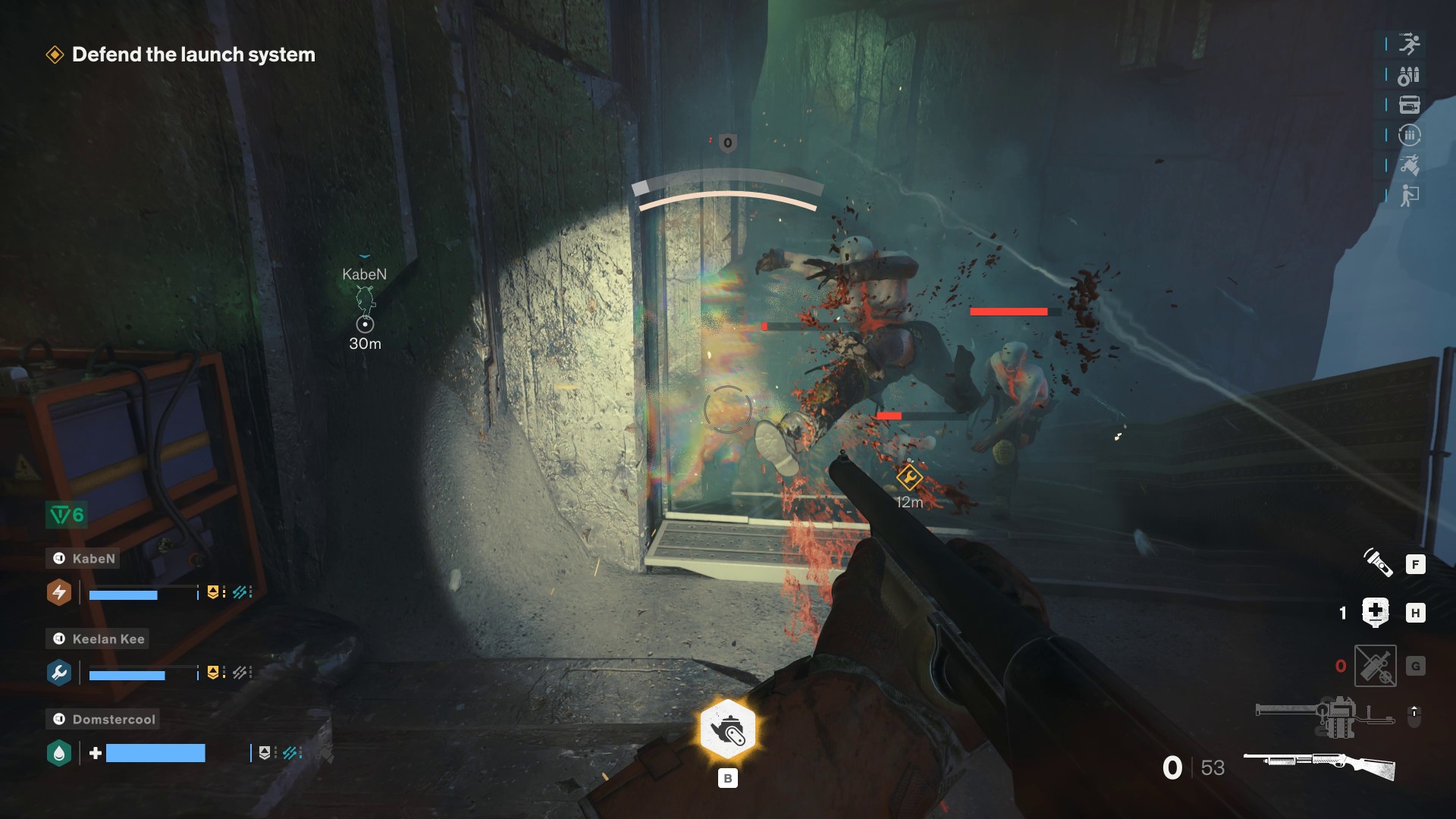
Another standout is the Traffic Light. It floats around with a green glow, but once it turns yellow, it targets a player. When the light goes red, any movement from that player causes damage, so you’re forced to stand still until it goes green again. Some Corrupted Items are simpler, like the Table Saw, which disables all player shields making everyone more vulnerable. The only way to remove these corrupted modifiers is by using the special Black Rock Neutralizer, a weapon found in Shelters with limited ammo. It consumes Black Rock ammo and destroys the item, rewarding players with Research Samples that can be spent on upgrading existing perks. Corrupted Items bring random chaos and replayability, offering modifiers that keep players alert and often needing to adapt, and is a reason why Corrupted Items in jobs makes them less stale.
As previously mentioned, one of FBC: Firebreak’s key weaknesses is its lack of content. With just five missions on offer featuring repetitive objectives and minimal variation in layout or design, it doesn’t take long for monotony to set in. Remedy has announced two major content updates slated for Autumn and Winter 2025. Each will introduce a new job, fresh gameplay systems, and new enemy types, all as free additions. Alongside these are Classified Requisitions, essentially paid cosmetic passes available with each update. One launched with the game, though I chose not to purchase it.
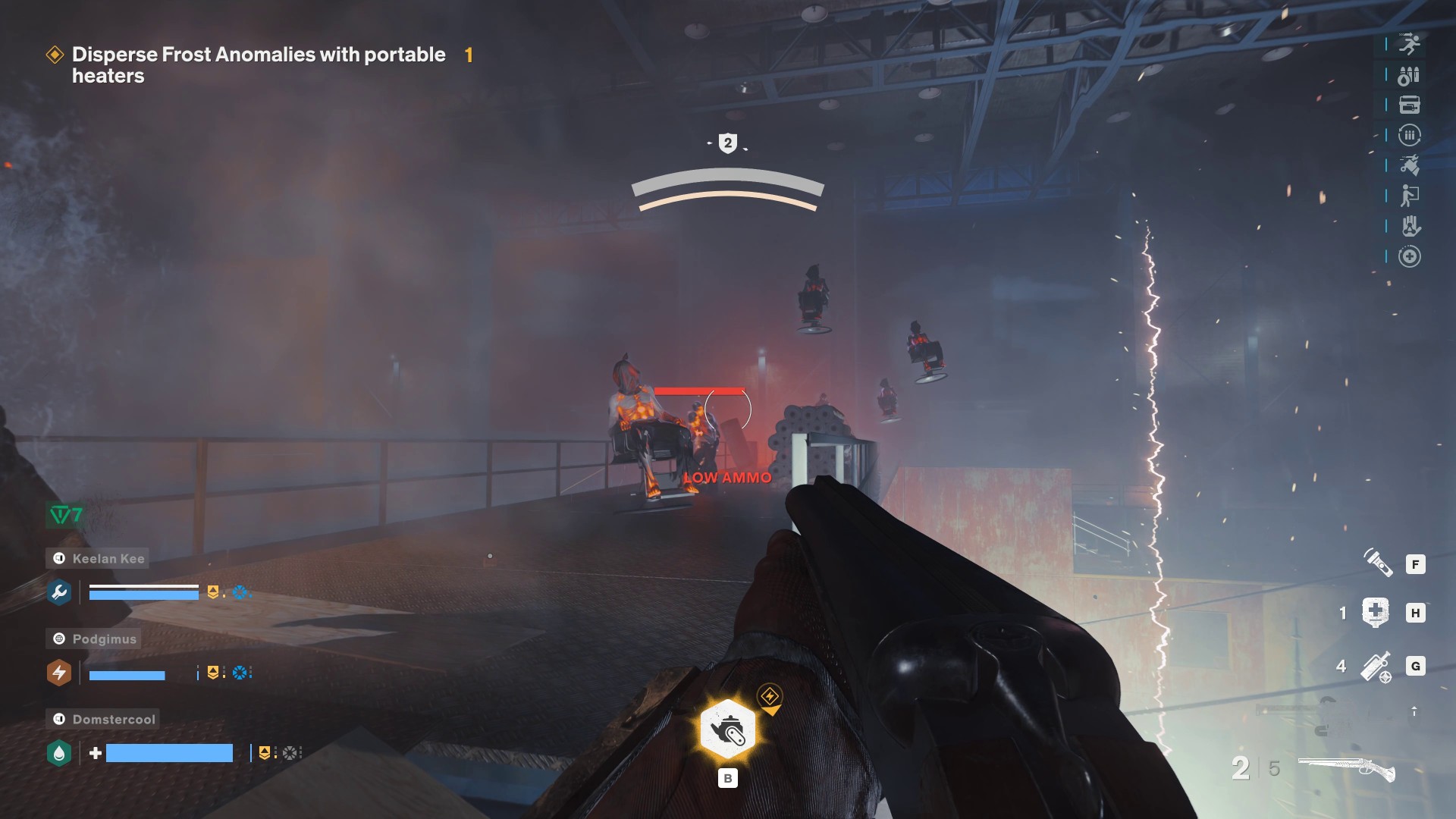
That said, I’m not convinced this content pace will be enough to sustain player interest long-term. I wouldn’t be surprised if FBC: Firebreak fizzles out by the end of 2025 or becomes one of those games with a yoyoing player count. People will hop in to blast through the new content, then bounce until the next drop, repeating the cycle only if they’re truly hooked. It needs to be compelling enough to pull players back in. That’s precisely why Vermintide 2 has endured, Fatshark continues to offer consistent support and meaningful expansions. FBC: Firebreak needs to do something similar to get that content increased and offer more variation for players.
There are also some puzzling design decisions in FBC: Firebreak, most notably the complete lack of communication. There’s no voice chat and no text chat, only a very basic ping system, which lets you highlight objects and occasionally thank or cheer your teammates. For a game that is emphasising co-op, this feels like a major oversight. While I played with friends over Discord, the absence of built-in voice or text options makes it unnecessarily awkward to play randoms. I don’t understand why some developers continue to exclude these features. The argument often comes down to avoiding toxicity, but that’s what mute and block functions are for. Most players are adults capable of managing interactions themselves, and removing communication entirely does more harm than good for such co-op focused games. At least on the positive the game is £32.99, understanding that this game simply would not sell at a current generation full-price.
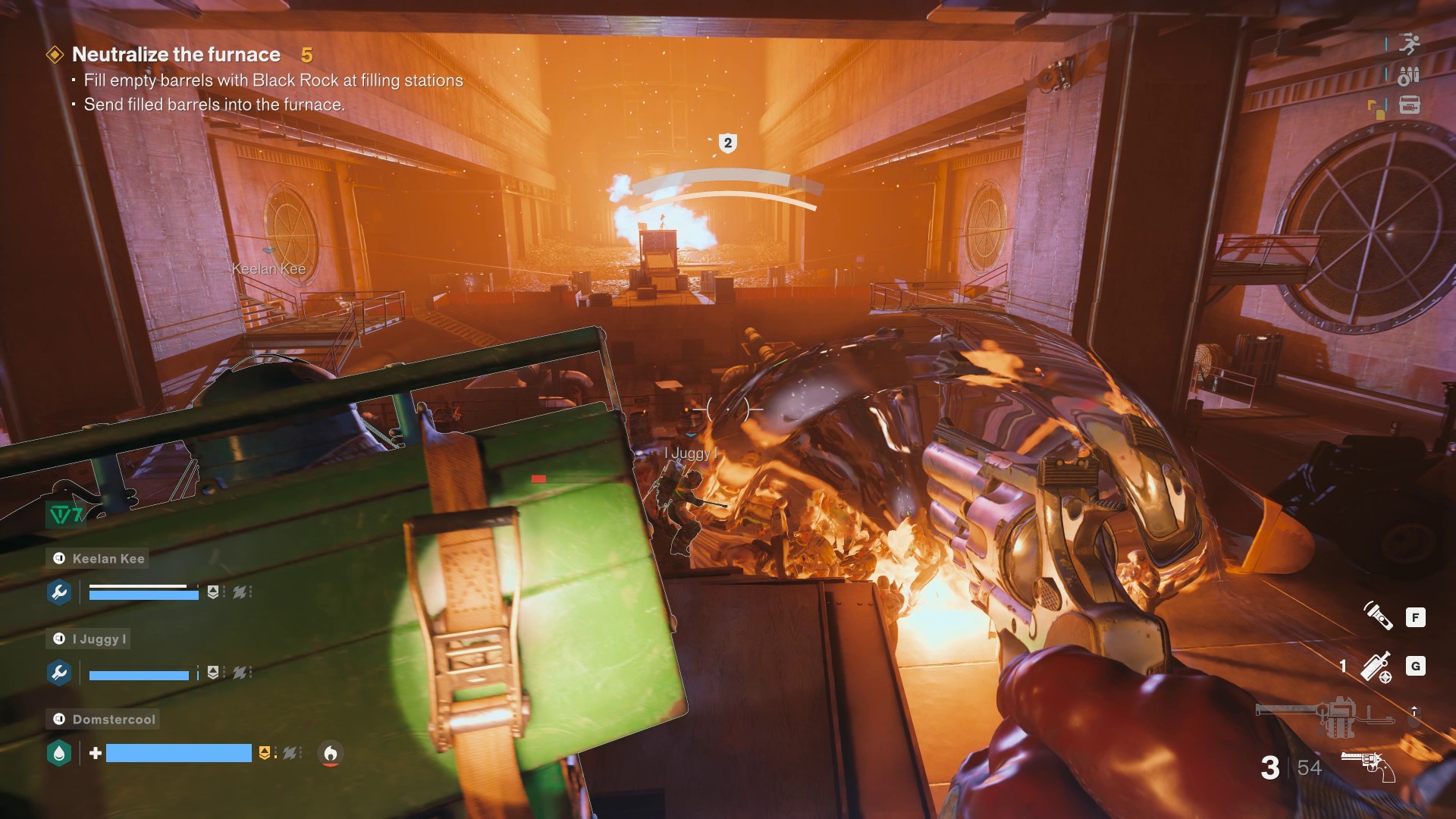
FBC: Firebreak leverages the latest graphics technologies, including Nvidia’s DLSS 4, AMD’s FSR 3, Ray Tracing, and even Path Tracing. The latter is incredibly demanding, as I had to enable DLSS on Quality mode to keep frame rates consistently above 60 FPS. On max settings at 4K resolution, performance hovered around 100 FPS. There were frequent dips below 60 without DLSS enabled, so using DLSS helped prevent this. This is on a Nvidia RTX 5090, which stresses how demanding the game can be. That said, I don’t think FBC: Firebreak looks quite as visually impressive or as technically heavy as Alan Wake 2. Still, it delivers strong visuals and beautiful effects. Most importantly, it runs smoothly. I experienced no noticeable stuttering or hitching, which is something some PC games struggle with. Remedy seems to have delivered a solid PC port here.
Initially, I was going to give FBC: Firebreak a 6, marking it as “Fair” on our scale, but patch v1.2 shifted my perspective. It addressed several of my concerns and signals a promising direction for the game’s future. As it stands, FBC: Firebreak feels like a game with potential that hasn’t fully figured itself out yet. While it’s built on a solid co-op PvE formula and benefits from Remedy’s unique universe, it lacks the variety and depth needed to keep players engaged over time. The handful of missions wear thin quickly due to repeated objectives and static structure, and even with Corrupted Items adding some unpredictability, it’s not enough to mask the thin content. The lack of no voice or text chat makes teamwork clunky. Remedy has shown they’re listening with patch v1.2, which improved pacing and progression, but unless future updates bring significantly more content and variety, I can’t see this game having long-term staying power. For now, it feels like a solid foundation that still needs more built on top of it to truly stand out in a crowded genre.