
Anthem#9 PC Review
If there is one thing I remember about seeing Anthem#9 for the first time, it was the trailer I saw last year that hit me with an onslaught of bright colours. That visual punch is exactly what players will likely remember when playing the game, its presentation oozes style, with anime-inspired aesthetics and a vibrant, spy theme. Developed solo by Koeda, a Japanese creator who began making games in 2021 and had no prior industry experience, Anthem#9 is their debut title and mixes roguelite, a little bit of deckbuilding and puzzle-like combat. Even before its release, the concept attracted attention as the game won the Grand Prize in the “No Demo” category at Shueisha’s Game Creators CAMP GAME BBQ vol.2. Since that award is judged on game design and proposal alone, it was a sign that the developer had a promising concept for a video game.
Anthem#9 is a title that places little emphasis on storytelling, instead establishing a basic premise to support its visual style and overall presentation. The game features three playable characters. Rubit is available from the start, while Beni and Phannie are unlocked after completing Rubit’s first mission. All three characters are members of a secret organisation known as Anthem#9.
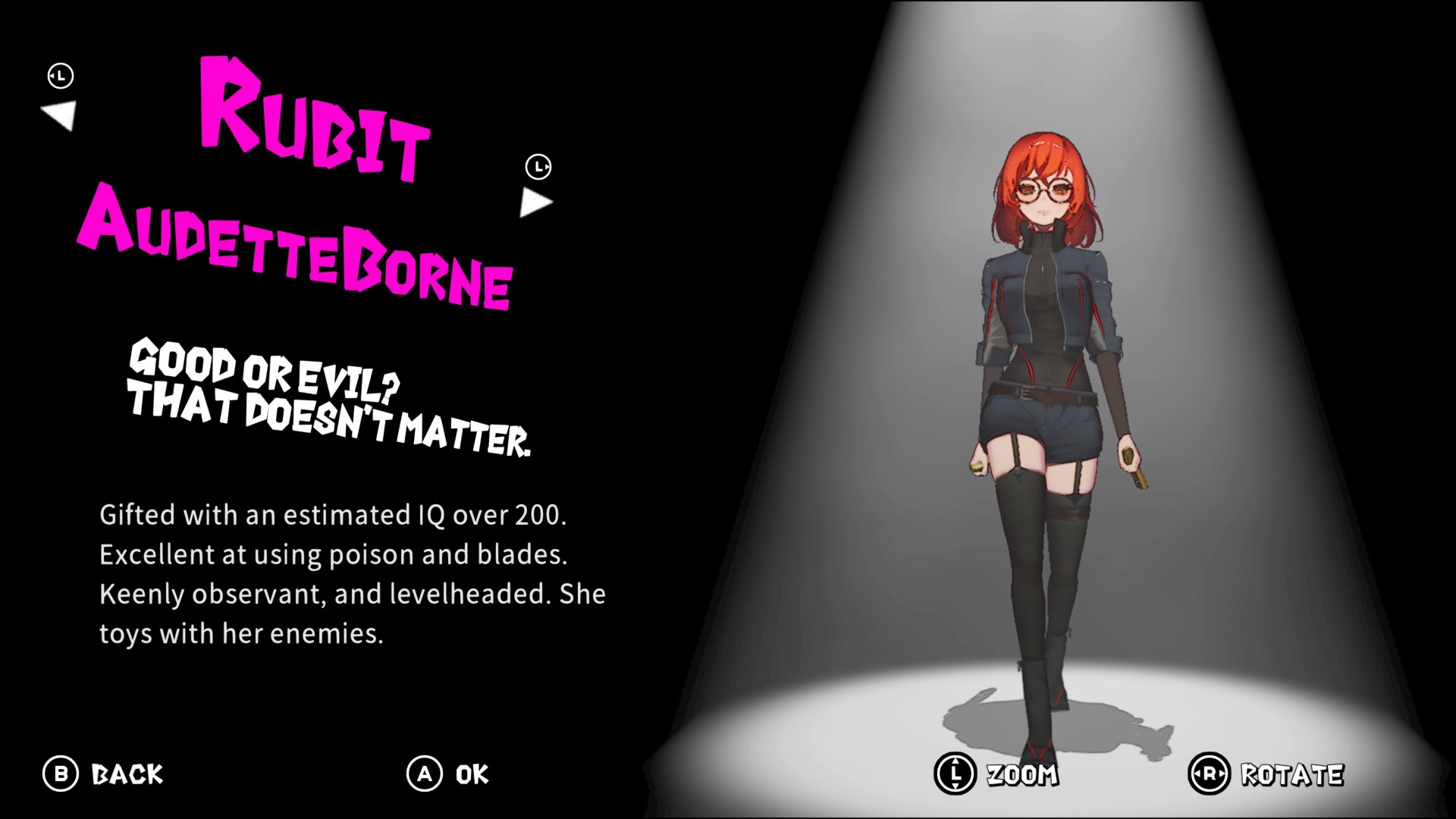
The goal of this organisation is to maintain global stability through balance and harmony. To prevent unprecedented crises or power struggles in the world, these agents purge central figures who are hunting for control that would upset the world’s equilibrium. This is done by entering the spiritual realm of their targets, allowing the agents to bypass physical bodyguards and other protection to confront the inner corruption that has altered their ego through the manifested game’s enemies within their spiritual world. While this premise allows for some bizarre enemy designs, it does not develop much beyond that. Story is kept to a minimal, with the game clearly focused on its aesthetics and gameplay rather than story or cutscenes.
While Anthem#9 is a roguelite with some deckbuilding elements, its core concept revolves around a unique gem-matching system used to trigger attacks. This is not a traditional grid-based puzzler like Bejeweled or Puzzle Quest. Instead of matching gems on a board, players use gems to activate specific combat skills. Each skill is tagged with a required colour combination, such as a red and a green gem. During a turn, the player is given a random pool of gems to choose from. The goal is to assign these gems to as many skills as possible, because the more matches made, the more attacks you execute per round.
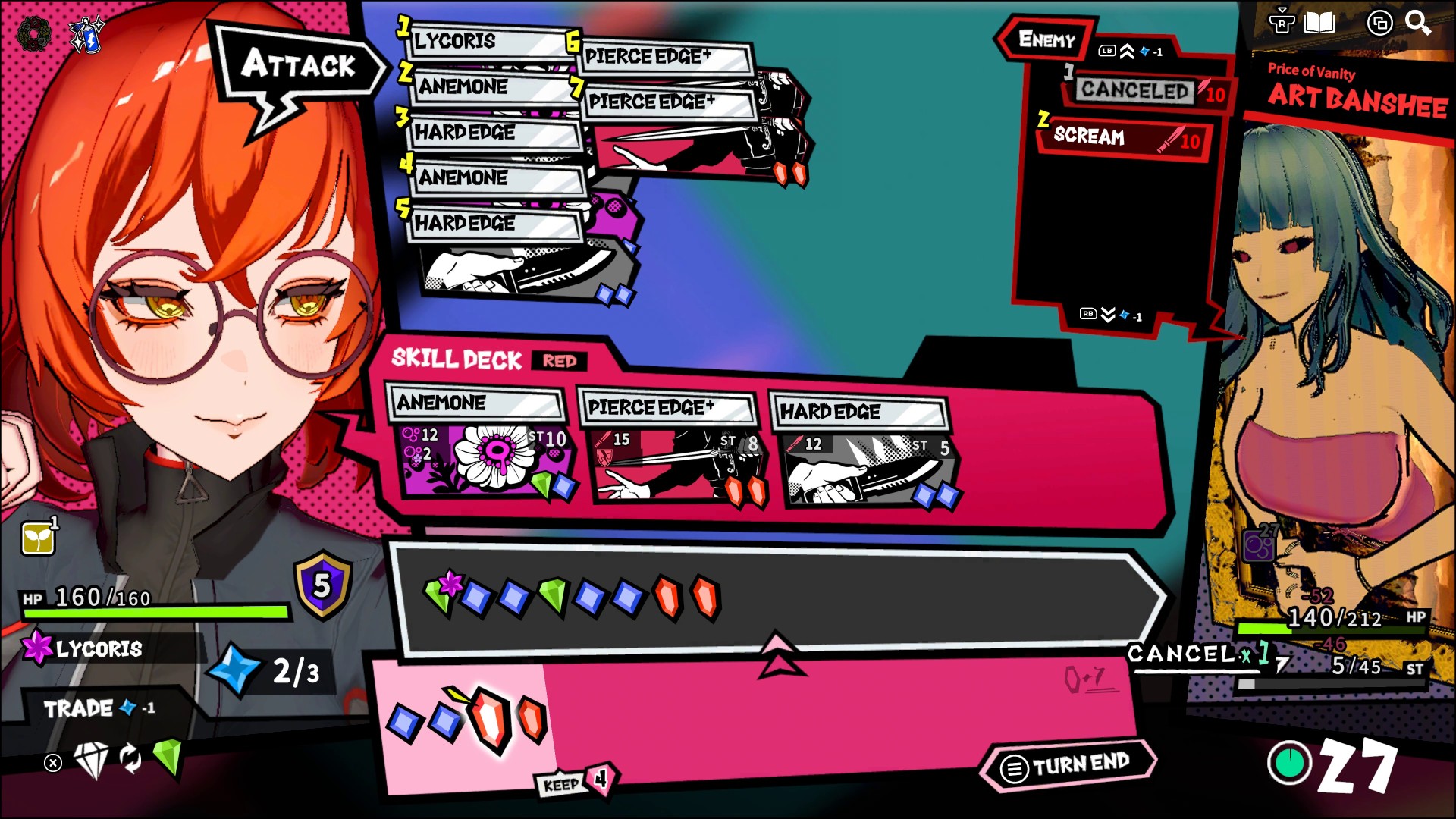
Players select one of three characters, each with their own unique skill sets, and progress through a series of missions. Each mission functions as a procedurally generated dungeon, though this takes the form of a grid of connected squares that the player moves between after each encounter. The objective is to navigate through the grid, defeat enemies, and reach the floor boss to progress. What varies from run to run are the grid layouts, enemy encounters, grid types (is it a battle, shop, healing, event node, boss, etc.), and the rewards earned along the way.
Jumping into battle begins by choosing one of two colour-based skill sets, red or blue. While they function similarly to decks, both colours start with the same three skills determined by the mission. Each skill requires a specific sequence of coloured gems to activate. There are three gem colours in total, and skills can require anywhere from two to four gems. For example, Rubit’s basic knife skill “hard edge” could be a combination of red and green or red and red. Picking these from the gems randomly given at the start of each round will activate these into a skill list, which will then attack the enemy once that player’s turn is done, which is when no more skills can be activated with gems, the timer runs out or the player forces an early end. On the next turn, the skill deck will switch to the other colour and this will happen each turn until the fight is over.
What really elevates the combat is how skills chain together. If one skill ends on a certain colour and the next skill begins with that same colour, the overlapping gem counts for both. This allows you to activate longer sequences using fewer gems, which the game treats as a continuous combo. Building these chains is key to maximising damage and is one of the more engaging aspects of combat, especially once its systems click.
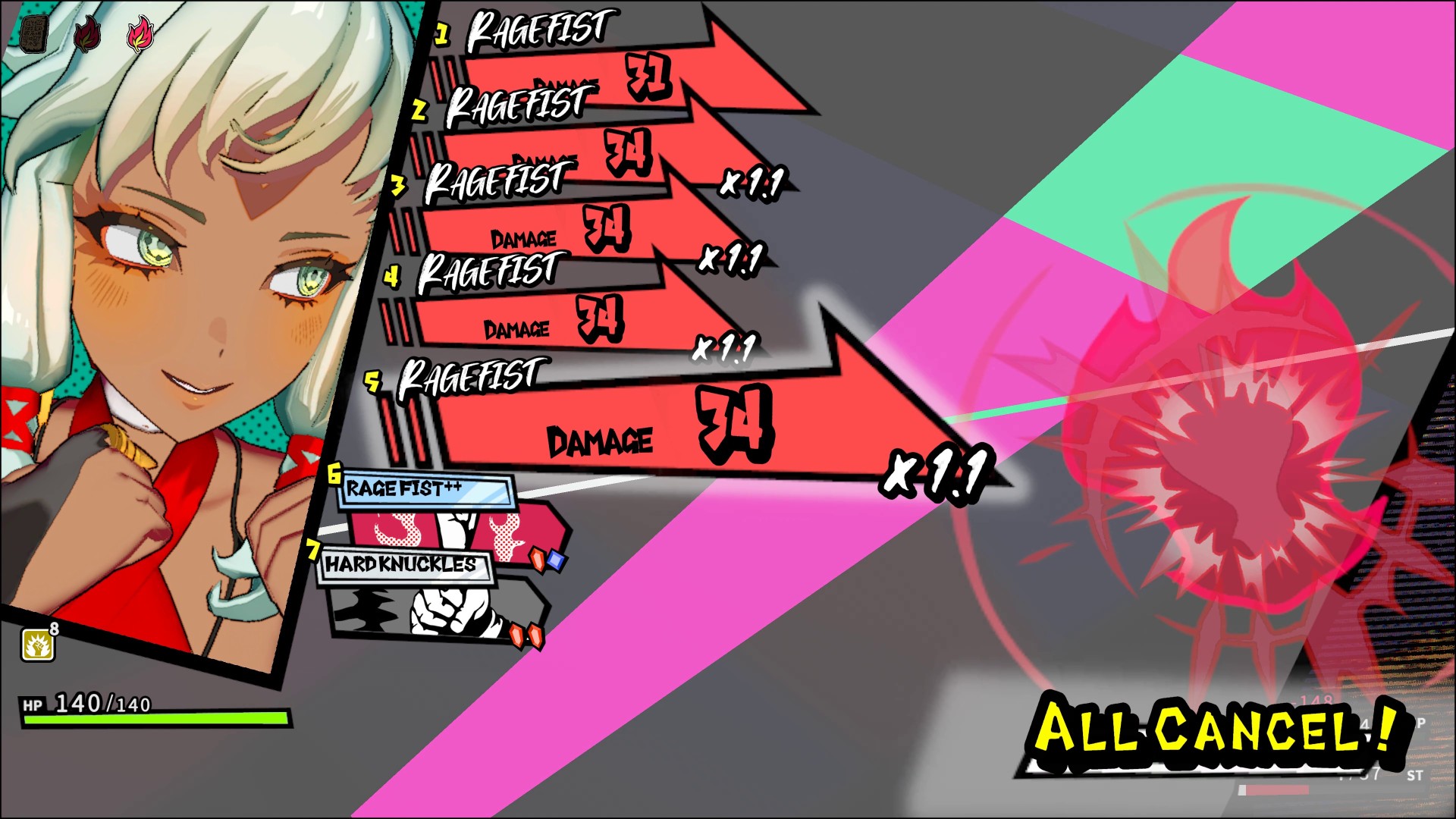
Another major element of combat is the enemy’s stamina bar. The player can see what actions an enemy intends to take during the upcoming turn, and draining their stamina serves as the primary way to interrupt those moves. Each skill drains a specific number of enemy stamina. If the bar is emptied once during a turn, one of the enemy’s actions is cancelled. If you manage to break the stamina bar as many times as the enemy has actions, it results in an all-cancel, leaving the enemy unable to act that turn. This creates a satisfying balance between focusing on raw damage and targeting stamina, adding more depth to combat than I initially expected. Blessings further reinforce this system, as some can drain large amounts of stamina in a single use.
Blessings are another key part of the player’s arsenal. Each mission begins with a predefined set of blessings, and at the start of every player turn, three blessings are randomly offered from the player’s available hand. These function as modifiers or buffs that can alter how a battle plays out. As players progress, additional blessings are earned by defeating enemies or purchased from shops, gradually expanding the pool of possible options. Blessings can be passive or active in nature, ranging from stamina-focused effects like Surprise Box, which instantly cancels one enemy stamina bar, to utility bonuses such as Two Extra Gems, which increases gem generation each turn. Others, like Mysterious Stone Tablet, reduce enemy stamina while granting an additional redraw, or Grand Oak, which provides shielding and a redraw option.
Shield is an important part of combat, acting as a damage reduction, reducing the damage of incoming attacks by the amount the shield is worth. Unlike health, shield does not persist indefinitely and is typically granted through blessings or specific skill effects, encouraging players to time its use carefully rather than relying on it as a permanent defence, unless a blessing offers that. Shield becomes especially valuable during boss encounters, where enemies tend to have larger health pools and higher damage output.
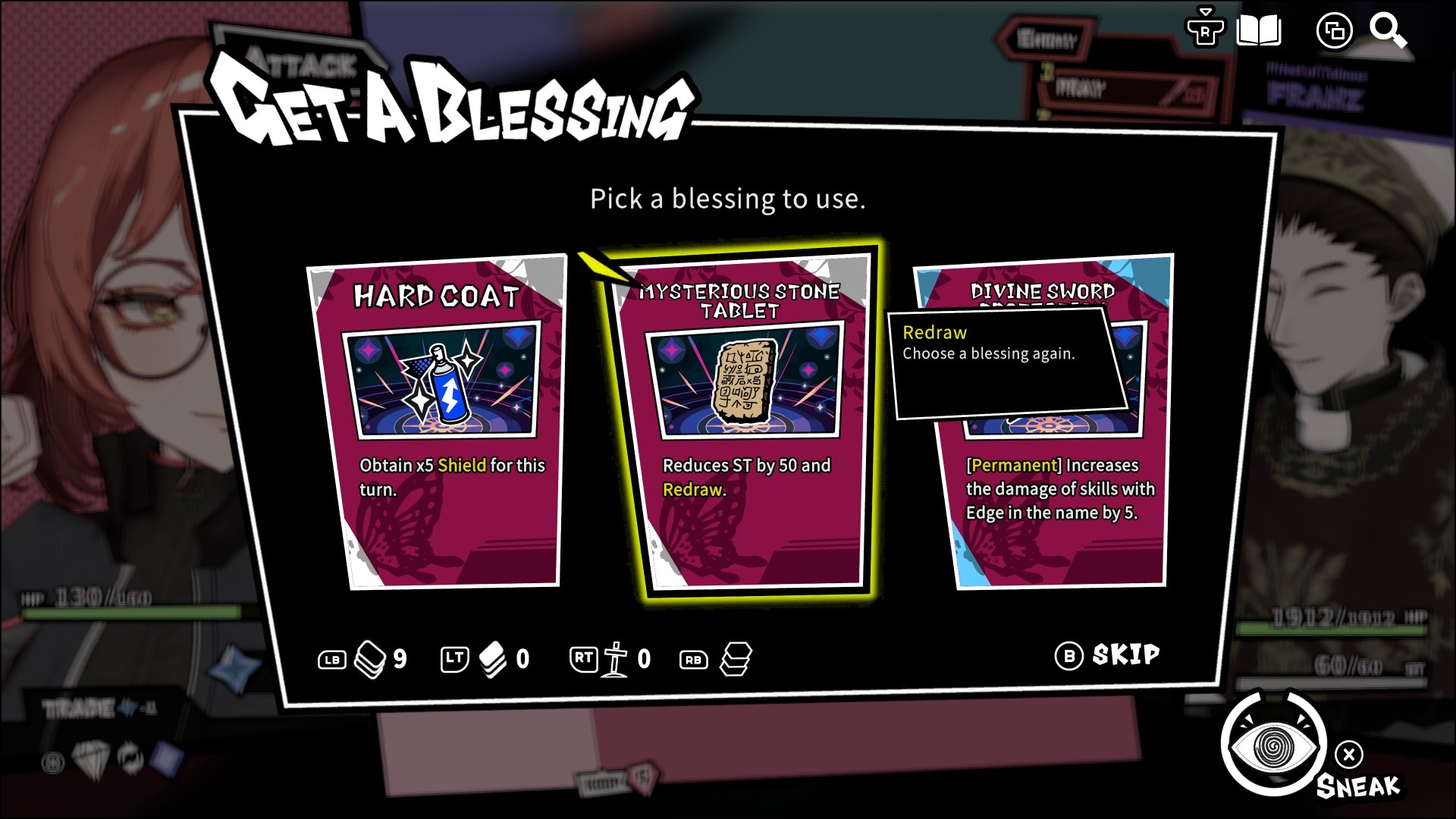
Each character in Anthem#9 follows their own mission with distinct bosses, rather than sharing the same run that other roguelites often do. This design choice means that seeing the game through to completion requires playing with all three characters. Their different playstyles help keep the gameplay fresh for their runs.
Of the available characters, Phannie stood out as my favourite. He embodies a high-risk, high-reward playstyle built around combos. His design is a flamboyant gambler wielding a gun. His Action Point ability allows double gems to be split into two separate gems, dramatically increasing combo potential. Double gems can also count as two gems toward a skill, making Phannie the undisputed combo king of the game, which is why I liked using him. The other characters lean into equally distinct styles. Rubit’s ability to convert gems into predetermined colours offers greater control over randomness, supporting her poison-focused kit, which helps dealing damage over time. Beni, by contrast, sacrifices gems to gain temporary buffs, stuff like shielding, healing, or increased damage, which allows her to either prolong fights or build towards an high damaging attack.
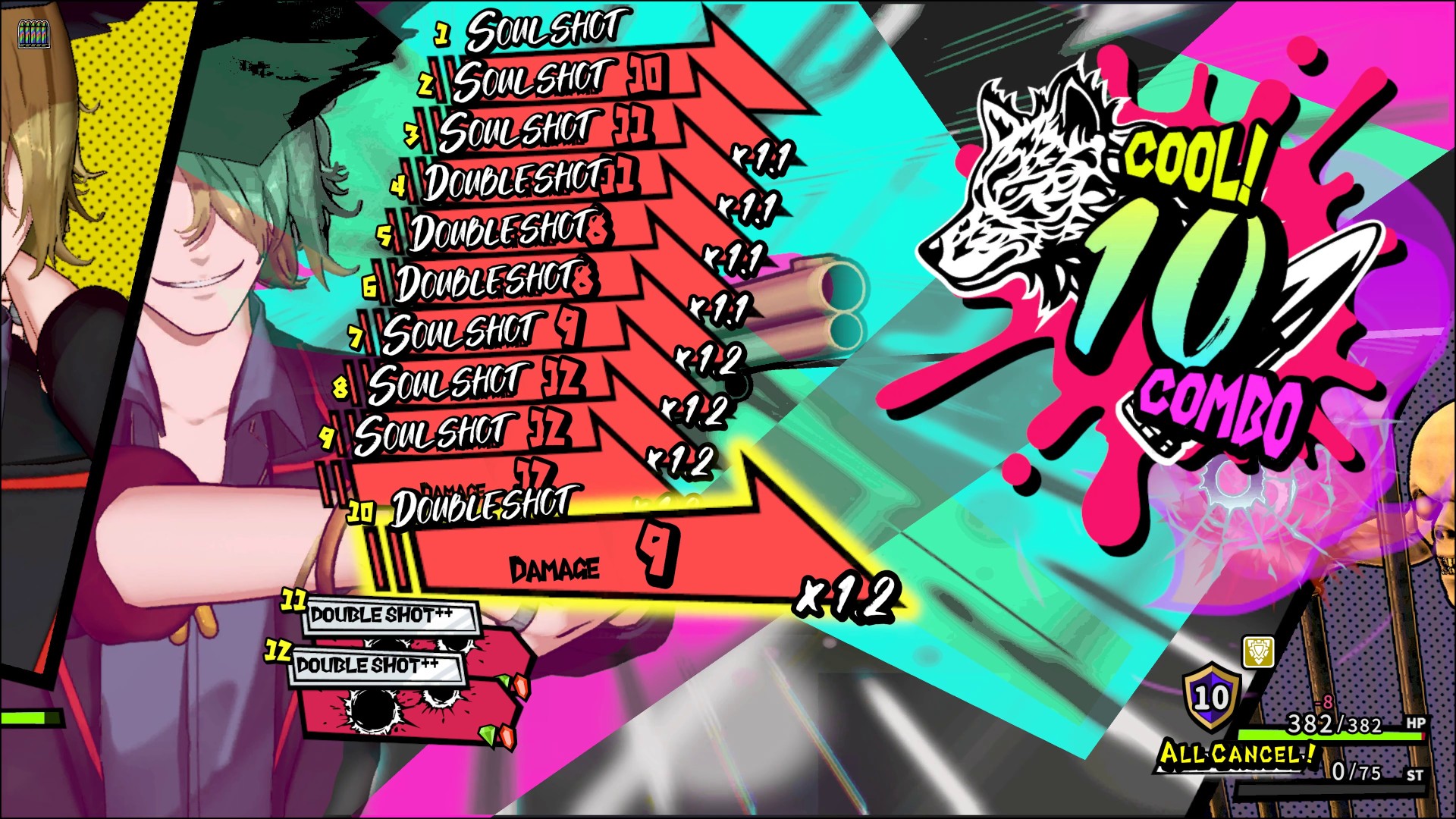
Action Points also serve a more subtle but impactful function: manipulating enemy attack order. By spending AP, players can rotate upcoming enemy actions, which becomes crucial when you cannot all-cancel an enemy. Shifting a high-damage attack into a cancel segment can make quite the difference in surviving. It’s a small mechanic, but one that adds meaningful depth and helps give a tactical element.
If I had one complaint about the combat, it lies in how each character’s playstyle is introduced. It took several battles to fully understand how each character was meant to function, largely because the game does not always clearly explain individual skills or the various symbols displayed beneath the character portrait during combat. While playing a few eventually fills in the gaps, the lack of clear explanation can make the early encounters harder than they should be.
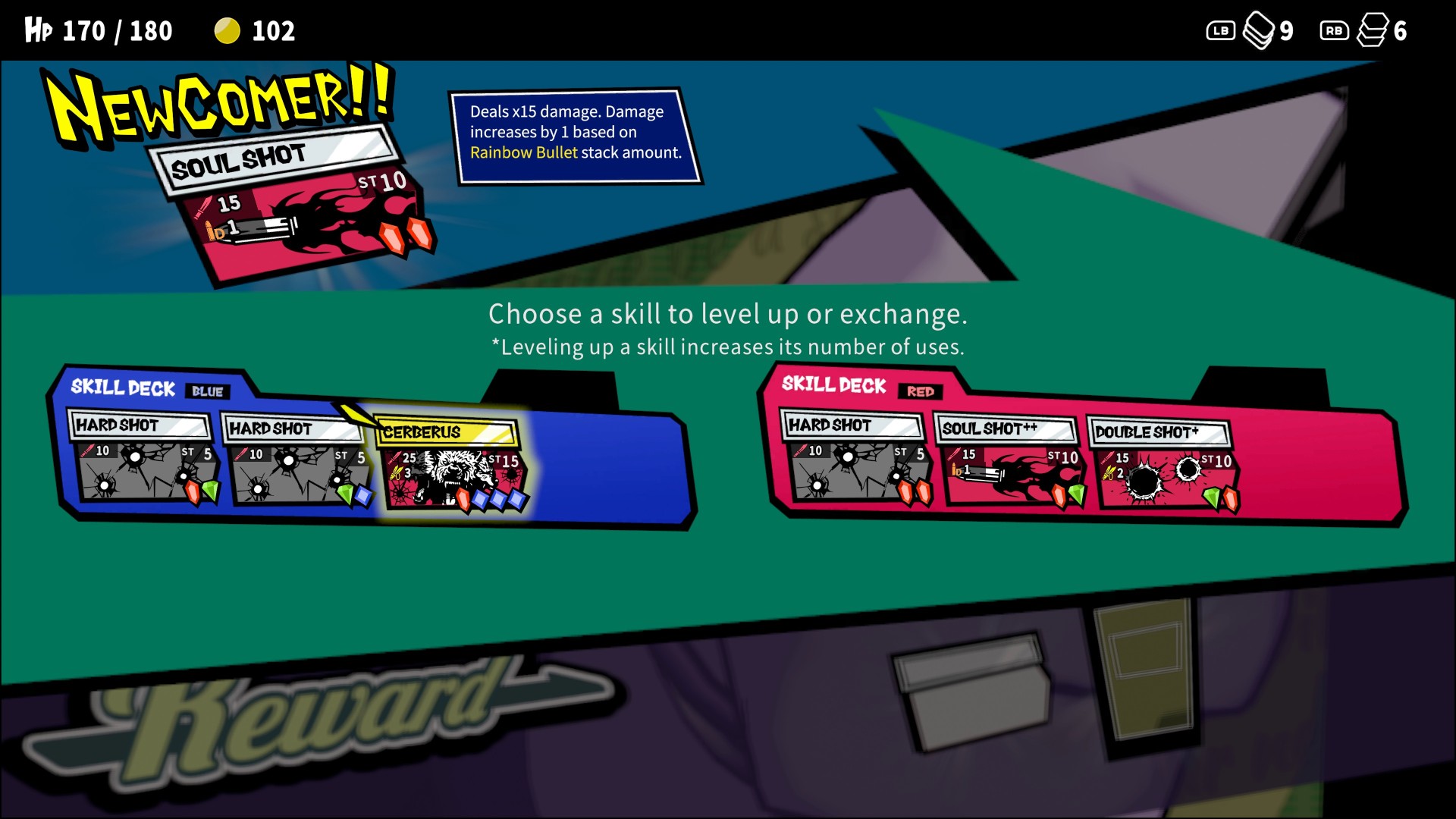
Another notable aspect of Anthem#9 is its complete lack of permanent power progression, which sets it apart from many modern roguelites. There are no perma-upgrades to health, damage, or abilities, and no long-term stat boosts that can be gradually stacked to make future runs easier. Instead, progression is entirely focused on the run itself and on the player learning each character’s strengths and how to apply them effectively in combat. Making use of new skills to replace the starting ones or upgrading them by earning the same skill and applying it on top of the existing one in a deck, this makes it so that the skill is casted twice or three times if upgraded twice for the same price as what it would have with one gem activation, is also key to winning.
The only form of progression comes through mission completion. Each character’s initial set of missions introduces mechanical twists, and completing the fourth mission unlocks a series of additional challenge missions that steadily increase in difficulty. These extra missions appear to extend up to around ten per character. I haven’t managed to complete them all yet, but I can see in the achievements it seems to have 10 per character. This structure provides a good amount of content to work through, which is decent for the cheap price of £12.79.
Presentation here, as mentioned at the start of the review, is undeniably stylish. The game embraces bold colours and fashionable character designs, giving it a strong visual identity despite its otherwise barebones structure. While the aesthetic is vibrant, the overall presentation is spoilt by the lack of anti-aliasing. The 3D models are extremely jaggy, and overall is deliberately minimal, with little in the way of traditional environments or detailed backdrops. Missions consist of characters performing a slick running animation as they move between grid nodes, but there is no true environment during these animations. Battles are similarly stripped back, with character portraits positioned on either side of the screen and the core mechanics occupying the lower central area. As skills are activated through gem matching, their animations shift toward the top of the screen.
Characters and their portraits are rendered in 3D, but they sit against simple colour backgrounds. While understandable given the game’s solo development, the minimalist presentation still leaves the game feeling barren. Over longer sessions, the lack of background variety makes the presentation feel more static. The music follows a similar approach. It is surprisingly catchy, blending elements of jazzy pop that complement the game’s tone. However, the soundtrack is limited in quantity, meaning that players who don’t connect with its style may find the repetition more noticeable over longer sessions. Personally, I found the tracks engaging enough to avoid becoming grating, but mileage will likely vary depending on your taste of music.
Anthem#9 is a stylish, compact roguelite that somehow works by doing less, but doing it well. No doubt it comes with a bold visual identity and an imaginative gem-chaining combat system. The lack of permanent updates might not be one for people who have become accustomed to the modern roguelite design, but this does mean the game is solely focused on offering a game that is purely about the player’s skill. Although the game’s tutorials and explanations can feel underdeveloped, the satisfaction of mastering its mechanics outweighs the early learning curve. In the end, what I found is that Anthem#9 delivers a surprising amount of depth wrapped in a striking, but simplistic presentation.