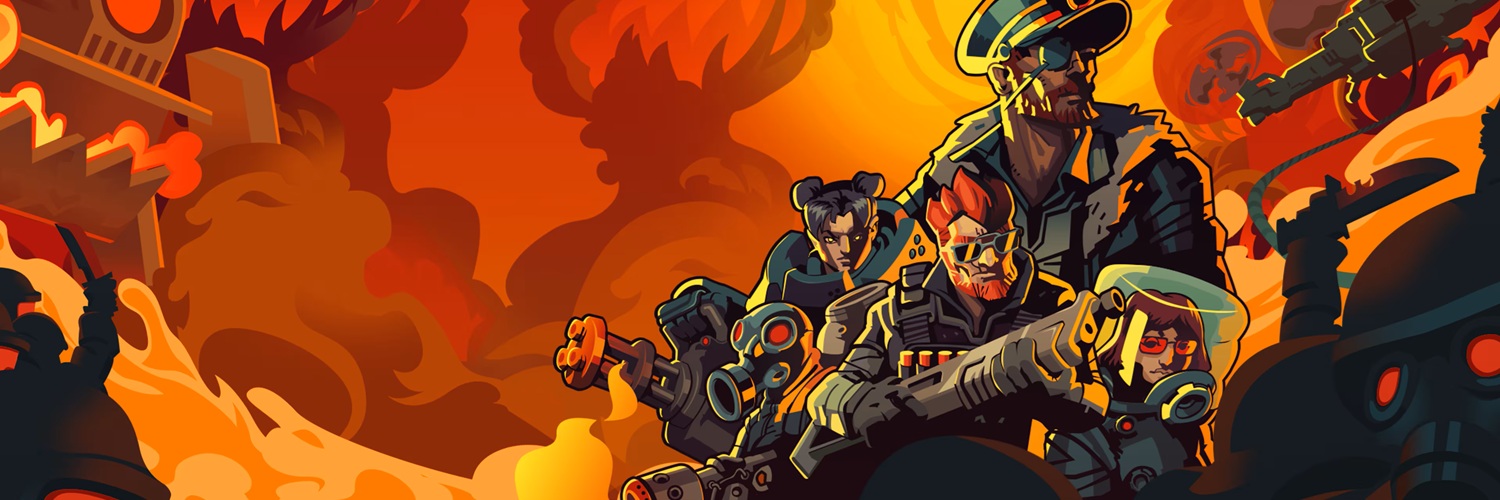
Survivor Mercs PC Review
Ah, the “Survivors-like” genre, a term popularised by the addictive success of Vampire Survivors and the wave of clones and inspirations that followed in its wake. It happens with many breakout hits, but thanks to indie development and how easy these games seem to be to create, fans of the genre have no shortage of options to choose from. Survivor Mercs is the latest to jump into that space, launching its 1.0 version this year, even though it initially dropped in Early Access back in March 2023, so that probably makes it one of the early adoptions post Vampire Survivors.
The developers say the game separates itself by focusing more on twin-stick shooting rather than the auto aiming/auto shooting the genre is known for. Ironically, the name Survivor Mercs may have worked against that idea, as Steam forum discussions during Early Access had requests for auto-aiming and auto-firing. Those features were eventually added, but the developers still maintain that two sticks are the optional way to play, with the core experience designed around active twin-stick gameplay. So, how does it hold up?
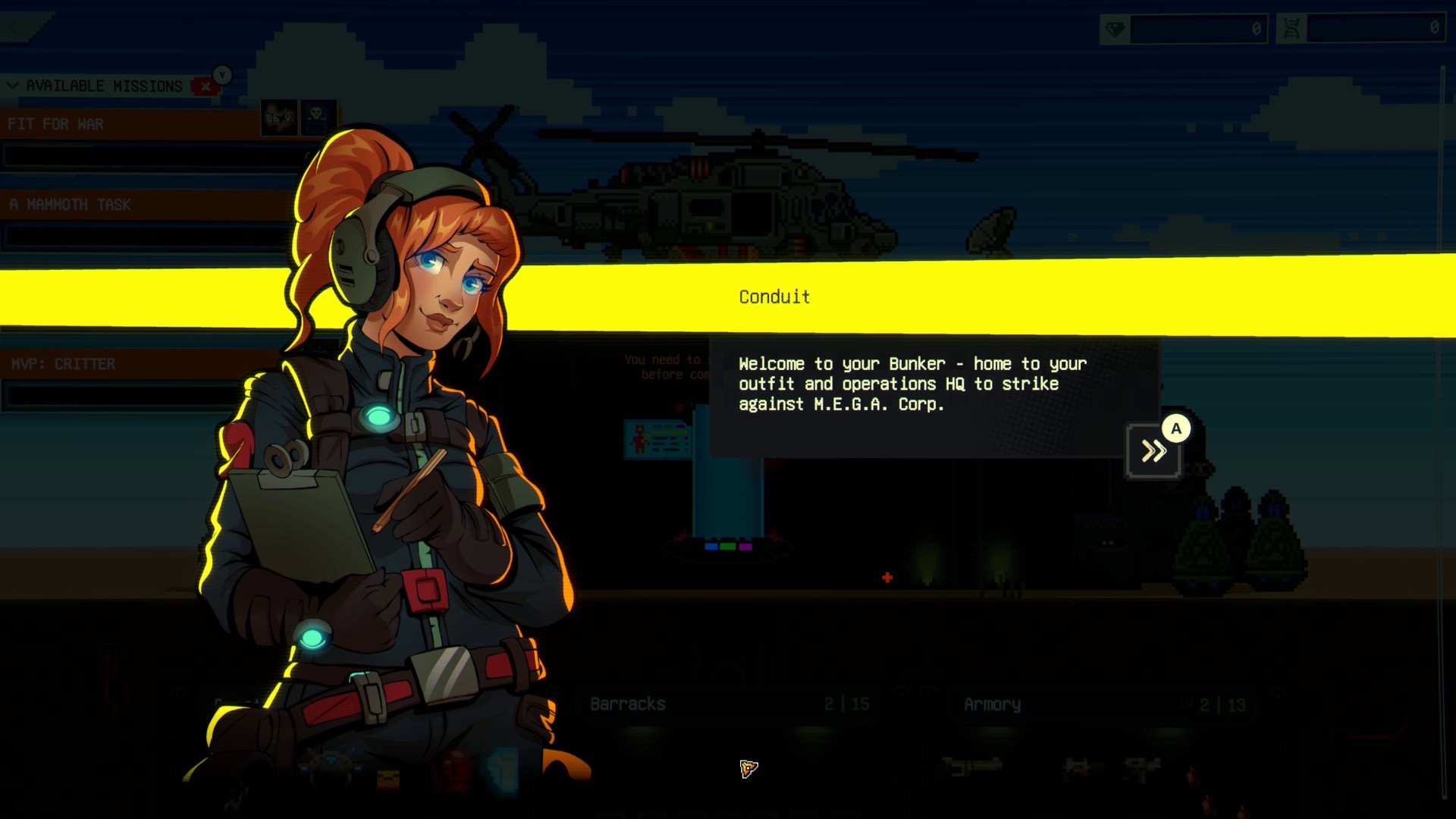
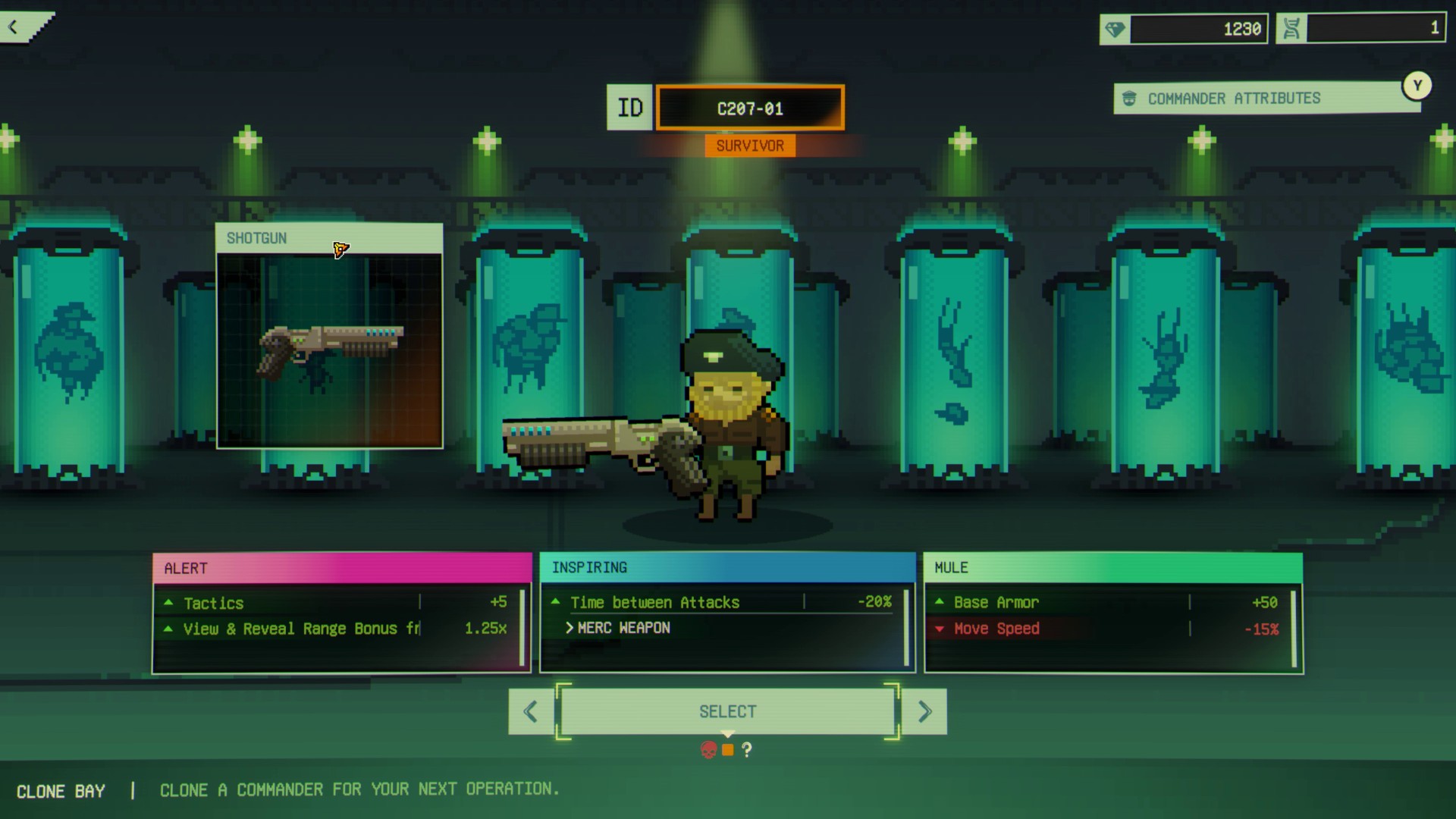
The only story you’re getting here is a straightforward setup: the world is under threat from M.E.G.A. Corp, which has unleashed a massive private robot army in a bid for global domination. Standing in its way is a group of heavily armed mercenaries who have become humanity’s last hope. Its narrative complexity isn’t far removed to be used as a plot for something like The Expendables: it’s an excuse to turn your brain off and blow shit up for a few hours. Players take control of a disposable clone who can be repeatedly respawned, using roguelike progression to grow stronger after each mission. This cloning allows for increasingly powerful buffs, but also sometimes some negative trait. You’ll gradually build up your strength and lead your band of merry mercenaries to victory.
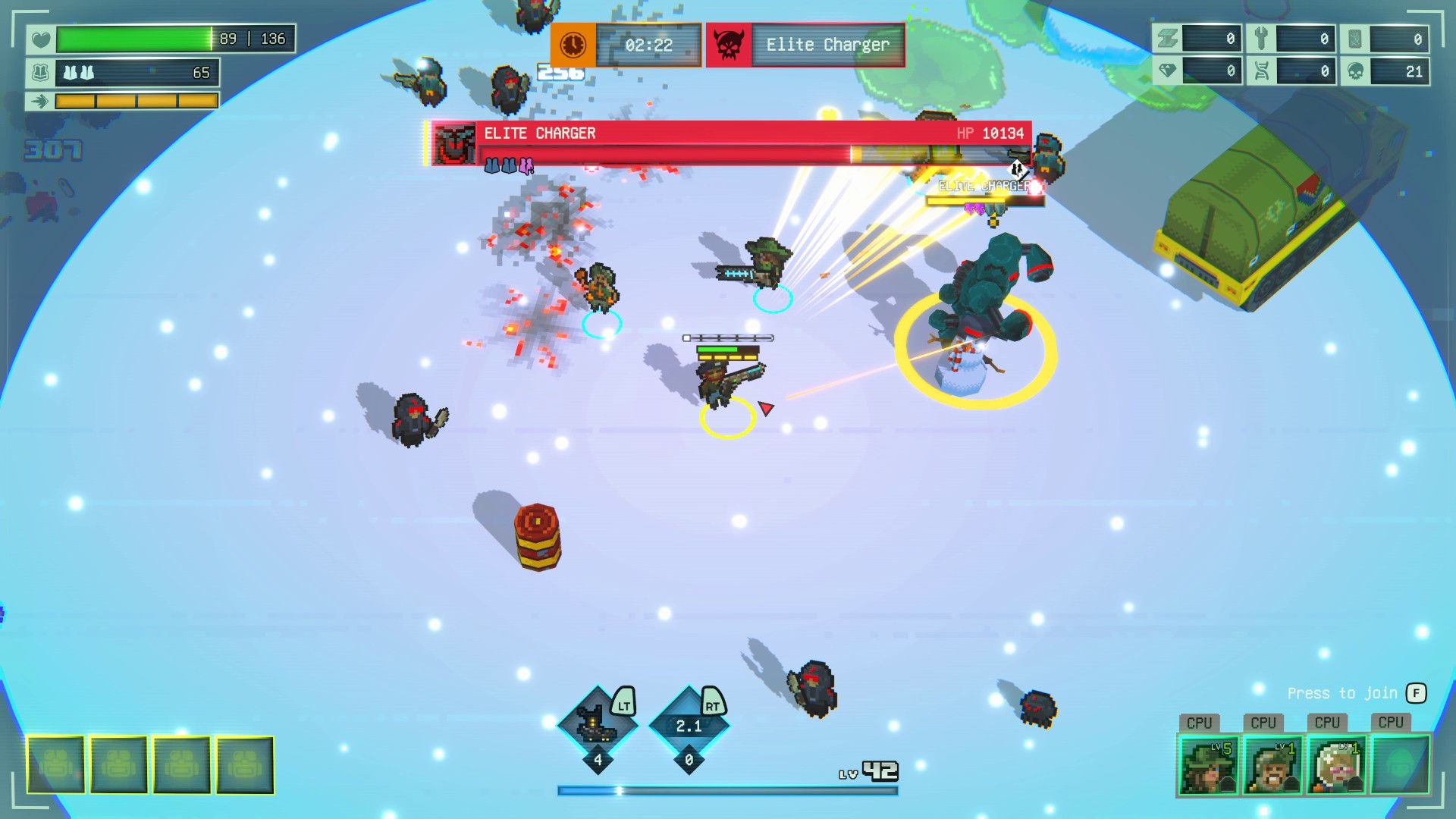
Mercenaries are what separate Survivor Mercs from many other games in the survivors-like genre. During each run, you can unlock up to four additional mercs, with new recruits becoming available further along the mission chain. Missions are selected on a world map, with new routes opening as you progress. Each mission contains a map structured similarly to Slay the Spire, featuring branching paths that lead to different objectives and rewards. These objectives vary depending on the mission type. Time Attack missions require you to strike, loot, and extract before the timer runs out. Escort missions involve guiding a payload to its destination within the time limit. Onslaught missions task you with thinning out large enemy forces, often requiring you to eliminate a specific target before extraction becomes available. Elite encounters focus on defeating a powerful boss before you can proceed.
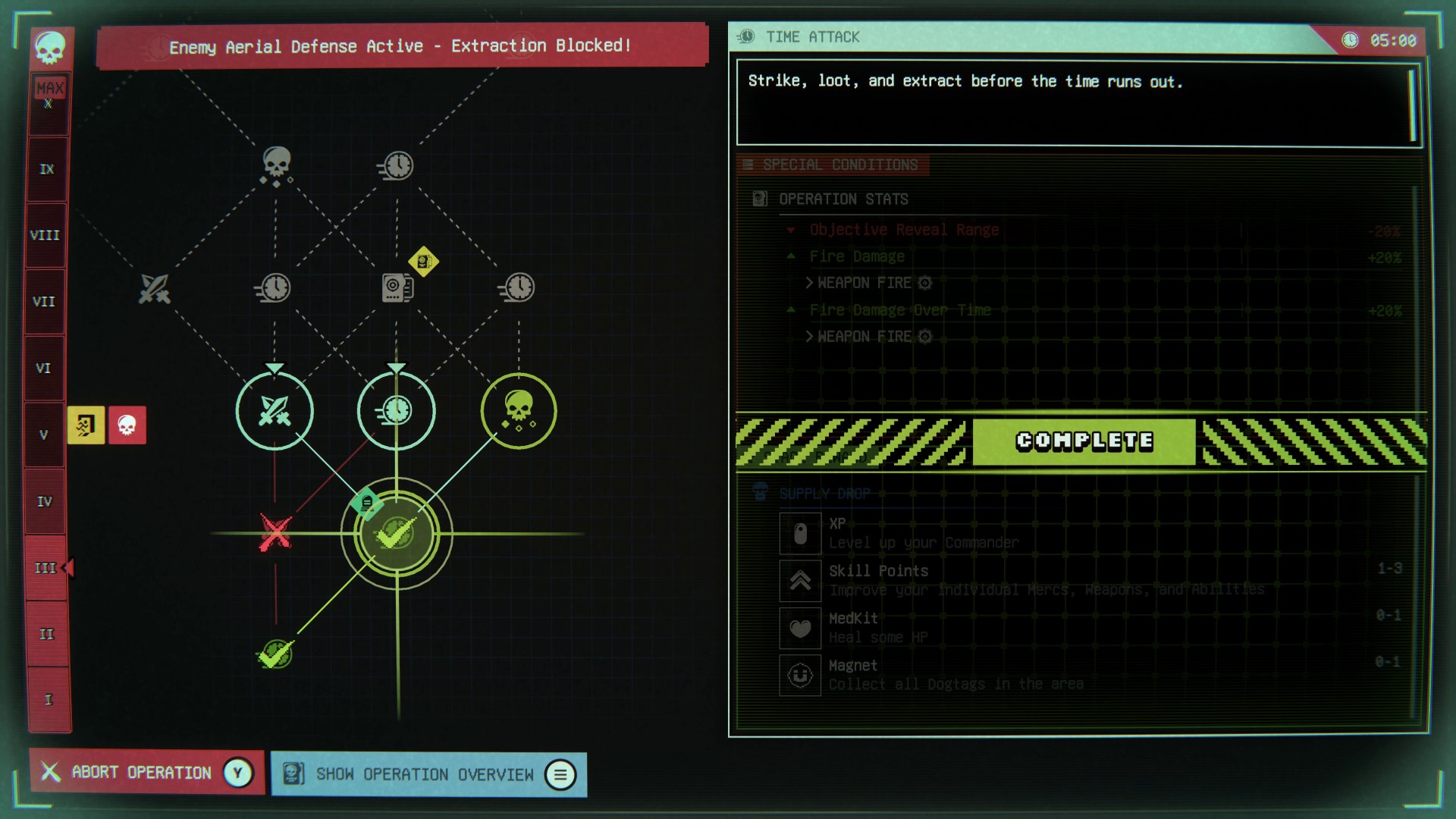
Mission structure does offer some slight variety on paper, but in practice, after 10 or so hours, the different objective types often blur together over time. Onslaught and timed missions all ultimately boil down to clearing waves of enemies while moving between points on the map. The capture point rewards help break things up slightly, but do not fundamentally change the rhythm of play in a meaningful way.
While within these nodes, the mercs can be unlocked by capturing beacons that will allow the player to call in a merc from a group of three, which are randomly picked from the mercs currently unlocked. Mercs are not randomly generated. The game features a roster of 15 mercenaries, with two available from the start and the remaining 13 requiring some sort of action to unlock them while on a mission, such as rescuing them from a map node. Once found, they can be permanently unlocked by spending blood diamonds at the home base. After that, they become available for deployment in future runs and can be called in at merc checkpoints.
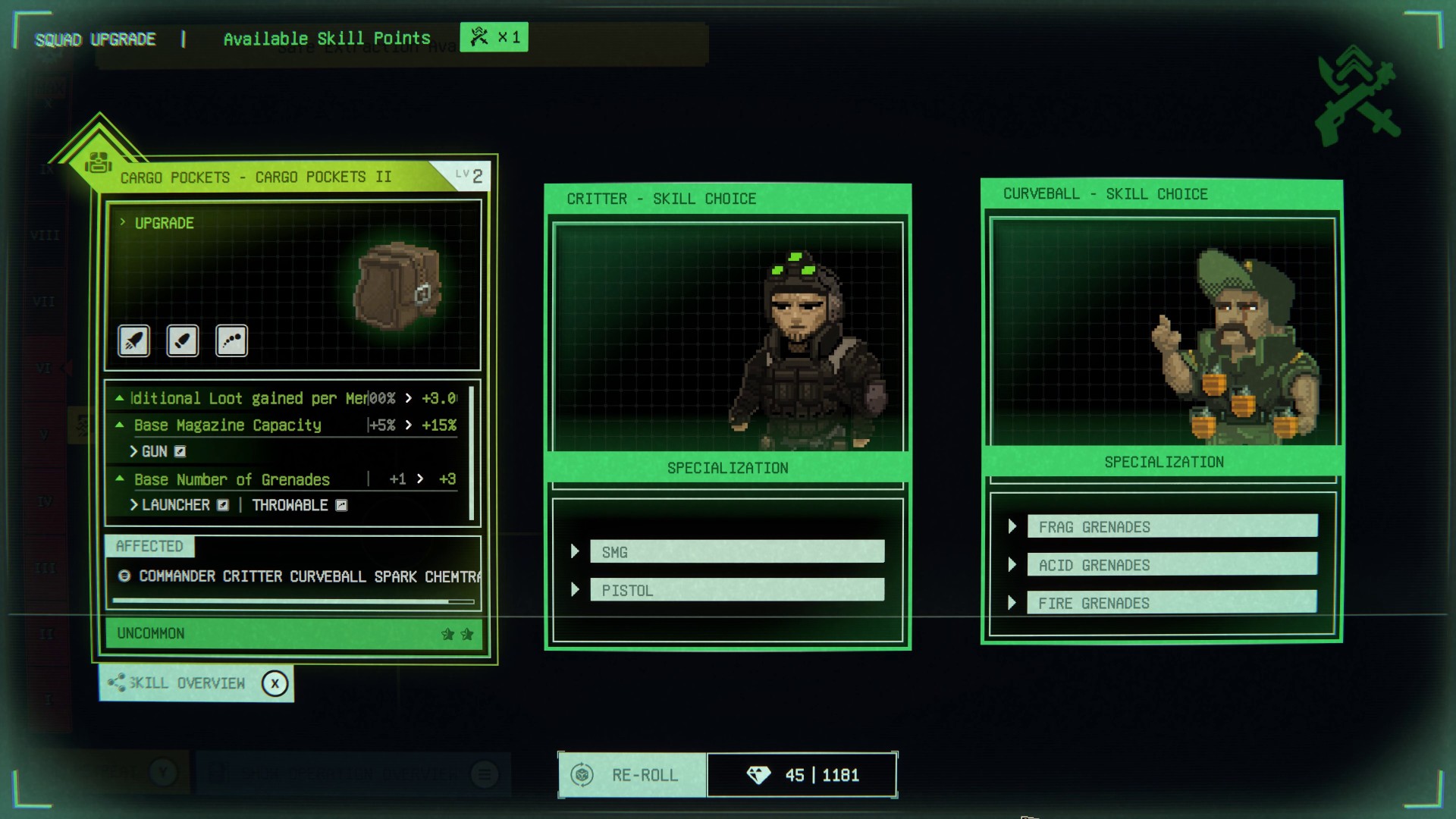
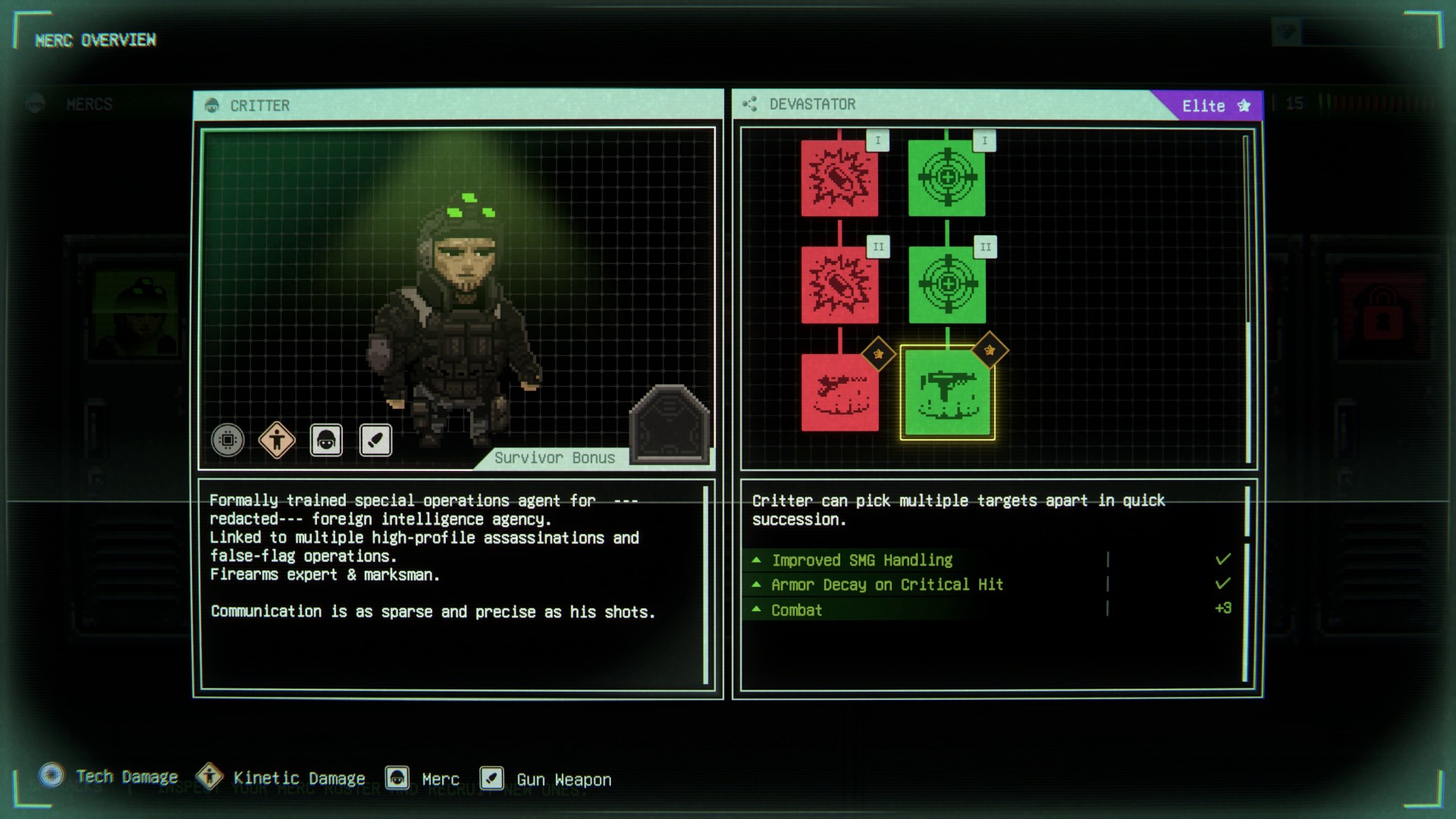
Each mercenary comes with their own skills, skill trees, and combat focus. Reaper is a sniper capable of dealing high piercing damage, while Chemtrail specialises in covering the battlefield with acid for area-of-effect damage. Curveball favours explosives and regularly lobs grenades into the fray, Shredder excels at close-range combat with a shotgun, and Scorch, as the name suggests, is all about setting things on fire. Each merc also synergises with three or four others, encouraging experimentation with different squad compositions to discover combinations that best suit your playstyle and maximise their strengths.
You do not need to worry about controlling the mercs, as they are controlled by the CPU. They automatically follow the player character, staying nearby while attacking enemies that come within range. Having fully controlled AI mercs does mean they run into issues at times, as there is no way to order commands to them, so they will sometimes aim at an undesired enemy or get stuck on a piece of the environment. Cooperative play is also available. Once a merc has been found during a run, a human player can take control of them. Up to four additional players can join, provided all merc slots have been filled, giving each merc full player control. This allows them to aim, shoot, dash, and otherwise play in much the same way as the main character, but based around that unlocked merc’s abilities.
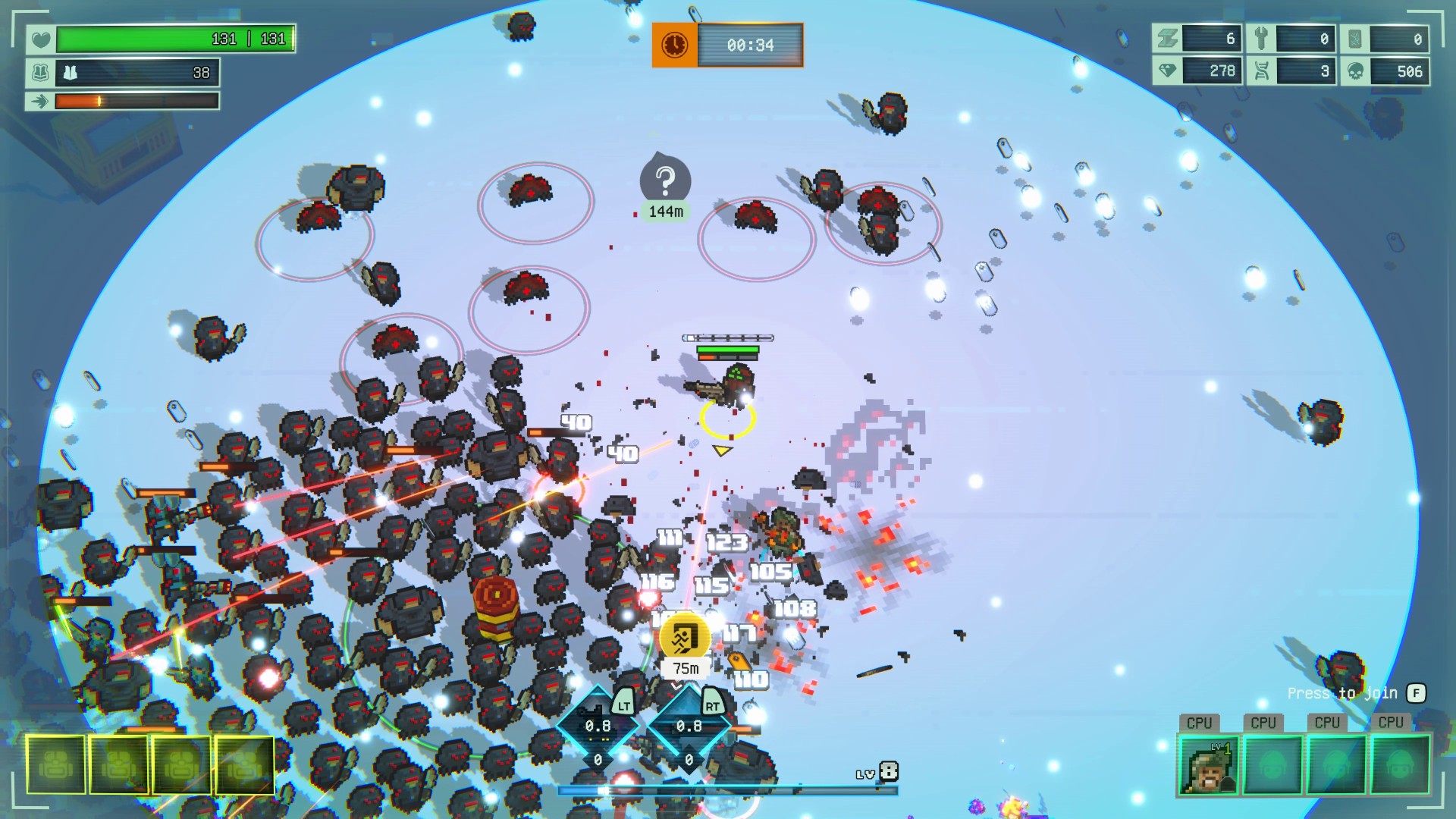
The controls are straightforward whether using a controller or mouse and keyboard, though I opted for a controller due to the ease of twin-stick aiming. The left stick moves the character, while the right stick controls aiming, with RT firing your weapon and LT activating a dash. The game uses an isometric perspective, providing an excellent view of the battlefield and making it easy to spot enemies approaching from any direction.
Movement feels a little on the sluggish side, with the dash acting as the primary means of quickly moving (there is an option in the game to speed up gameplay by a percentage, which helps a little with this). However, the dash operates on a cooldown system and initially provides only two charges, though additional charges can be unlocked through permanent upgrades at the base HQ (more on that later). Weapons also use a cooldown-based ammunition system that effectively acts as a reload mechanic. For example, a pistol may hold six shots, with each bullet taking just over a second to regenerate. If left unfired, the weapon will gradually replenish back to its maximum capacity. This system works well when manually controlling your attacks, as it encourages user management of their attacks. However, it becomes more problematic when using auto-fire.
Within the options menu is the ability to turn on specific auto-aim and auto-fire settings. With these players can make the game feel a little more like a traditional survivors-like such as Vampire Survivors. While that may appeal to some fans of the genre, I found it to be detrimental to how the game is designed to play. Auto-fire works reasonably well with weapons that have short recharge times, but it struggles with weapons that rely on storing multiple charges. For example, the shotgun begins with two shots available. With auto-fire enabled, the game immediately fires both shells as soon as a run begins, leaving the player waiting several seconds for ammunition to recharge. This removes the ability to save shots and unleash them in quick succession when they are needed. The problem becomes even more noticeable with weapons that store larger numbers of charges, making auto-fire feel inefficient unless you are using a weapon with particularly fast recharge times.
Thankfully, the game allows players to use auto-aim without enabling auto-fire. There are also multiple lock-on options available, including targeting the closest enemy, aiming in the direction of hero movement, or prioritising enemies with the highest health. These options provide a useful middle ground for players who want assistance with aiming while still maintaining control over when they shoot. It becomes clear why the developers have emphasised the game’s focus on twin-stick gameplay. Many Commander weapons are designed around situational use rather than constant firing, and the controls feel more natural when played manually. While it is great that the accessibility options are available, relying entirely on auto-fire can leave players at a disadvantage.
Initial rounds start off relatively slowly, with enemies easy to track and eliminate. However, as players progress further up the map towards the boss node, enemy numbers begin to increase significantly, creating a much greater threat despite the maps themselves remaining open and easy to navigate. As players explore, points of interest will appear on-screen with a distance indicator when they are nearby. These capture points and drop zones provide various rewards if successfully secured, including blood diamonds, experience, crafting materials, gear, and consumable items. Some of these items can help clear enemies, such as a screen-clearing explosion or a powerful laser beam that sweeps across the battlefield clearing out the pathway for the player.
Defeated enemies drop dog tags that act as experience points. Collecting these fills an experience meter, and each level gained presents a choice of three upgrades. These upgrades can enhance the commander, improve their weapon, or bolster the abilities and skills of the accompanying mercenaries. Maps can get filled with experience as density of enemies increase, to the point there are elements of bullet-hell gameplay here once enemy numbers begin to swell. Thankfully, the magnet powerup drop helps suck all in these dog tags without having to collect them all, a life saver when there is so much experience left on the battlefield to pick up. Dealing with mass waves of foes requires careful movement and positioning, plus quick reactions all become crucial, and the dash’s invincibility frames are invaluable for escaping dangerous situations or avoiding being trapped in a corner by an overwhelming horde.
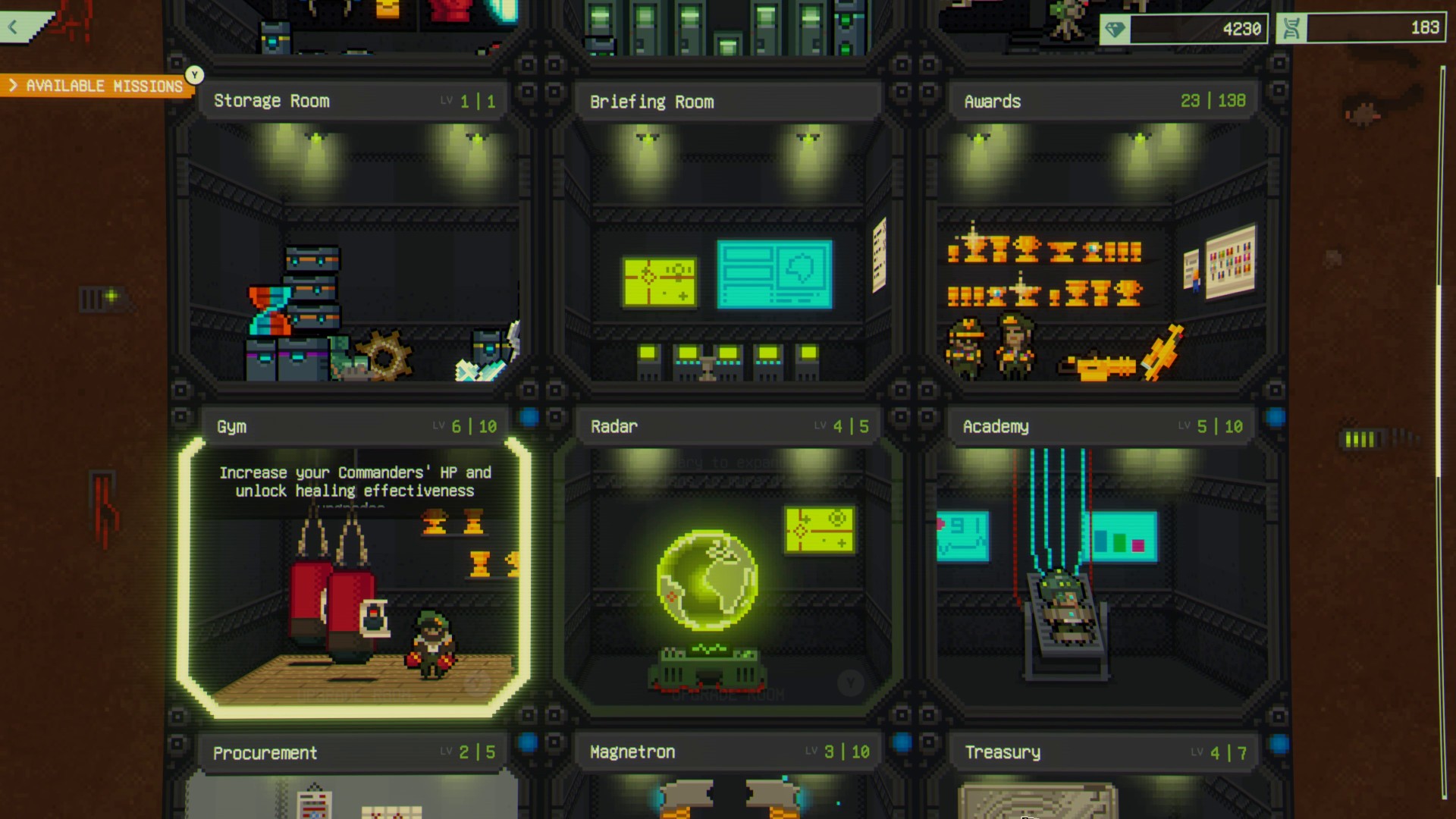
Outside of missions, Survivor Mercs features a bunker HQ that serves as the game’s central progression hub. Here, players can unlock new mercenaries, weapons, and gear, while also investing the resources gathered during runs into permanent upgrades. By constructing and upgrading specialised rooms, players gain bonuses that persist across every run, providing a tangible sense of progression beyond the immediate action.
The range of upgrades available covers a lot. Players can increase the amount of blood diamonds and resources earned during missions, improve starting stats, gain additional skill slots, expand pickup ranges, unlock extra rerolls, and enhance DNA modifiers. Each facility can be upgraded multiple times, encouraging players to invest resources into strengthening the bonuses on offer. Due to the amount, it feels there is always something to unlock for a good few hours of playing, whether that is unlocking a new feature or maximising the effectiveness of an existing one. The overall amount of content feels good for its price point (£8.50 in the UK), making it great value.
As one might expect, running Survivor Mercs is hardly taxing for a modern PC. Even the minimum requirements, which sit around a Nvidia GTX 1060 or AMD RX 570 with 8GB ram and a 2.5 GHz processor, show that this is a easy game to run. The visuals match these requirements, presented from an isometric viewpoint with simple character models and special effects filling the screen during combat. The overall art style leans towards a slightly cute, stylised direction, with chibi-like proportions used for both mercenaries and enemies, helping keep the action readable even when the screen becomes busy. Interestingly, the presentation shifts outside of gameplay, where mercenaries are depicted in a more detailed and realistic style when showcasing their character portraits. Music is decent and has those rock energy vibes, but an issue is each mission is tied to just one song. Expect to hear the same track dozens of times if a mission is long due to its map node layout or you’re struggling with it that it requires multiple attempts to beat.
Overall, Survivor Mercs offers a small twist on the survivors-like formula through its mercenary squad system. While the bunker expansion adds a dressed up take on permanent progression, and the mercenary system and twin-stick focus set it apart on paper, yet in practice missions blur into a familiar loop that the squad mechanics alone can’t rescue. There’s fun to be had here, particularly for genre fans willing to overlook its inconsistencies, but it never quite delivers on the promise of its concept to fully succeed as either a standout twin-stick shooter or a top-tier survivors-like.