Trash Goblin PC Review
I’m not exactly sure how to classify the rise of the cosy video game. It’s not quite a genre, more a style, a tone, or a mood. Whatever it is, it’s been gaining momentum since the early 2020s. Just look at the most recent Wholesome Direct: a dedicated summer showcase that curates cosy games into a global streaming event. This year, it featured over 60 titles, a remarkable number for such a focused niche, and a clear sign that this softer, more comforting approach to game design is growing. I’ll admit I haven’t played many cosy games myself, so when I had the chance to try Trash Goblin, I figured it was the perfect opportunity to clean up my act and explore what this wholesome corner of the video game market is like.
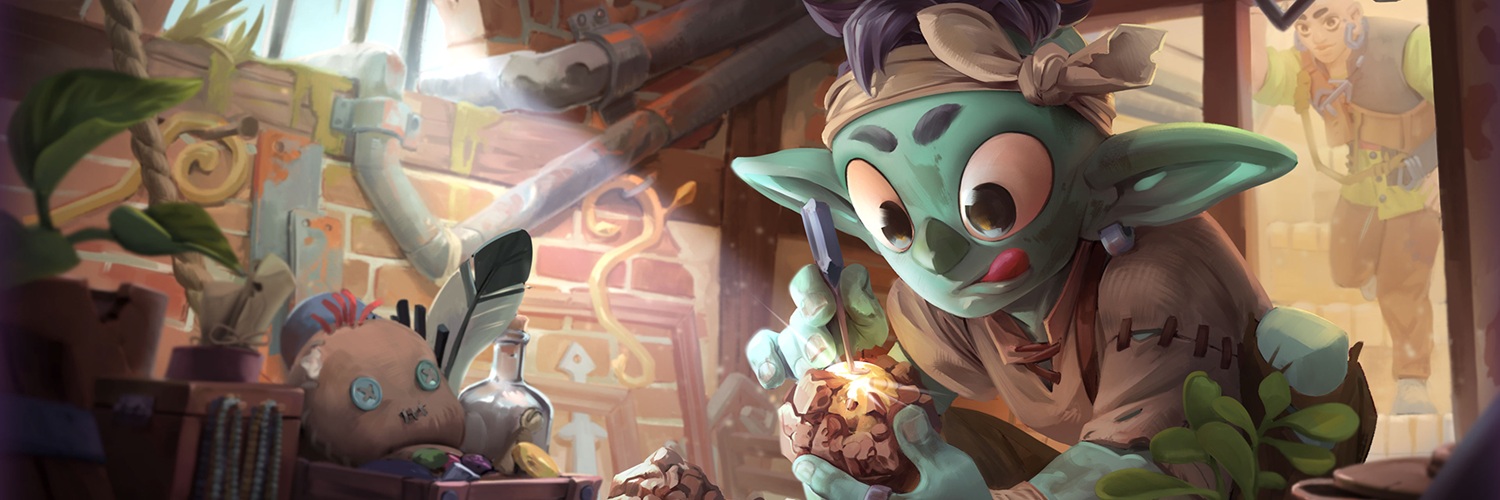
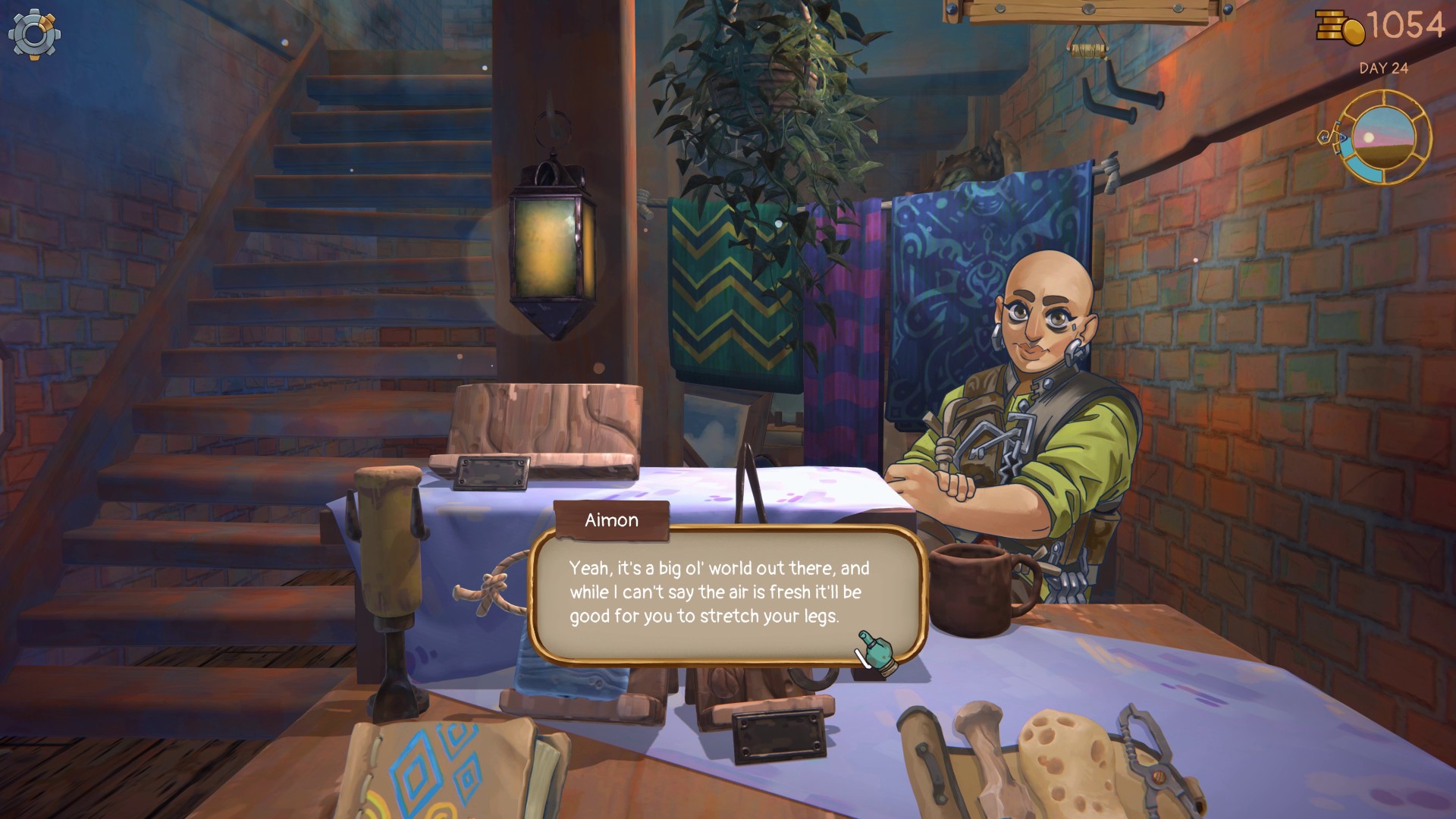
Trash Goblin doesn’t waste time with grand intros as it opens with you, a goblin, inheriting your very own trinket shop nestled in the city of Silver City. That shop becomes your life: dealing with customer requests, uncovering dusty oddities from mysterious spawning sacks, cleaning them up, and piecing them back together. You’ll chat with your friend Aimon, an antique dealer with a mysterious past who acts as the trainer/tutorial for your trash polishing antics, and get to know the city’s characters as they repeatedly visit your shop.
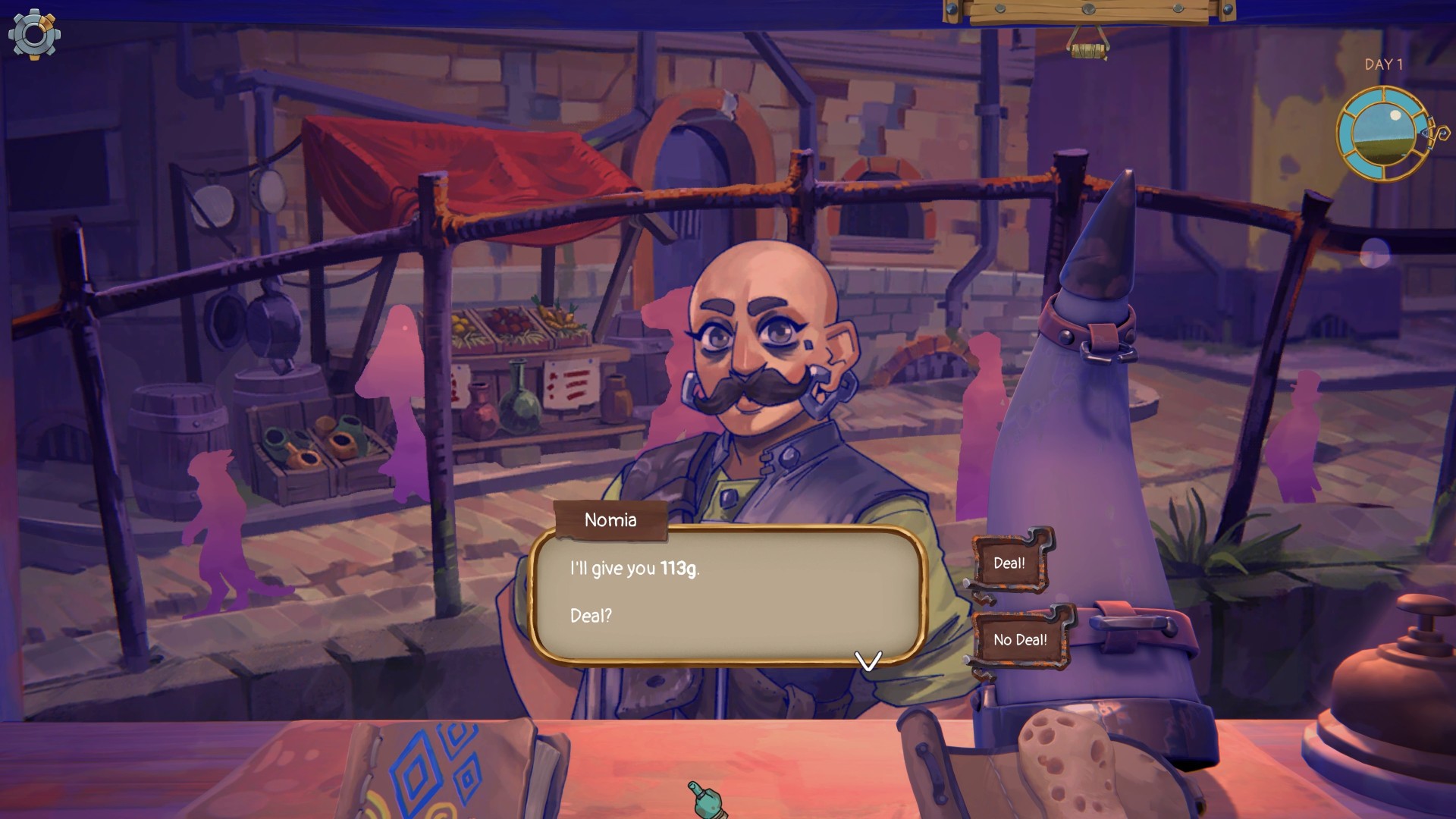
I didn’t play Trash Goblin during its Early Access period, which ran from November 6th, 2024, to its full release on May 28th, 2025, but the full launch brought more story content, including over 30 non-playable characters to interact with. While the narrative remains simple, it becomes a kind of gentle reward. As you chisel through trinkets, the game slowly reveals its cast of quirky characters over the passing days. It’s charming, low-stakes, and just weird enough to feel satisfying after all your hard work scrubbing and piecing things together. The storytelling leans into a visual novel style, with text bubbles appearing during conversations, sadly no voice acting, just quirky little moments of ambient text that build up the characters over time as you work towards your riches. It works well enough as a background element, but I don’t see it sticking in anyone’s memories after been done with the game.
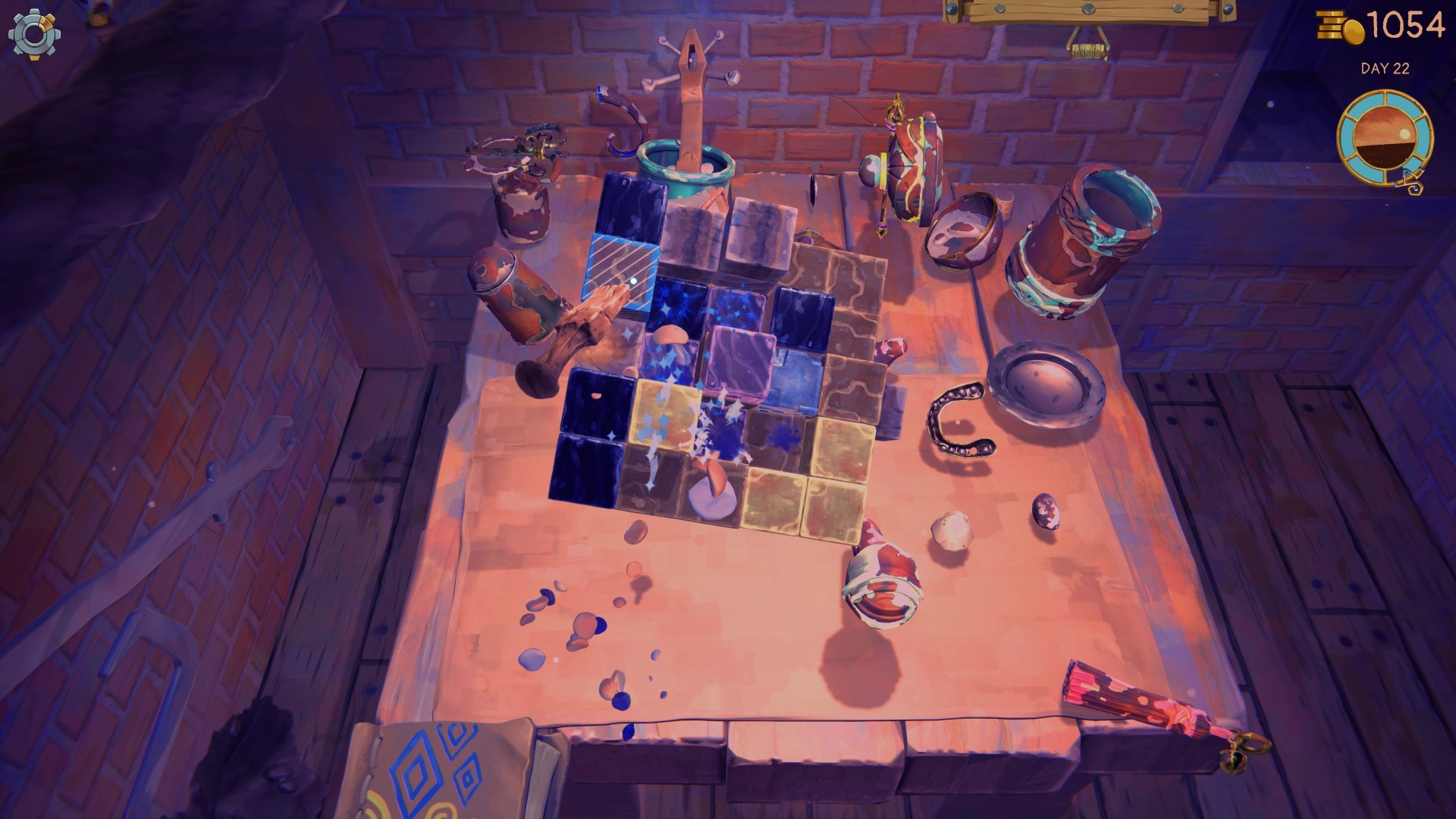
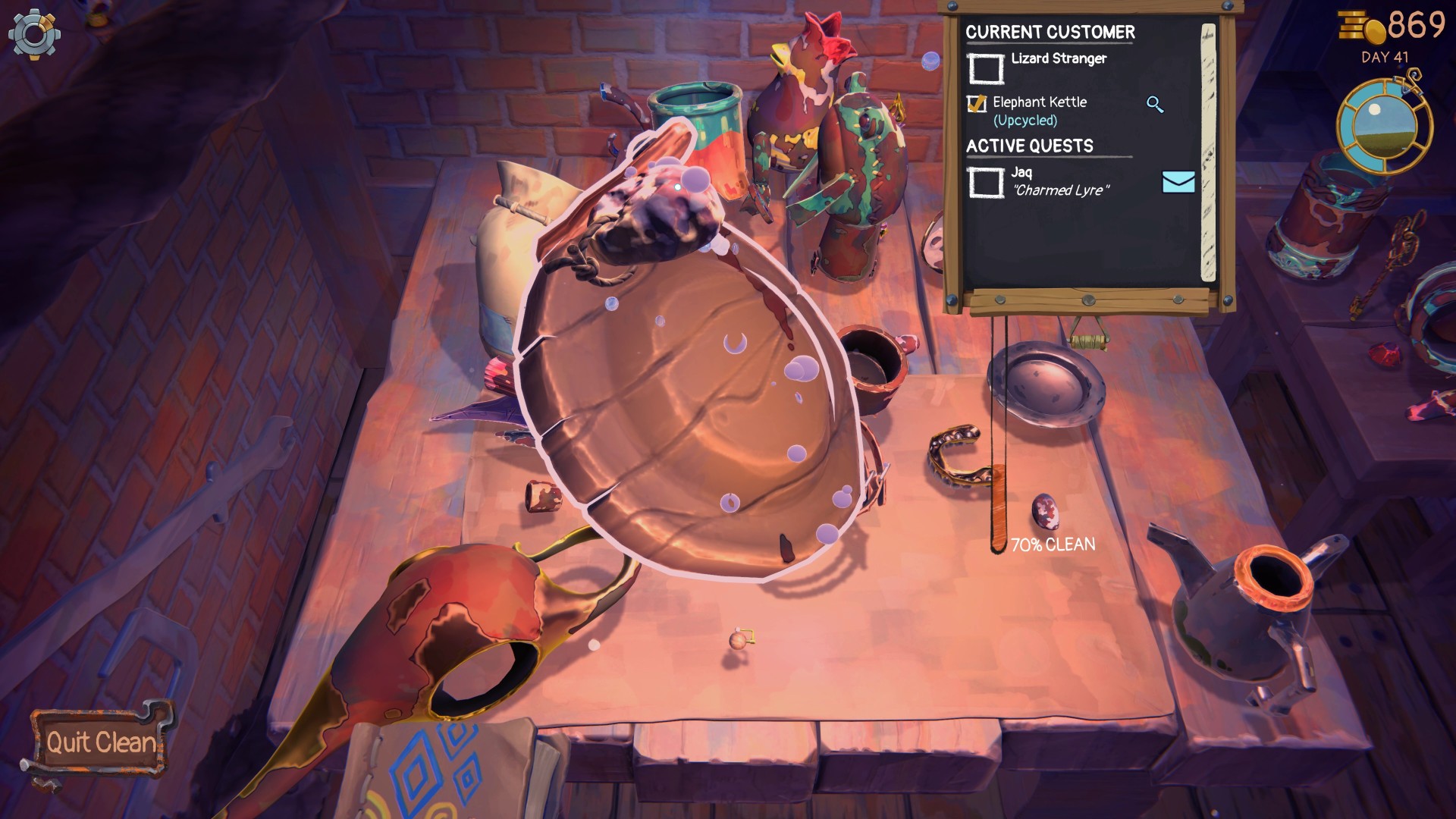
This shop is only a small one, but within its four walls are four distinct areas, each playing a key role in Trash Goblin’s core gameplay loop. The workbench is where bags of junk randomly appear, one at a time, but are unlimited, and where you’ll use the chisel in a mini game to break apart dirt blocks and reveal hidden trinkets. This is the core of item discovery where new stock comes from to sell to customers. Once uncovered, items can be cleaned or upcycled, which will alter their condition and value.
The storefront is where customers arrive with specific item requests. Some don’t mind a bit of dirt, but others want spotless, fully assembled goods. Each customer gives you a task sheet outlining exactly what they’re after, which is useful because it’s easy to get caught up opening junk bags only to realise the item you just revealed isn’t the one needed for the current job. One corner of the shop is home to Aimon, who acts as both a friendly NPC and your upgrade vendor. He offers improvements for your tools, such as improving the chisel so it clears more dirt per hit, sponges that clean faster and more thoroughly, or an upcycler that allows you to combine even more parts into one item. These upgrades can be purchased multiple times, and they meaningfully boost your efficiency.
The final area is the bed, where the you sleep to advance to the next day. Each action in Trash Goblin moves time forward, so the bed acts as the ender to push the day on one. Just behind the bed is a map, which lets you spend a few in-game hours traveling to off-site markets. These trips are great for offloading old stock that regular customers haven’t asked for, especially items sitting untouched in your storage pack, which as the game continues is easy to have way too much stock sitting around on tables and storage chests when the player’s pockets are also full to the brim.
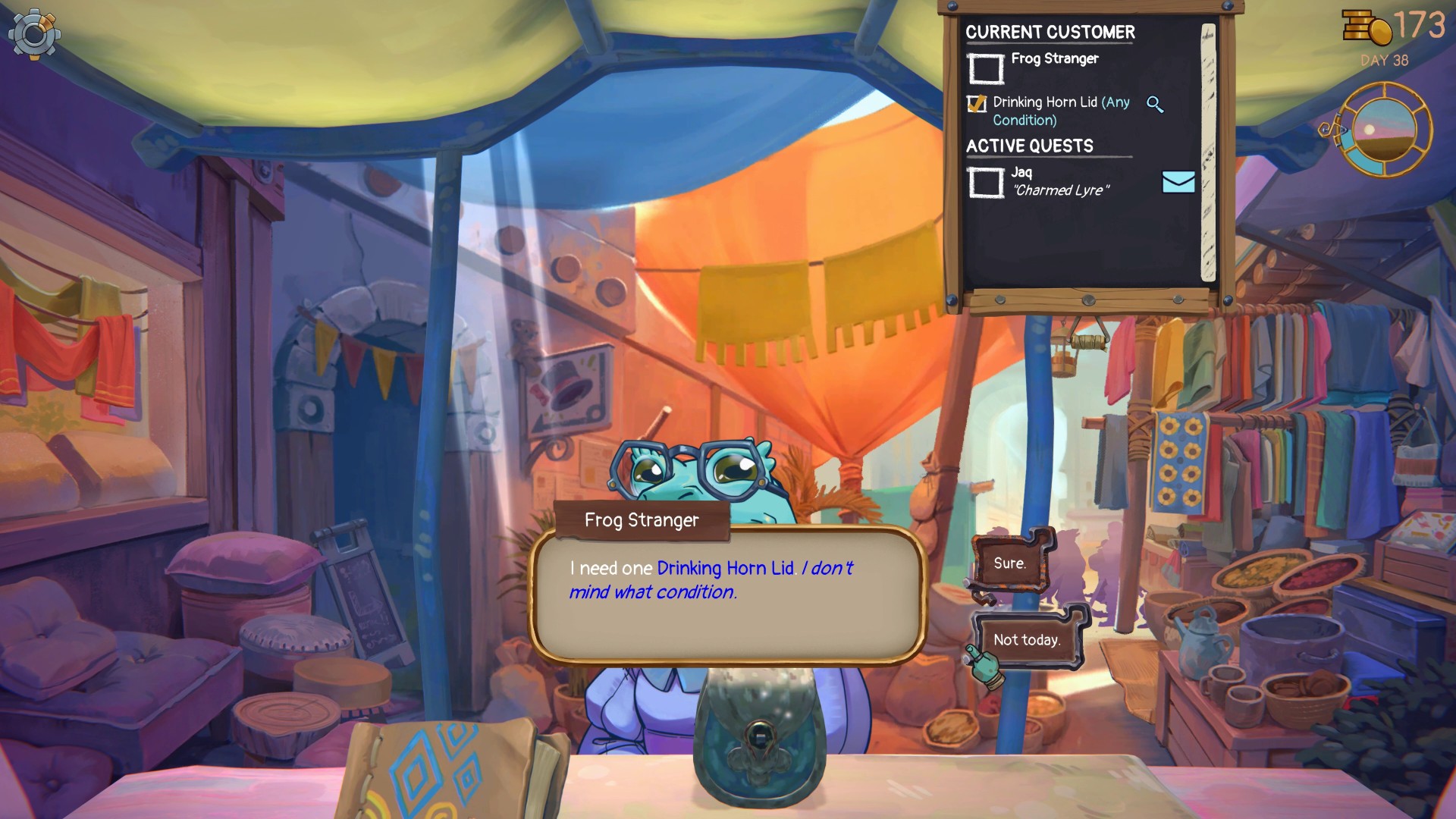
Early on, Trash Goblin introduces its mechanics through a steady stream of simple customer requests. These daily visitors ask for straightforward items, like a cleaned bedpan, a hairpin tassel in any condition, or a fragment of a frog plush. At first, the loop revolves around discovery via chiselling, followed by cleaning and handing over the goods.
As the days pass and the game progresses, the demands grow more complex. Character stories begin to unfold, and word spreads about your goblin’s crafting talents. Soon, customers are asking for multiple items at once or trinkets that require three or more attachments via upcycling before they’re satisfied. With more requests coming in, the shop quickly fills with unused trinkets, waiting for their customer to appear at the store and request it. It’s easy to get overwhelmed with stock. For example, at one point, I had over 50 items cluttering my space. Thankfully, the game offers a smart inventory system. If you already have a requested item in stock, an icon appears next to the customer’s request. Clicking it highlights the item either glowing on the shop floor or shown directly in your inventory. This small feature is a huge quality-of-life asset to the game, especially when your shop is descending into a shop of trinket horrors.
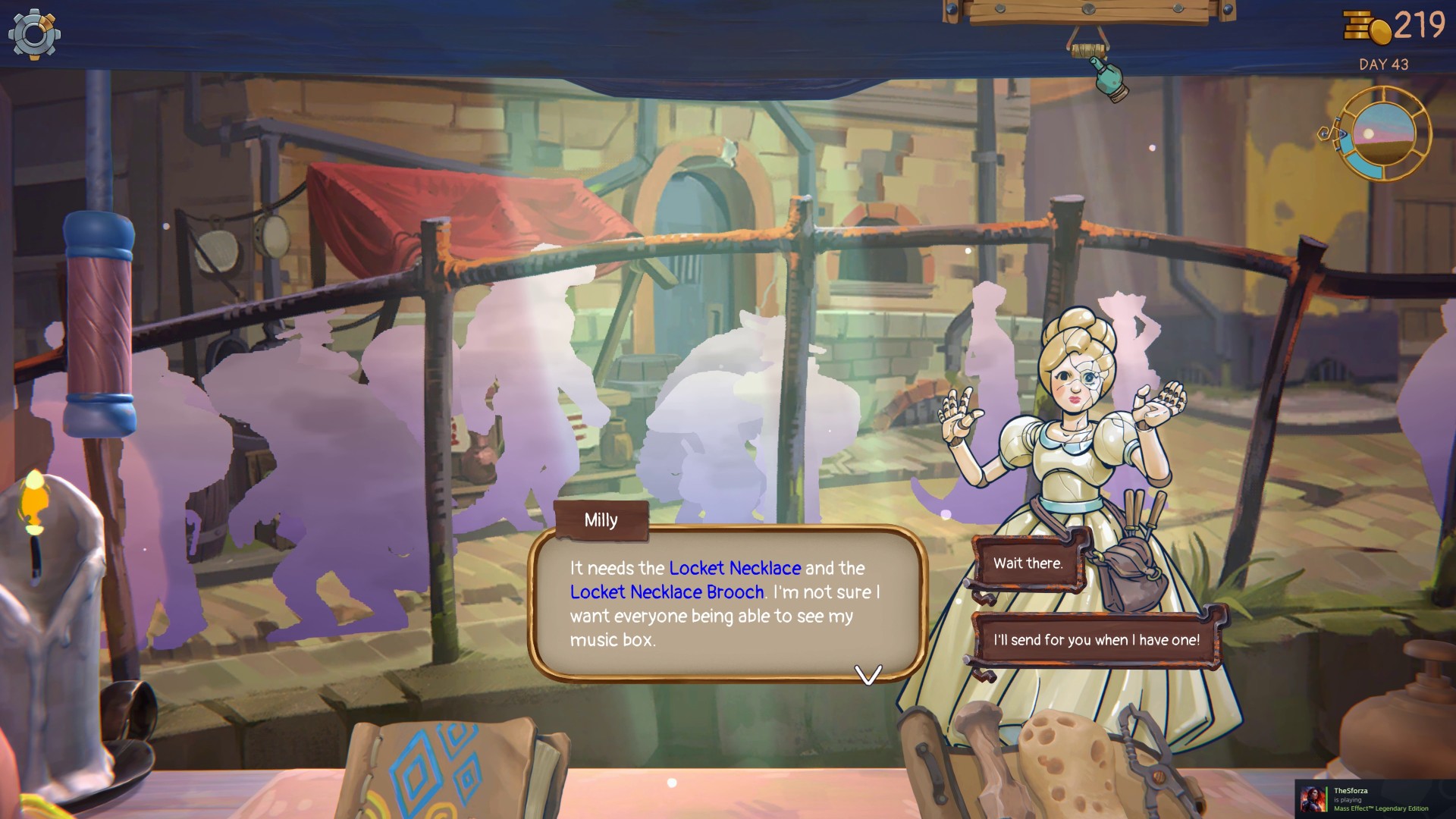
Sometimes, tracking down a part for a customer’s request can take a few attempts, but if it’s not in stock, no worries, you can just send them away and keep the game moving. New customers will show up, and you can continue earning money from them. There’s no penalty for this, and honestly, the game has no negative consequences at all. You can be as generous or dismissive as you like with customers, which is oddly freeing. It’s refreshing to play a game without any failure conditions, but that also means there’s never a sense of urgency. As mentioned earlier in this review, that’s really the point: Trash Goblin is about taking it easy, getting through some jobs, and stepping away whenever you’re ready for a break, until the next time you feel like unwinding with something cosy.
It’s a strange feeling to play a game with no possibility of failure. Performing tasks without any consequences for getting them wrong feels unusual, but that’s simply part and parcel of Trash Goblin’s design. The game does its utmost to make everything as stress-free and relaxing as possible. Some of these features are genuinely good, like the TrinketPedia, which keeps a record of all discovered trinkets and the actions you’ve performed on them. Once per day, it also allows you to order an item you’ve previously found. This is perfect for when a customer asks for something you don’t currently have lying around, and it will pop up in stock the next day. It does cost gold, but you can always sell a few extra trinkets, and the money quickly rolls back in.
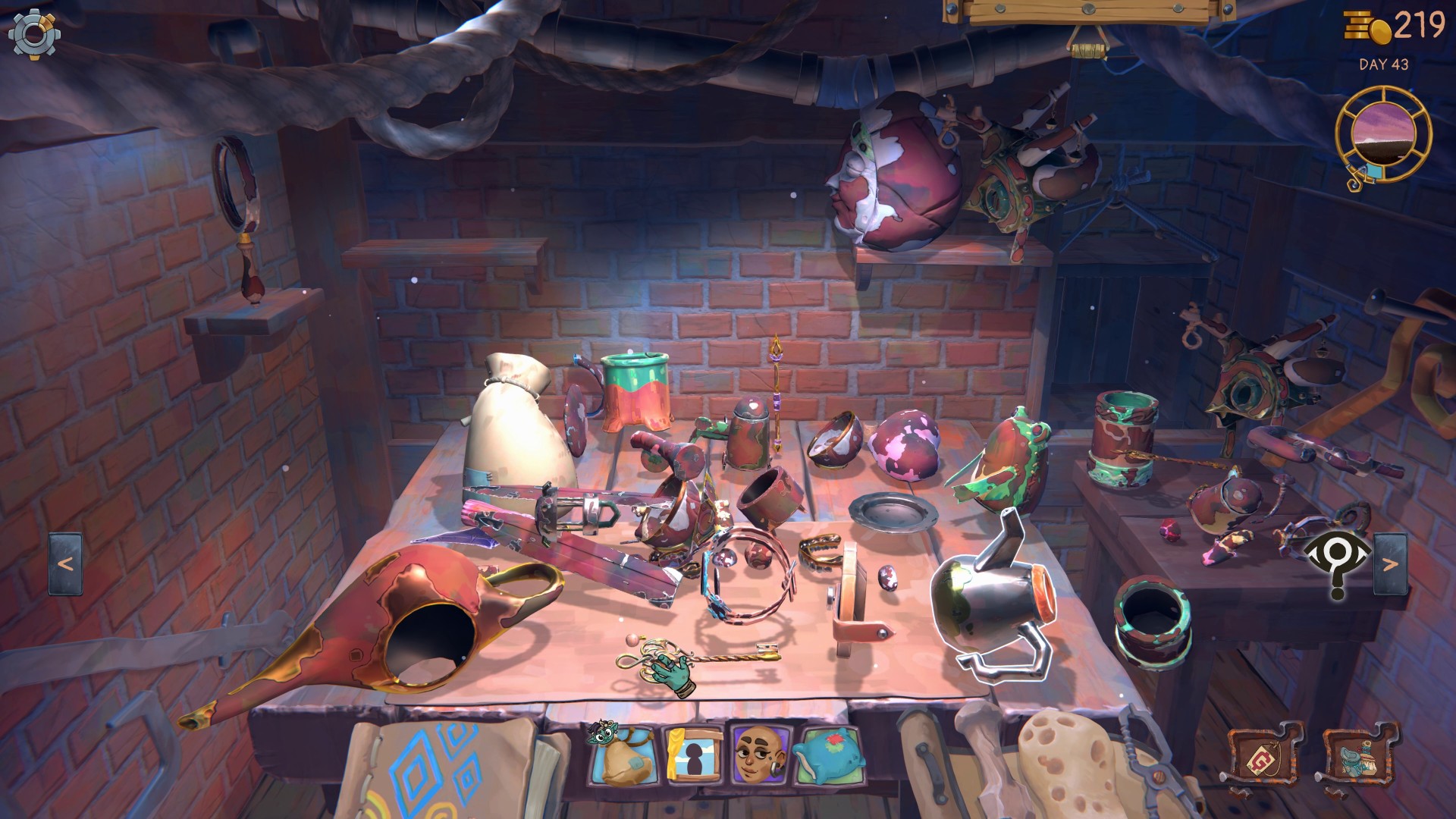
Talking about performance in a game like Trash Goblin almost feels unnecessary, simply because it’s so undemanding. Running it on my high-end setup featuring a Ryzen 7 7800X3D paired with an RTX 5090 is complete overkill. The system requirements are minimal, with DirectX 11 GPU and a Intel Pentium 2GHZ or something similar being the only real baseline, meaning just about any modern PC or even lower-end laptop should be able to run it without a hitch. This is largely thanks to the game’s mix of hand-drawn 2D portraits and simple 3D models with limited animation, which makes for a lightweight demand.
Visually, Trash Goblin has a charm. The character portraits are quirky, giving personality to customers to the otherwise repetitive cycle of requests. After a few hours, the backgrounds can start to feel sterile, especially as you’re often rooted in the same location performing the same actions rotating around the four walls for each of the four actions they provided. Fortunately, the game allows for some customisation through purchasable upgrades, which can alter your shop’s visual elements and add a bit more personality to the environment. It’s the same for the item design. These are detailed enough and imaginative that they serve the game well.
After a while, my time with Trash Goblin began to feel mundane. I saw what the story had to offer, lasting around 7–8 hours. The recent 1.1 patch (Spirit of Customer Service) adds a handful of new trinkets, a small new character storyline, and a few more achievements to chase, but these additions are minor and don’t significantly change the experience. Once the story wraps up, there’s little incentive to keep playing beyond simple completionism and achievements. The cosy process that begins as satisfying slowly drifts into repetition, as the core gameplay loop doesn’t evolve much. With no consequences, no time limits, and no customer satisfaction to consider, your choices lack weight. You can ignore requests, hoard junk, or sleep through days without penalty. There’s nothing serious pushing you forward bar the story, so prepare to polish more trinkets to satisfy more endlessly polite customers.
There are also a few minor but noticeable annoyances with Trash Goblin’s presentation. Objects can occasionally get stuck on parts of the environment, most notably the trinket bag, which sometimes clips into things and stretches across the screen in bizarre ways (as seen in the gameplay video below). One particularly frustrating moment happened during chiselling: a large trinket I had already uncovered was still sitting on the workbench mat because I was running out of space. Its oversized shape got in the way of my clicks, which kept registering on the trinket instead of the dirt blocks I was trying to chisel. With no way to move, hide, or temporarily store items mid-action, it became a tedious workaround. I had to awkwardly reshape the block to avoid colliding with the object. To make matters worse, there’s no way to cancel or exit out of the chiselling action once you’ve started, so for a moment I genuinely thought I was stuck. Thankfully, I managed to chisel the trinket out and move on, but it was a damn frustrating time.
Trash Goblin has the basics of a cosy experience, offering a casual, low-stakes loop with charming characters and accessible mechanics. It’s pleasant, undemanding, and occasionally fun, but it rarely stretches beyond those foundations. The lack of failing mechanics keeps things relaxing but also dulls any sense of progression or challenge. As the systems begin to fade and repetition sets in, even the new patch content struggles to reignite that initial enthusiasm, it begins to lose its appeal. There’s enjoyment here, for sure, especially in short bursts, but it’s the kind of game you put down once the novelty wears off or the story wraps up. A fun little distraction, but not a noteworthy one.