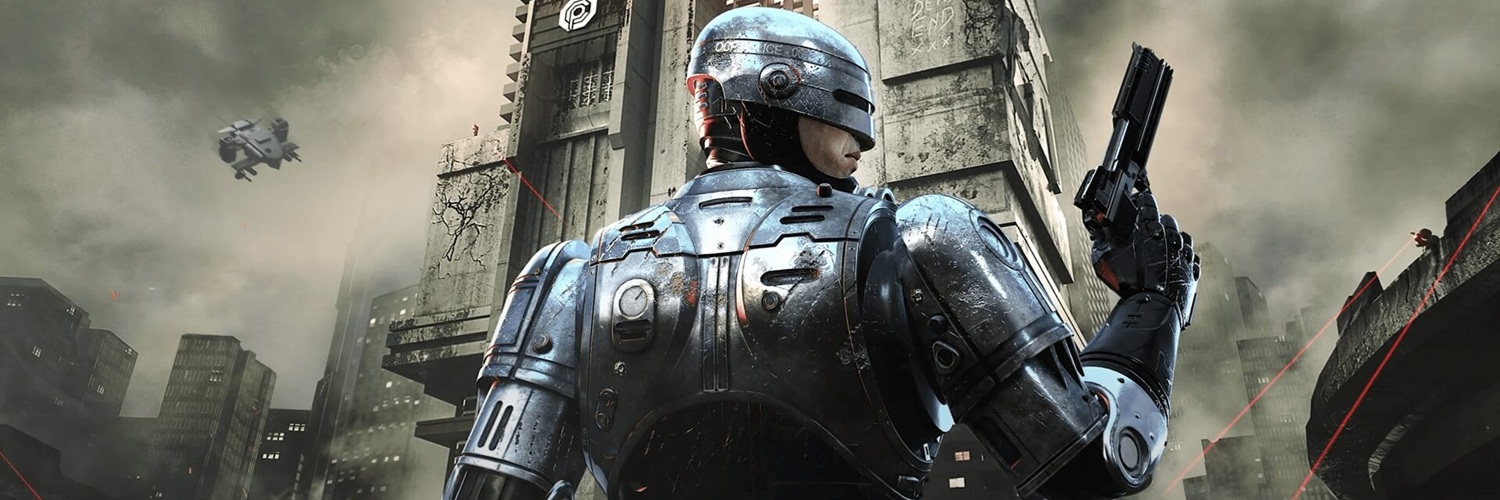
RoboCop: Rogue City – Unfinished Business PC Review
RoboCop: Rogue City – Unfinished Business feels like an encore to a game that delivered something fans have waited some time for: the chance to roleplay as the walking tinman himself, RoboCop. Now RoboCop is back, thanks to this new standalone expansion from Teyon, and he has unfinished business that needs taking care of. RoboCop: Rogue City was a dream come true for RoboCop fans, a lovingly crafted power fantasy that brilliantly captured the heavy-footed, law-upholding brutality of the iconic cyborg. Unfinished Business continues that authentic success that was portrayed in Rogue City with this fresh continued new story. It walks the same beat as before, but when the beat is RoboCop, that’s not such a bad thing to experience again.
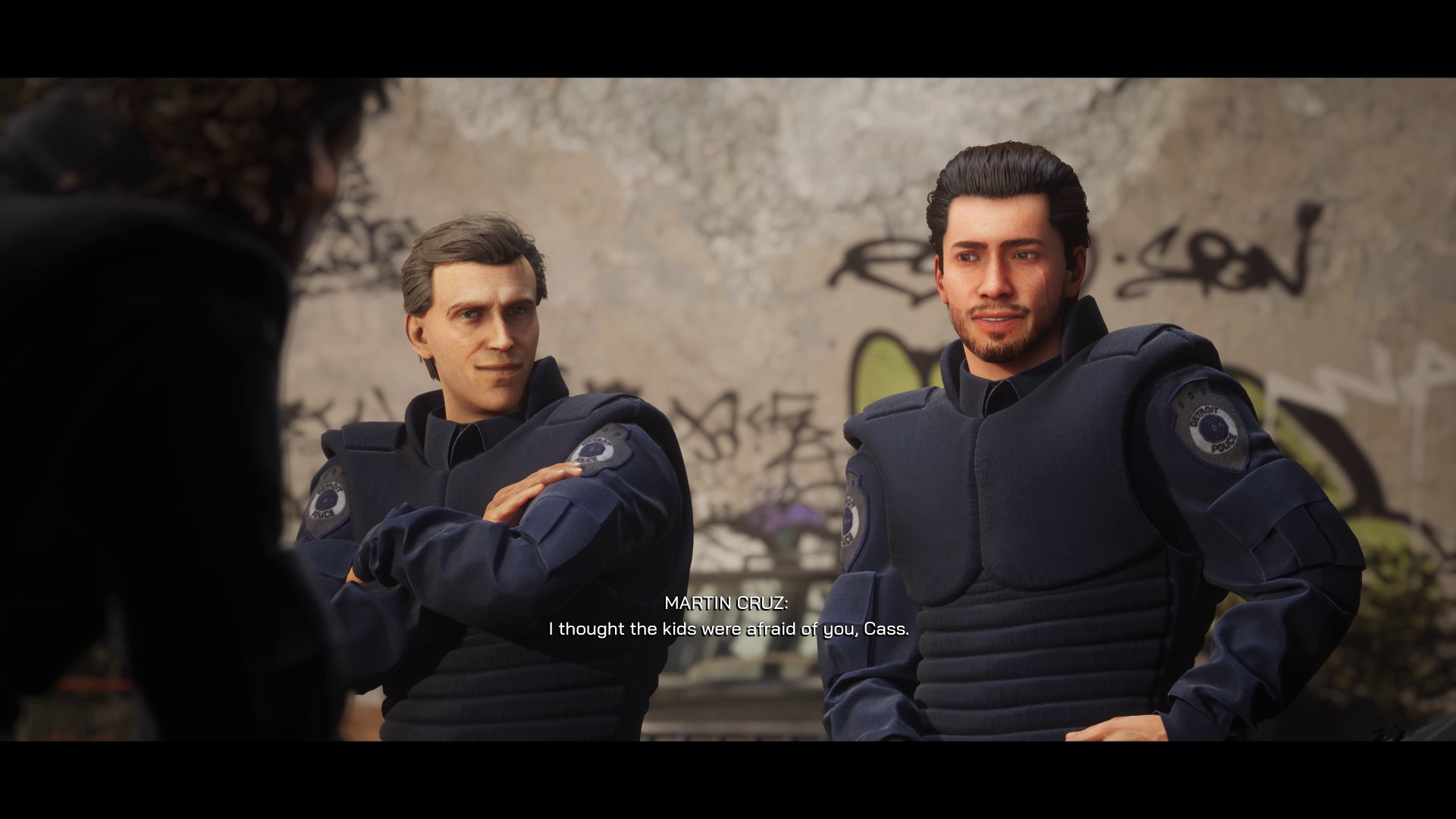
Still wedged narratively between RoboCop 2 and 3, Unfinished Business picks up after RoboCop’s victory over Detroit’s gangs in Rogue City. This standalone expansion opens with a brutal assault on the Metro West Precinct, leaving cops dead and RoboCop’s OCP interface equipment stolen. Our tinman is sent to OmniTower, a massive housing complex built by OCP for Old Detroit’s displaced residents. Now, it’s become a vertical fortress of crime. With the tower outside police jurisdiction and OCP’s tech at risk, RoboCop must ascend floor by floor, dismantling the criminal stronghold before they gain control of the OCP’s arsenal and RoboCop himself.
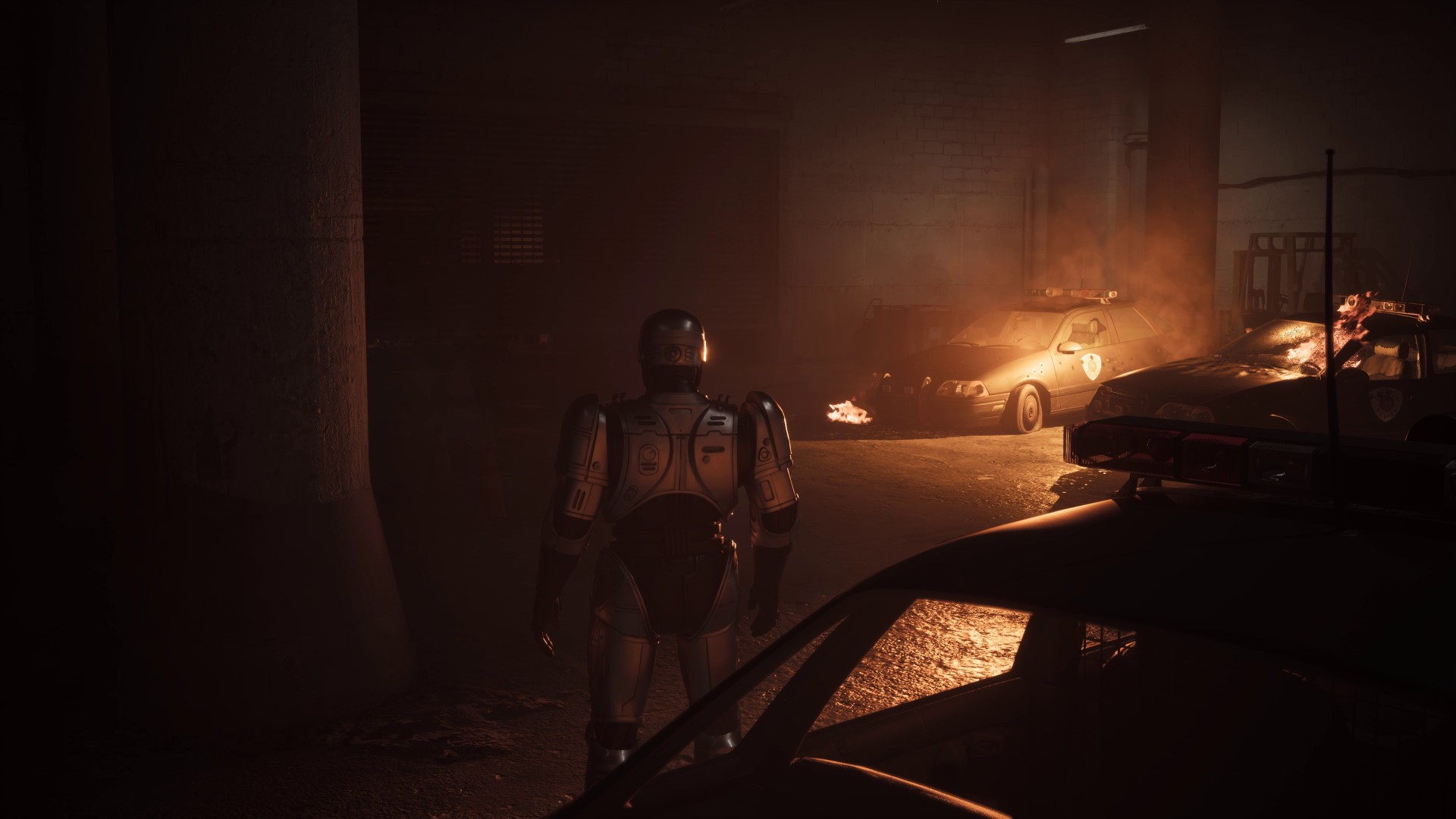
The structure of this expansion immediately brought two films to mind: The Raid and Dredd. The premise is strikingly similar; a lawman must fight his way to the top of a building teeming with criminals to reach a final target. I guess the developers at Teyon are fans of those movies, because Unfinished Business leans hard into that same vibe, the tropes are unmistakable as RoboCop moves through each level, administering his brutal brand of justice to anyone standing in his way who won’t hand themselves in quietly. And in all honestly, that is great, because those two films are rather fantastic in their own way on tackling a similar theme. if you were a fan of the action in the previous entry, Rogue City, then this premise might put a smile on your face.
But unlike the films it draws inspiration from, Unfinished Business isn’t as well-paced across its roughly nine-hour runtime, which is a length that genuinely surprised me. The game has consistently been marketed as a standalone adventure priced at £24.99, which is £20 cheaper than Rogue City. That game took me just under 12 hours to finish, so I was expecting a six-hour experience here. Instead, Unfinished Business stretches longer, but not always to its benefit.
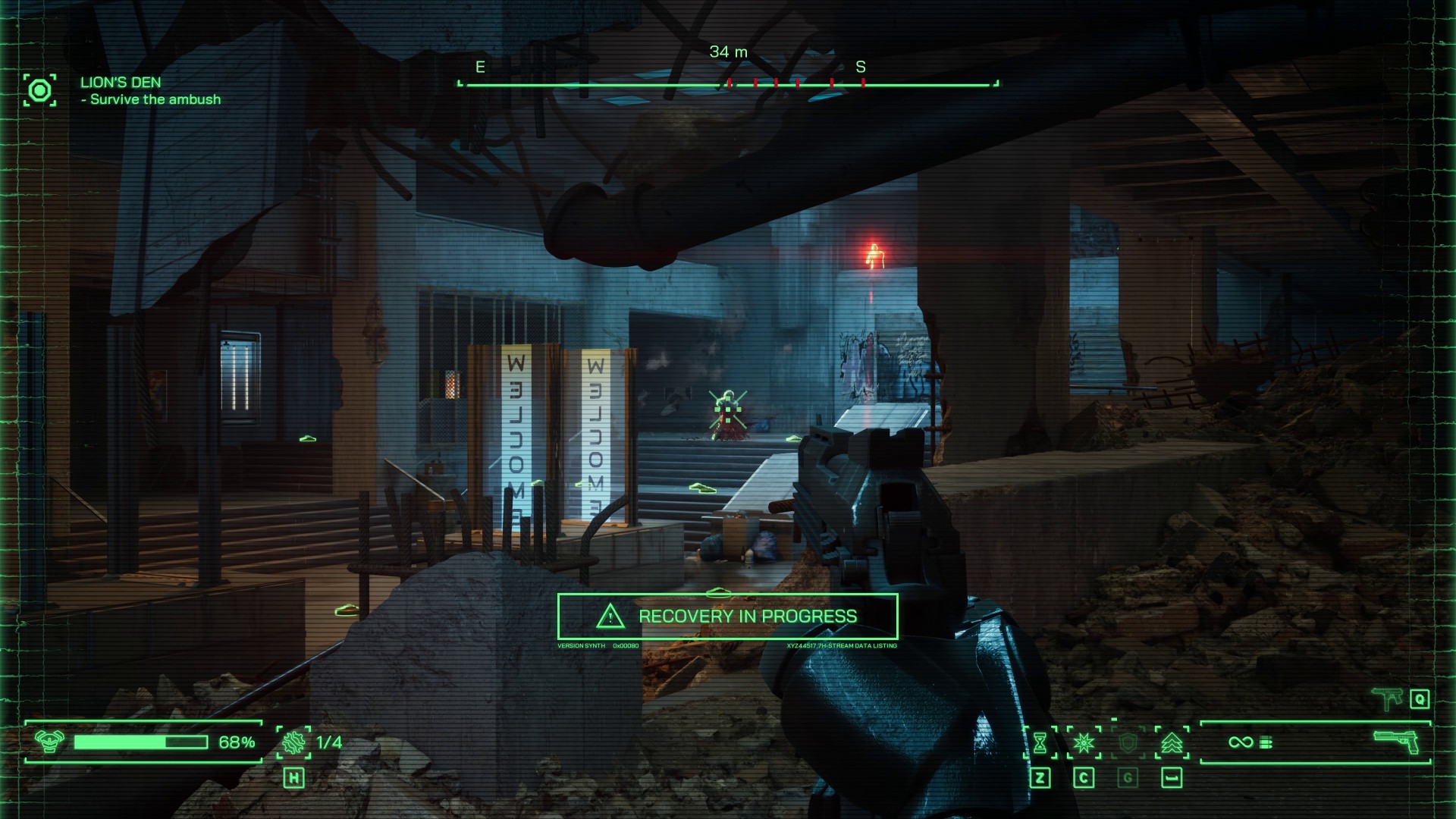
The pacing feels uneven, as there are occasional side quests, similar to those from Rogue City, which had RoboCop do small tasks for the citizens, that break up the combat, though some arrive at the most inappropriate moments and are the most mundane things. The core story is usually pretty good, but it can also have slow moments. One example that stands out is during a tense pursuit of the game’s main antagonist, RoboCop loses his trail and instead of keeping the pressure on, he’s suddenly slowed down to find a smuggling gang as part of the main quest to help find a secret passage. It’s a jarring shift that halts the momentum.
Combat in Unfinished Business takes place across the various floors of the OmniTower, a setting that starts out tight and enclosed, with most encounters happening at room range. As the game progresses, the environment shifts into various themes, like apartments, small shopping areas, garbage compactors, and opens in the last couple of levels as the player makes their way to the top of the tower, where the skyline becomes visible through its open-beam architecture, offering a more expansive battleground when flying enemies become involved.
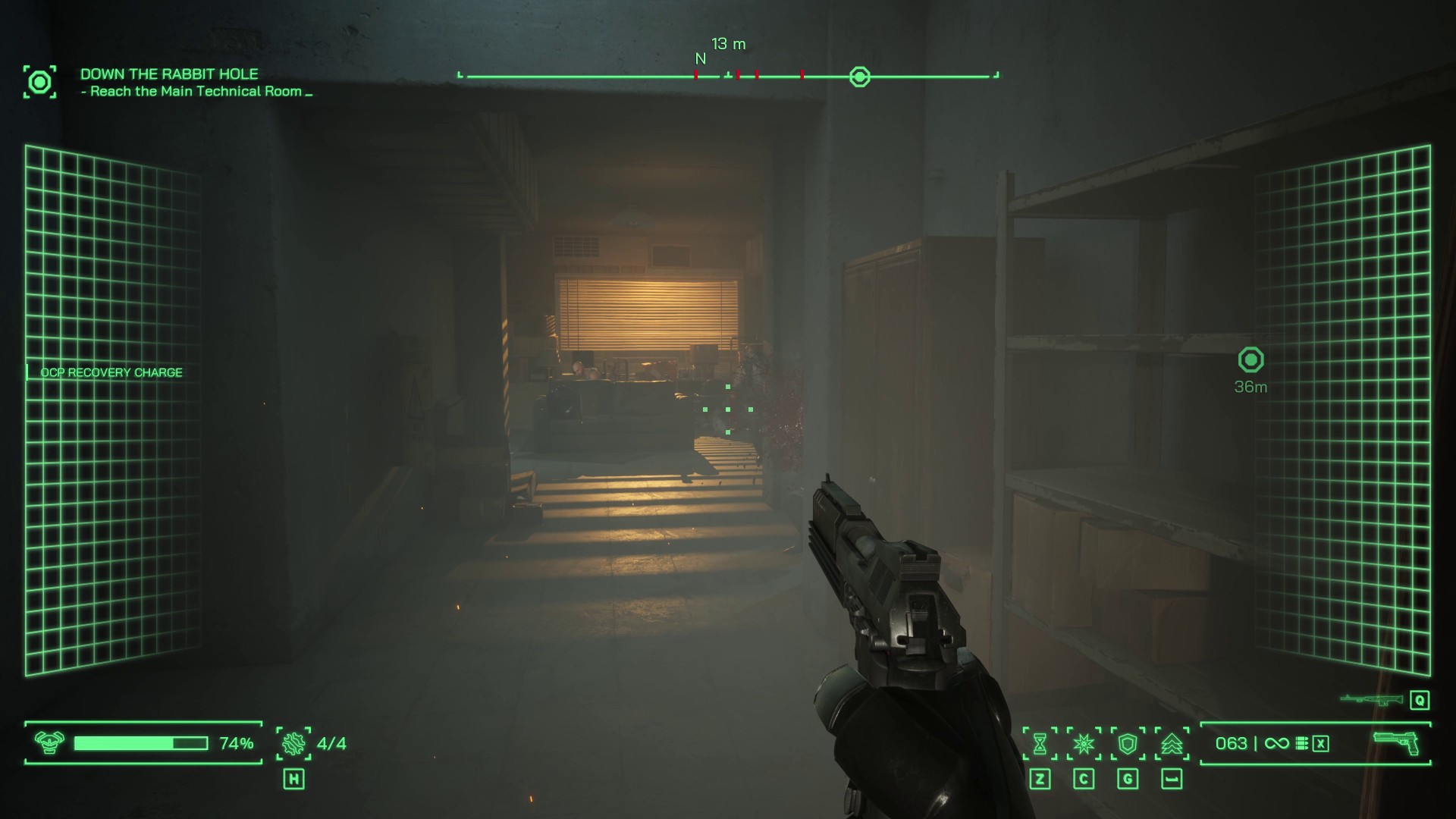
RoboCop retains all the abilities unlocked in Rogue City, including his bullet-time-style slow-motion for precise aiming, a flashbang to stun enemies, a quick dash to close the gap, and a deployable shield for absorbing extra damage. This means players have full access to RoboCop’s arsenal of abilities right from the start, avoiding the common “Metroid-style” trope of losing powers and gradually relearning them. It keeps the pace brisk and allows players to dive straight into the action without having to go through the story of relearning old skills.
Just like in Rogue City, the Auto 9 remains an absolute powerhouse in Unfinished Business. The gun not only sounds and feels fantastic, but it can also be upgraded with circuit boards that drastically change its behaviour. However, one disappointment is that the circuit modding system appears to be unchanged from Rogue City. The same mods and abilities are here to unlock again, which feels like a missed opportunity as some new upgrades or enhancements for the pistol would have added more variety.
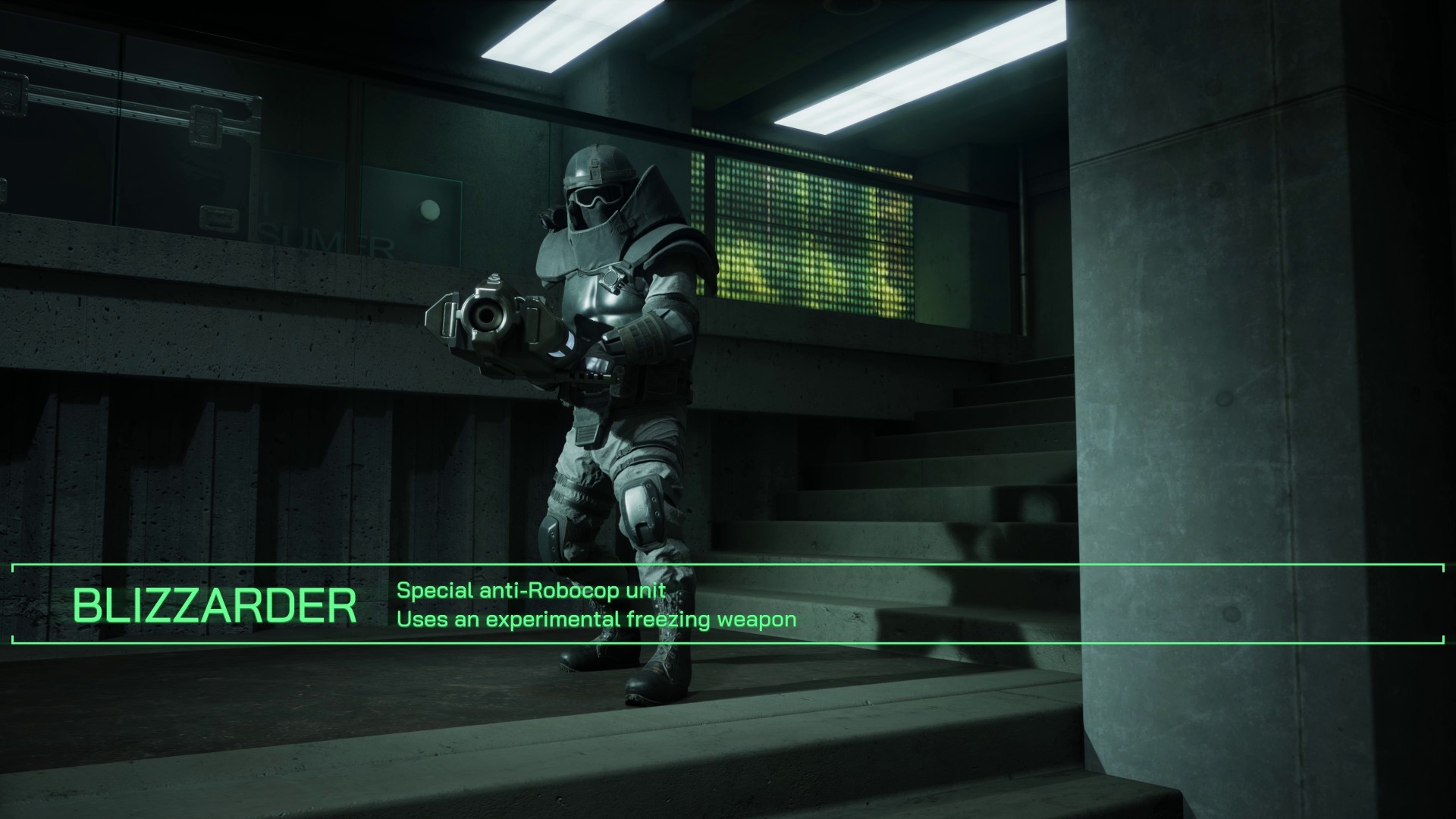
That said, the existing mods are still a blast to use. One gives unlimited ammo per clip, while another turned the Auto 9 fully automatic, reducing enemies to bloody, perforated heaps. It’s ridiculously fun and brutally effective, especially since the Auto 9 has unlimited reserve ammo. In contrast, all other weapons come with limited ammunition and small magazine sizes, making them feel like throwaway tools next to RoboCop’s iconic pistol. The only one I felt was worth using was the newly introduced Cryo Cannon, a big gun that launches an ice blast that will freeze any enemy caught within its radius, making for some easy kills. The gatling gun isn’t half bad too, allowing fans to live out their Terminator dreams as RoboCop. Still, every shot from the Auto 9 delivers bone-crunching impact: heads pop, limbs fly, and the violence stays true to the over-the-top brutality of the films and is clearly the best gun to use.
A fresh roster of enemies makes the OmniTower assault more engaging than before. Katana-wielding cyborg ninjas with unsettling, botched facelifts charge at RoboCop in a clear homage to RoboCop 3’s Otomo. Flying drones swarm in from the rafters when alarms blare, while exploding mini-bots sprint toward RoboCop in kamikaze fashion. Turrets guard key choke points, requiring a quick hack via nearby laptops to turn them onto your side.
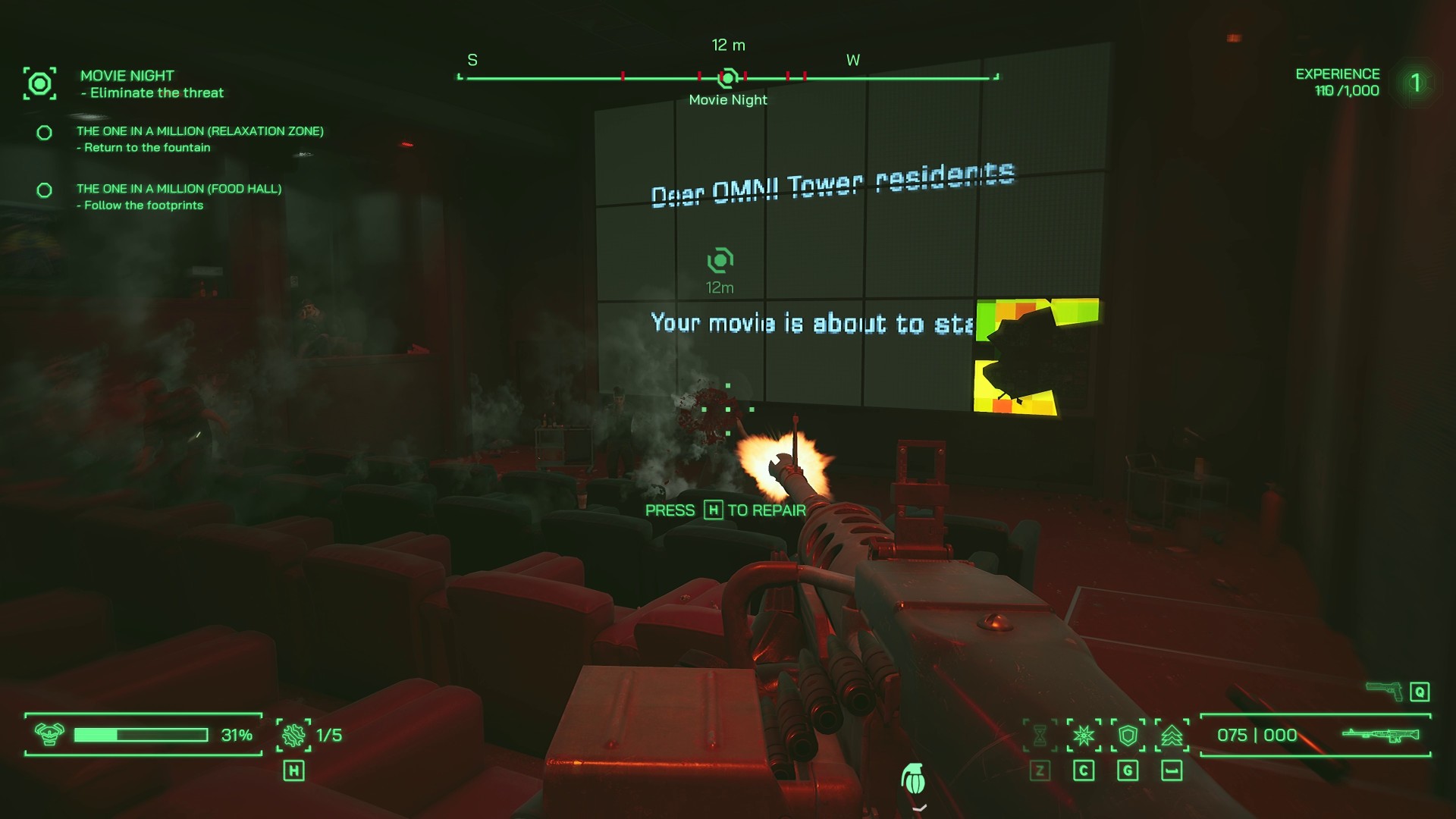
On the human side, there’s no shortage of heavily armed opposition. Gangsters and elite mercenaries come equipped with assault rifles, grenades, gatling guns, and even jetpacks, all relentlessly trying to bring RoboCop down. The combat overall feels more intense this time, with larger enemy counts and more frequent waves, especially during the game’s climactic moments. Just as the action starts to risk becoming repetitive, the game smartly breaks things up by letting you take control of an ED-209 and unleash destruction on enemy forces including other ED-209 units. It’s a satisfying power shift and a well-timed change of pace.
Unfinished Business continues to run on Unreal Engine 5, and it still looks great because of it. For an AA title, the visual presentation is impressive, featuring current-gen graphical staples like Lumen lighting, Nanite geometry, software-based ray tracing, and support for upscaling tech such as Nvidia’s DLSS and AMD’s FSR to help maintain performance. At native 4K with max settings, the game remains demanding, but on an RTX 5090, I was getting between 85–100fps without any upscaling. It’s just a shame that kind of performance comes at such a steep hardware cost.
Unlike Rogue City, however, I encountered a few stability issues. I had around five crashes, all flagged as Unreal Engine errors, plus a couple of instant application shutdowns when loading the game and hitting “Continue”. These came without any error message, so I’ve no clue what caused them. Reloading the game usually fixed it, but it does suggest the expansion could use a bit more polish.
RoboCop: Rogue City – Unfinished Business is more of the brutal, authentic RoboCop power fantasy fans loved when it comes to its intense combat. Gunplay is as meaty and over-the-top as before for the series, with the iconic Auto 9 still stealing the show. However, the expansion comes with some uneven pacing and technical issues that weren’t present in the original. It’s one for fans of the first game’s action but be prepared for a few rough edges in its current state.