AI Limit PC Review
When a genre becomes popular many developers attempt to recreate the magic that made it successful. Right now, the Soulslike genre is one that players can’t seem to get enough of, and developers show no signs of slowing down. The market is filled with quality Soulslike experiences, with each offering its own punishing combat, intricate world-building, and sense of accomplishment through hardship. FromSoftware pushed boundaries with the open-world stunningly successful Elden Ring. Hexworks introduced a dual-reality mechanic in Lords of the Fallen (2023), where players switch between worlds using a magical lantern to progress. Gunfire Games blended procedural generation and randomized quests in Remnant/Remnant II, proving the genre’s versatility. The list of good Soulslikes is decent, but today, we’re diving into AI Limit, the latest entry from SenseGames, a young indie studio founded in 2019 in China that wants to tackle the genre.
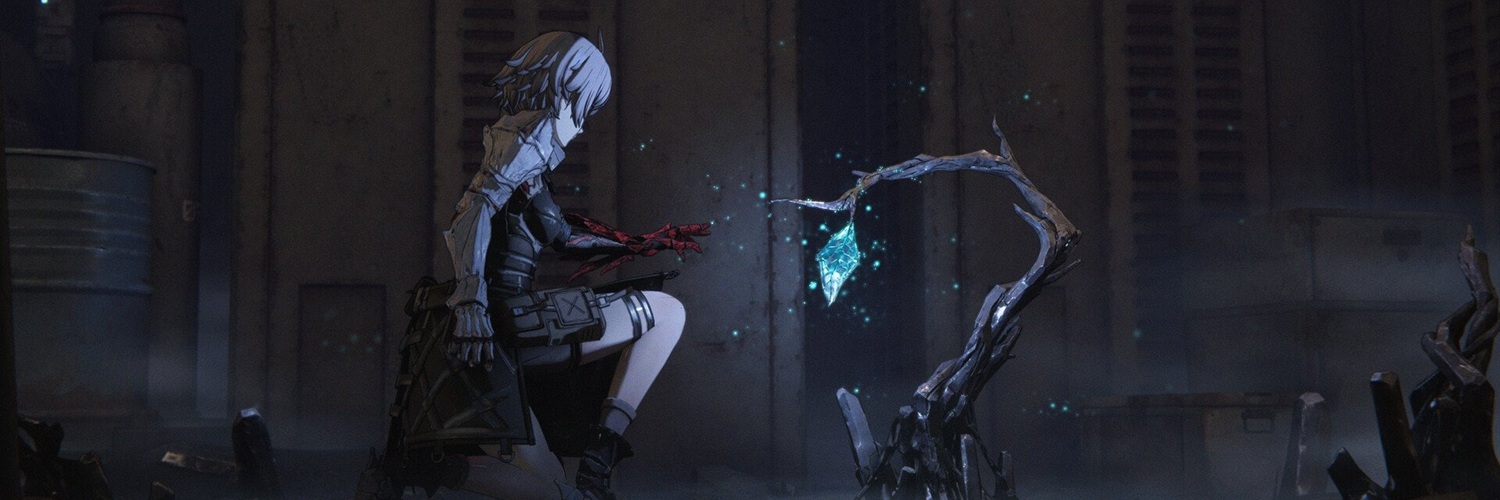
Set in a bleak future where artificial ecosystems have failed, natural disasters have ravaged the earth, and endless wars have left the world to ruin. The story follows Arrisa, an android crafted from arcane technology, who awakens in Havenswell’s grimy sewers. The city of Havenswell is an important place as this is where the last remnants of civilisation exist. Arrisa does not remember much as she suffers from memory lost. Arrisa is not an ordinary character; she is a blader, a unique lifeform born from advanced technology, endowed with the ability to resurrect at specific locations known as branches. These branches, reminiscent of the bonfires popularised by From Software’s Souls series, have suffered damage and require Arrisa’s to restore them. Muddying her journey is the presence of a mysterious substance called Mud, which has seeped into the city, spawning monstrous threats that endanger both Arrisa and the remnants of civilisation.

The story in AI Limit is delivered in classic Soulslike fashion. With the protagonist, Arrisa, suffering from memory loss, players uncover the world’s secrets alongside her, gradually learning about the people, places, and conflicts that define Havenswell. Cutscenes are sparingly used. These are primarily here to introduce formidable bosses or brief flashbacks that are tied to fixing some of the breaches encountered throughout her journey. Instead, the narrative is pieced together through cryptic logs, environmental details, and character interactions in Havenswell, encouraging players to construct their view of the narrative through this slower story delivery. This style of storytelling isn’t for everyone. Those who prefer a more direct and structured narrative may find the gradual, fragmented approach challenging to follow. However, for those who enjoy unearthing lore through exploration and inference, AI Limit offers this. Personally, I found the more science fiction setting entertaining after playing a lot of fantasy based Soulslike, and the relationships between the Church, the Necros, and the Bladers, along with their philosophical underpinnings, provided a compelling motivation to continue to the end.
AI Limit has linear progression typical of some Soulslike, favouring a structured path over the open-world freedom or the flexibility to attempt to the game’s zones in a non-scripted order. The game pushes players through Havenswell’s forsaken zones with each area flowing directly into the next. While these environments offer side quests and minor alternate paths, such as hidden optional bosses, the exploration remains tightly constrained. Unlike Dark Souls, where interconnected zones allow for varied progression and discovery, AI Limit limits your ability to venture into different areas out of order. This approach makes the game feel narrower in scope, trading a sense of discovery for a more directed route.
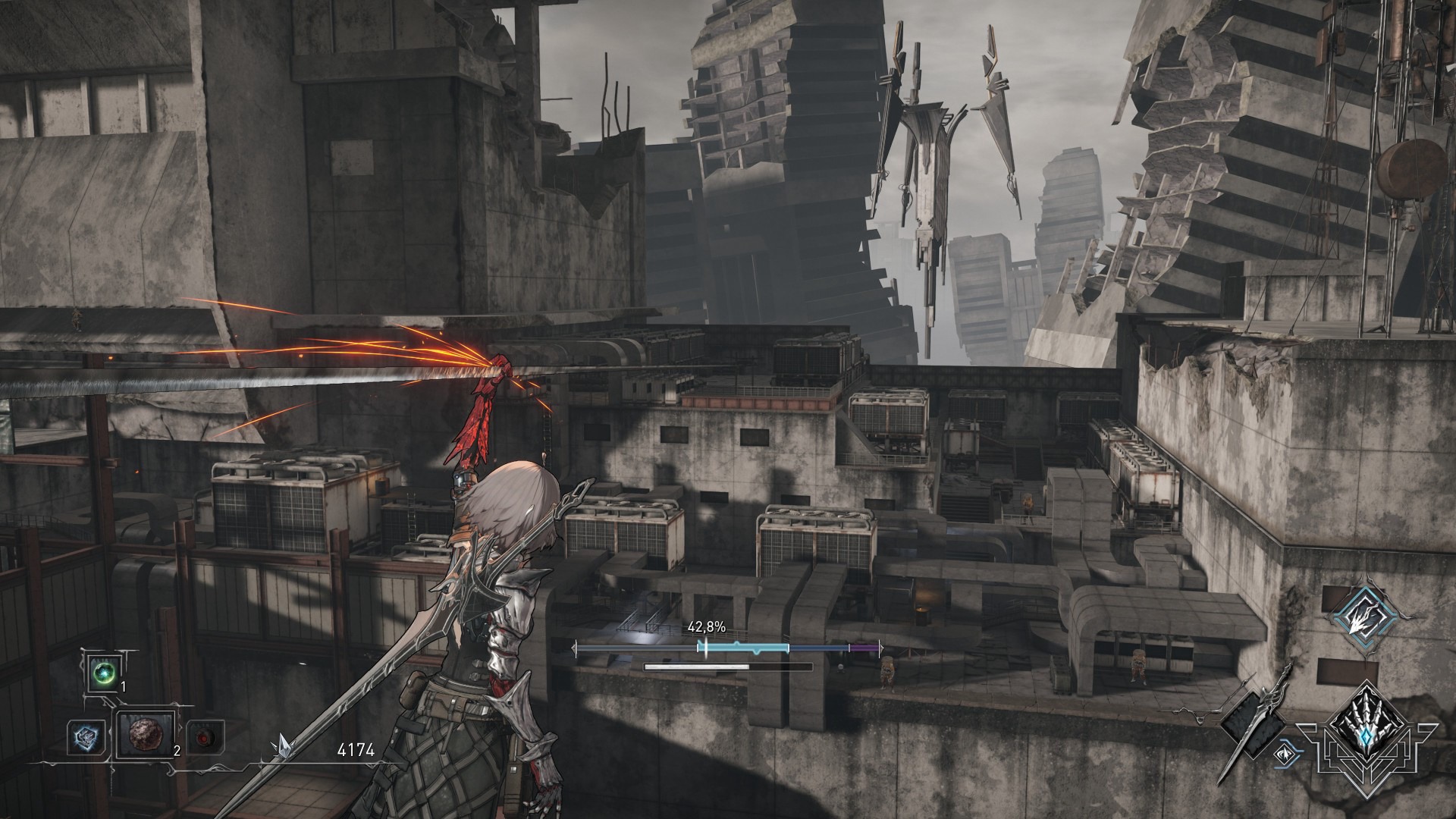
As with any Soulslike, combat is the core focus of AI Limit, and it follows the subgenre’s traditions closely. Fans of the genre will quickly recognise familiar mechanics: light and heavy attacks are mapped to the right shoulder and trigger buttons, dodging doubles as a sprint when held, and a special Frame ability is triggered with the left trigger. Item selection is managed via the d-pad, with one button dedicated to using the currently selected item and another for consuming Life Dew, the game’s version of an Estus Flask. Progression also mirrors Soulslikes, with Branches serving as checkpoints that refill your Life Dew, and they can be upgraded using Dew Essence. These Branches also function as places to spend crystals (dropped by enemies on death and is also used as the game’s currency and not just for upgrading Arrisa), allowing you to level up key attributes like Strength, Life, and Technique.
However, rather than directly copying the Soulslike formula completely, the developers introduce some smart twists to the combat system. These tweaks make the action feel more aggressive, although not quite at the level of character action games like Bayonetta, nor having the same animation quality, as they are on the stiff side in AI Limit, but certainly reduces some of the wait and punish pacing common in the genre. One major change is the complete removal of a stamina bar. This allows players to dodge and attack without restraint, creating a more fluid experience. While animation still governs how attacks flow, so it’s not a button-masher, the lack of stamina enables players to cancel out of attacks into a dodge without worrying about stamina depletion. This adjustment makes fights against regular enemies more manageable, allowing less experienced players to progress.
This accessibility seems intentional, especially since the death penalty is lighter than in typical Soulslikes. When you die, you don’t leave behind a pool of crystals to reclaim. Instead, you permanently lose a portion of your inventory, depending on your equipped Nucleus, a special item that determines your crystal retention rate. The Nucleus also affects how many crystals you gain from enemies (the Absorption Rate) and how much energy you absorb when hitting enemies, which ties into the next layer of the combat system crafted for the game, the Sync Rate gauge.
Sync Rate is a critical mechanic in AI Limit, directly affecting Arrisa’s attack power and ability usage. Displayed as a segmented bar above the health bar, just below the character, each tier provides increasing damage boosts. Aggressive actions like landing melee hits fill the bar, while taking damage or using abilities drains it. Maintaining a high Sync Rate is vital because dropping into the grey tier weakens attacks, and certain abilities become unusable when the meter is too low.
Sync Rate powers special abilities, weapon arts, and limited-use magic. As players progress, they unlock frame abilities that can be swapped in and out. For example, the Counter Field frame, a parry move that consumes Sync Rate if mistimed, but costs nothing when timed perfectly or holding the ability button with a shield frame, which raises a guard but continuously drains the meter. The base tier of the Sync Rate regenerates passively after a short delay, while higher tiers must be charged through combat or consumables, rewarding skilful and aggressive play. This mechanic gives AI Limit a slightly different feeling to most other Soulslikes.
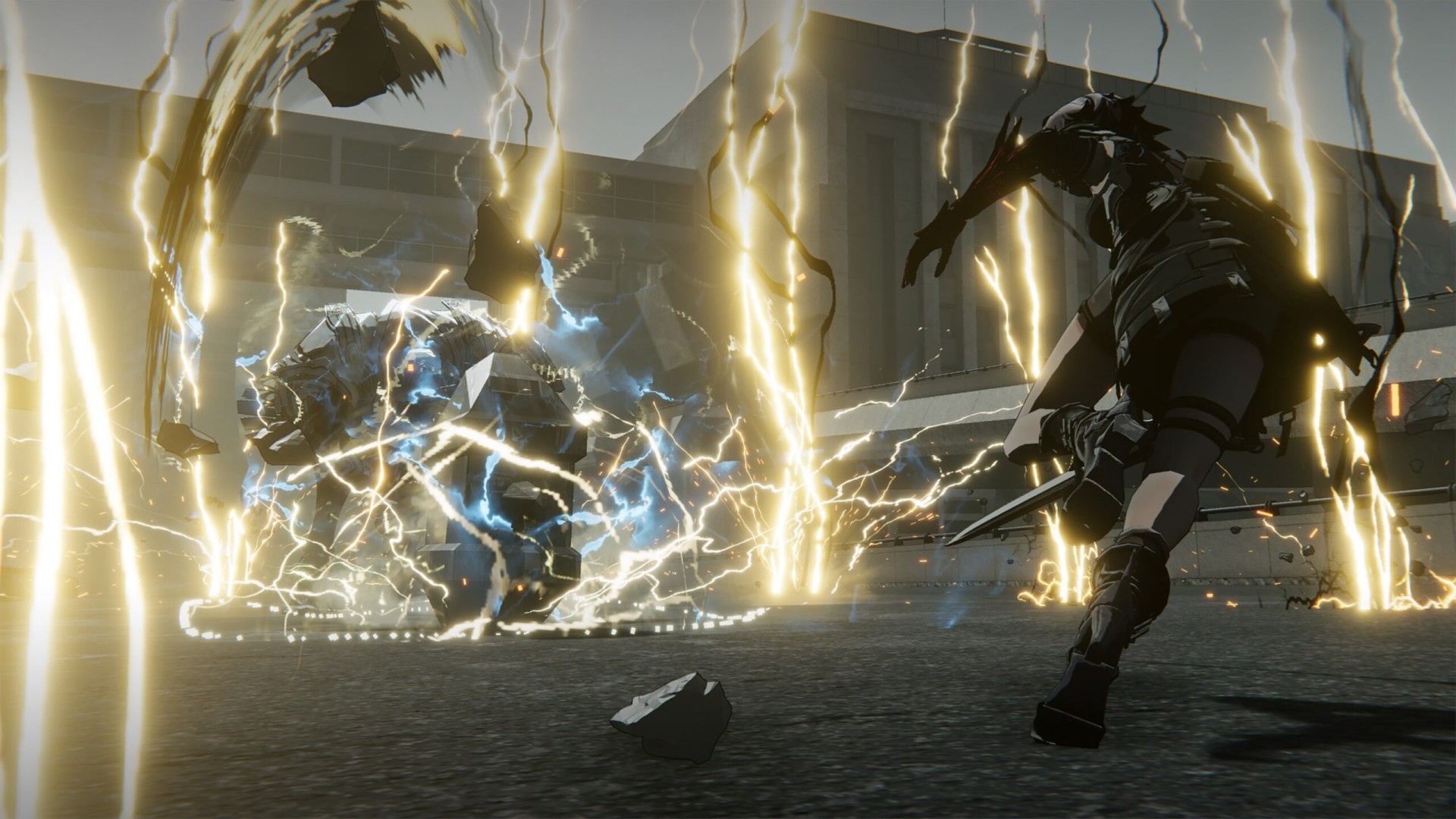
The other two frame abilities, alongside parry and shield, are Piercing Claw and Thunder Step. Piercing claw encourages aggressive gameplay by dealing self-damage and consuming sync rate, but it buffs attacks with claw strikes for increased damage, sustained by landing hits. Thunder Step is an enhanced dodge that is faster and covers more ground than Arrisa’s standard dodge. This also leaves an electric clone that explodes to deal area electric damage to nearby enemies, making it great for repositioning or crowd control. The fact that the shield and parry are two separate abilities means that you cannot have parry and block at the same time, which is unusual for a game in the genre, but since switching the frame abilities is quick, done by holding a button and press the relevant face button linked to the ability. It is a change that I felt was worth noting.
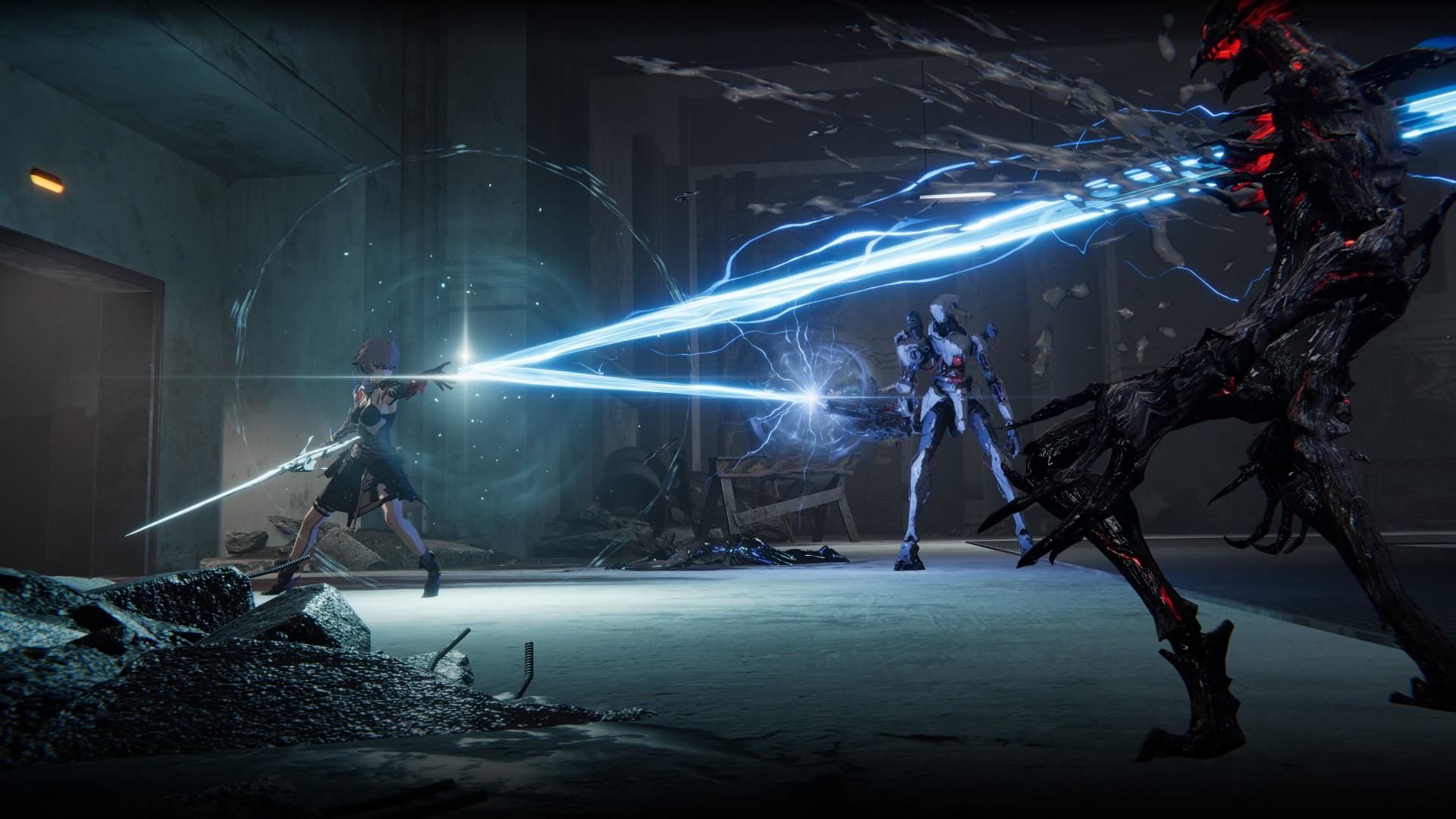
Standard baddies in AI Limit rarely pose a real challenge. Their predictable attack patterns and moderate health allow Arrisa to tear through enemies while maintaining a high Sync Rate. However, late-game areas suffer from enemy recycling, with reskinned versions of early-game bosses/foes.
Group encounters introduce a layer of awkwardness, as status effects and stray hits can rapidly drain Sync Rate making it hard to get away unless relentless spamming dodge. Open environments usually give enough space to manage 1 – 3 encounters, but cramped areas, like Sunken City’s narrow pathways and construction beams, feel designed to frustrate. Here, clustered enemies can knock you off to instant death, sometimes due to awkward collision detection, which was one of my biggest annoyances during my 25 hours with the game. Unlike the duels found in boss fights, AI Limit’s late-game enemy variety can falter with repetition, these standard foes lack the complexity move sets that make boss fights more engaging.
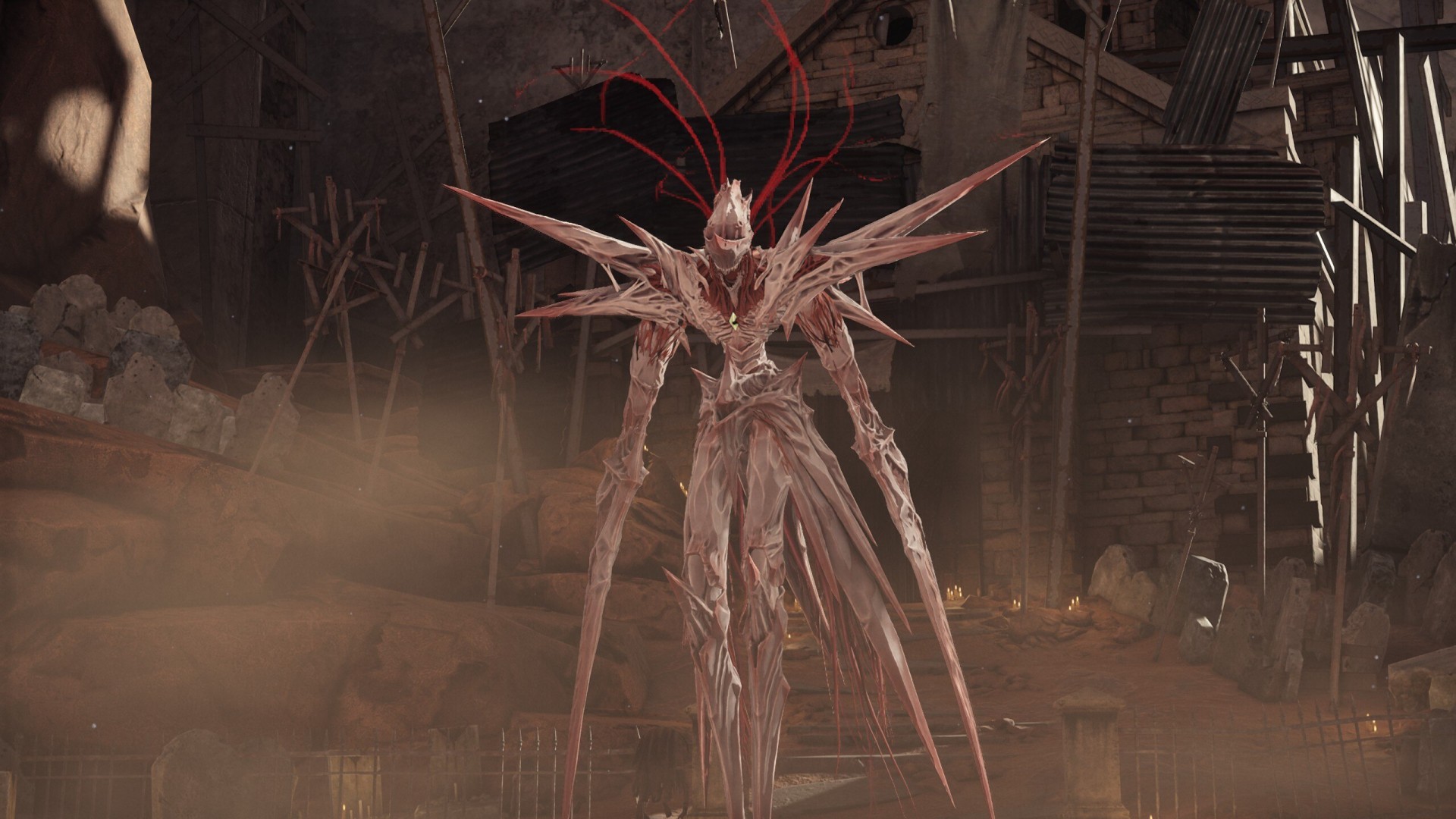
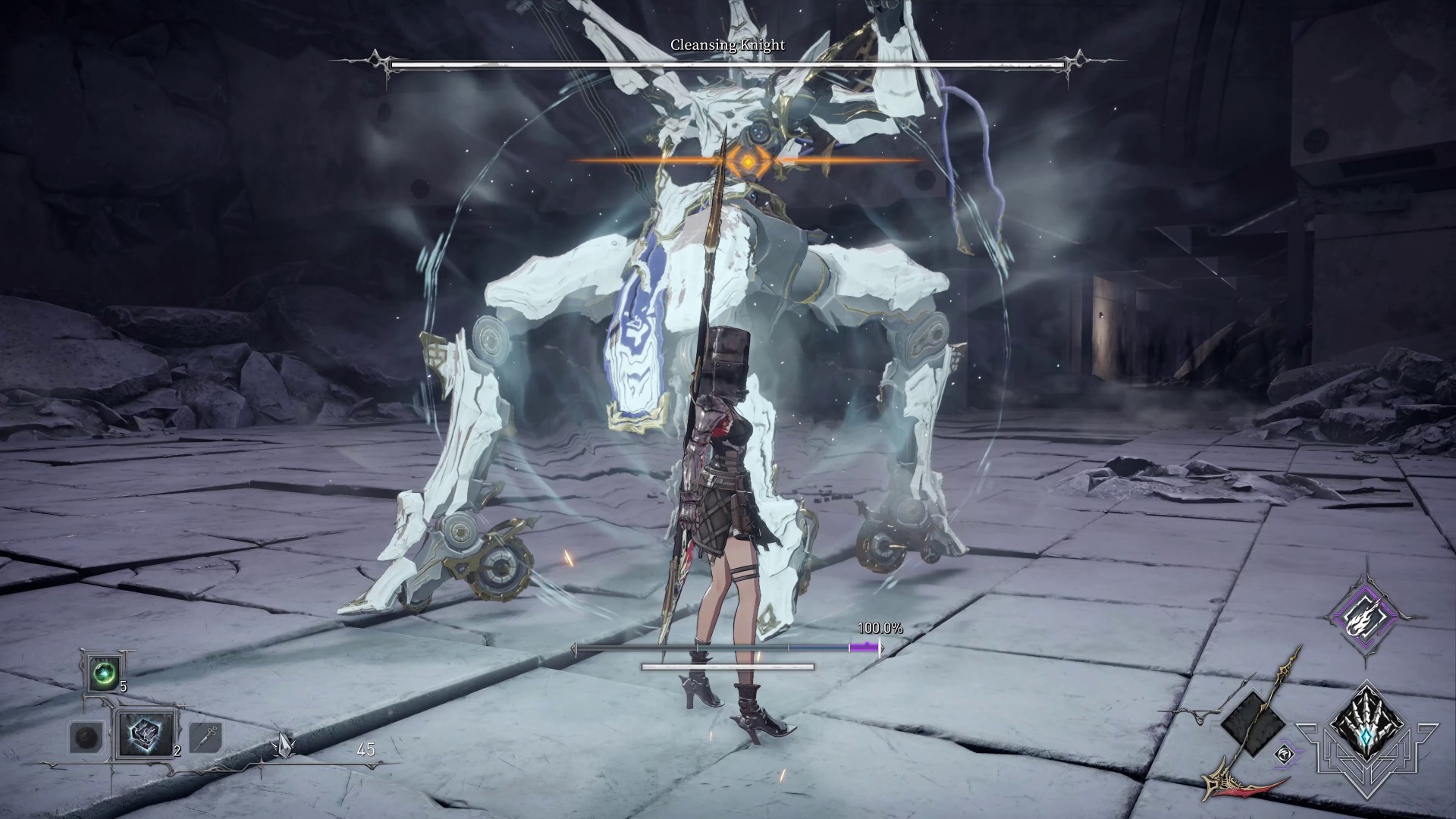
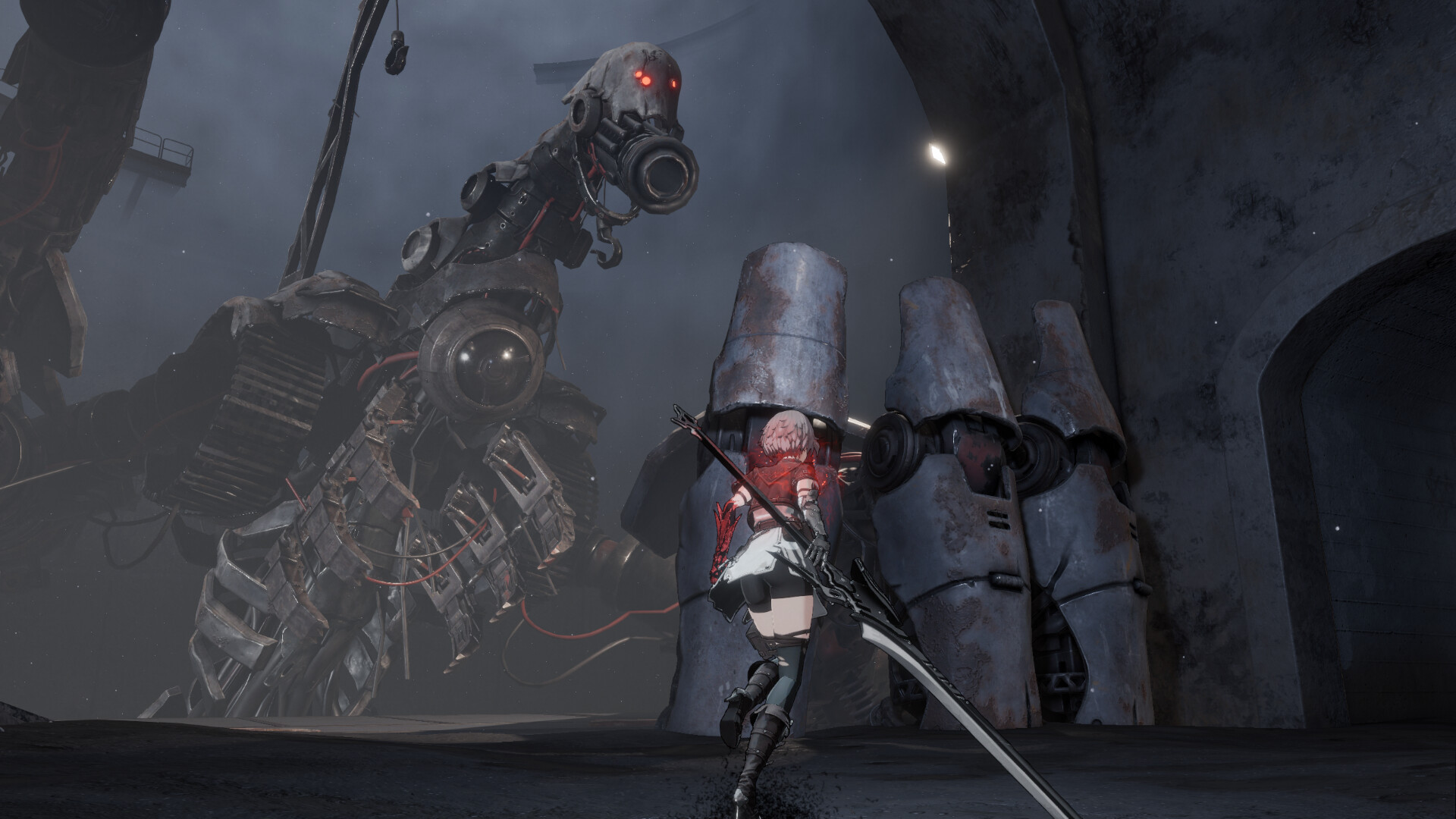
As expected of a Soulslike, AI Limit brings it when it comes to boss battles, and these encounters are mostly solid fights. Bosses come in a variety of forms, each with more complex attack patterns and mechanics that force players to stay alert. Many are also susceptible to certain frame abilities. One boss, the Cleansing Knight, was the first to make me rethink my strategy. Initially, I relied on the shield ability, preferring a defensive playstyle, but the Knight consistently broke through my guard. After several failed attempts, I switched to the parry frame, and the fight suddenly shifted. A well-timed parry staggered the boss long enough to land heavy damage before the four-legged cyborg regained its composure, giving me the time to get in there and drain a good chuck of its health.
There are also a couple of boss Bladers, basically enemies similar to Arrisa. These have some of the same abilities and even build Sync Rate just like the player. These fights push aggression even further: by damaging these bosses, you drain their Sync Rate, reducing their power and ability access. It is a neat design switch that reinforces the game’s core mechanic of rewarding relentless offense. Some bosses are certainly easier than others, but the line up includes a few that will genuinely test hardcore Soulslike fans while still offering a fair challenge for newer players learning the ropes of its combat.
There is also enough build variety thanks to the different frame abilities, magic options, and weapon types. While I have not gone deep into the weapon systems, expect a solid range of gear, such as swords, dual blades, great swords, axes, halberds, and some stylish scythes. Combined with generous quality-of-life features like free and unlimited respecs (once you find a certain key item), AI Limit seems to be designed to enable adaptation to experiment with the game’s playstyles.
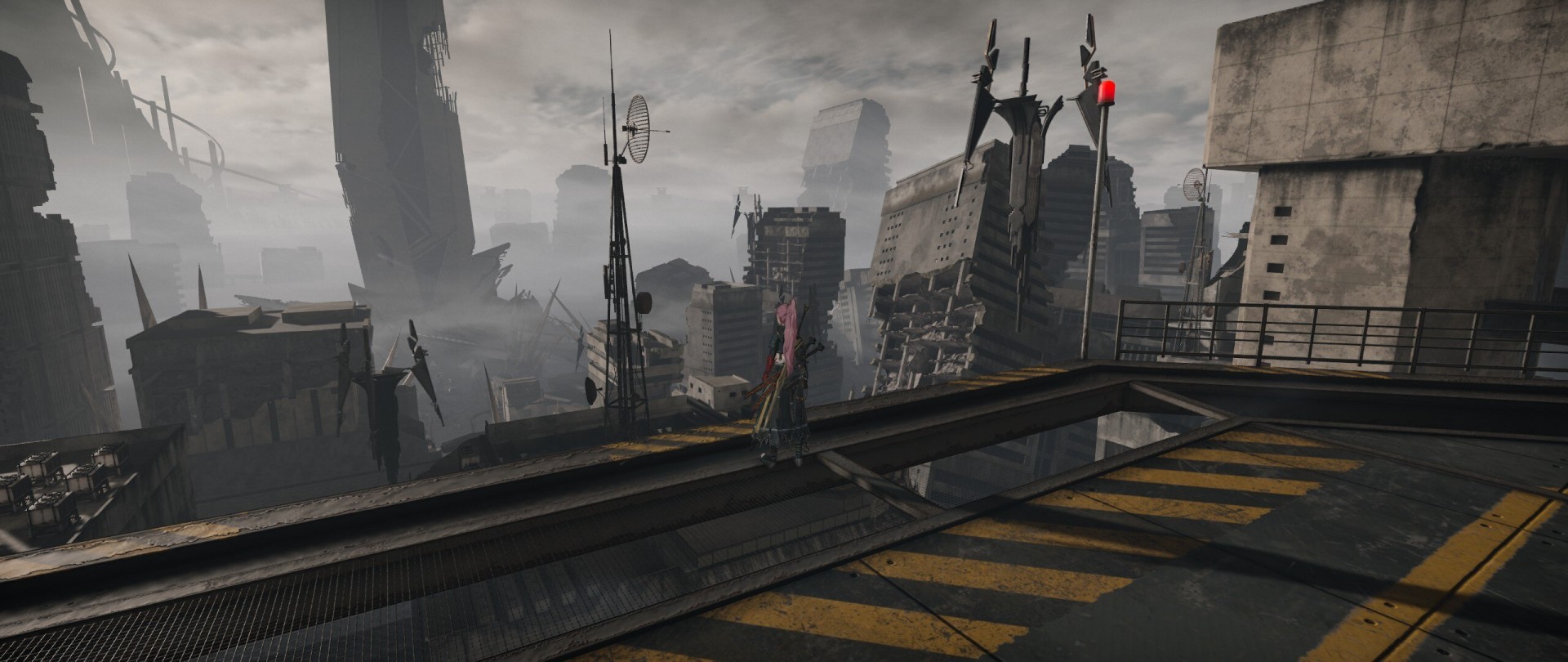
AI Limit is priced at a reasonable £29.50 here in the UK, a welcome change in a market where major releases are pushing up to £74.99 (looking at you, Nintendo). It feels like a budget-friendly offering. Visually, the game does not aim for AAA realism. Instead, it leans into a stylised, anime-inspired aesthetic, one that opts for a darker, grittier tone that gives the game a more mature atmosphere. The darker anime presentation supports the game’s themes, even if it is not the most graphically ground breaking to look at. Some environments can be a bit on the plain side, while some shine with an artistic display.
Built in Unity, AI Limit runs smoothly on PC. My setup features an AMD Ryzen 7 7800X3D and an Nvidia RTX 5090. This combo had no trouble pushing the game to 240 FPS at 4K resolution, delivering a sharp image and smooth experience. That said, the game is light on system resource. Even older cards like the GTX 1070 can run it well enough at 1080p, and if you are targeting 4K, something in the range of an RTX 3070 should be sufficient.
AI Limit delivers a solid but somewhat uneven Soulslike experience, offering engaging combat driven by its attack-focused Sync Rate system and versatile frame abilities. At £29.50, it is an affordable entry into the genre, blending a gritty, anime-inspired sci-fi aesthetic with cryptic world-building. SenseGames’ debut succeeds in capturing the rewarding challenge of Soulslike combat, with solid boss fights (Hunter of Bladers is one of the better ones) pushing players to master mechanics. However, late-game areas can recycle enemy styles. Cramped spaces leading to unavoidable deaths and some collision issues also introduce frustration, occasionally disrupting the flow of the game. Despite those flaws, the lack of a stamina bar and its aggressive combat focus make AI Limit more accessible than traditional Soulslike entries. My 25-hour journey through Arrisa’s mud-soaked world was mostly enjoyable, even if some aspects did not feel as polished. It may not redefine the genre as a whole, but neat mechanical changes offer a worthwhile alternative for fans waiting on the next big hit in the genre.