Warriors: Abyss PC Review
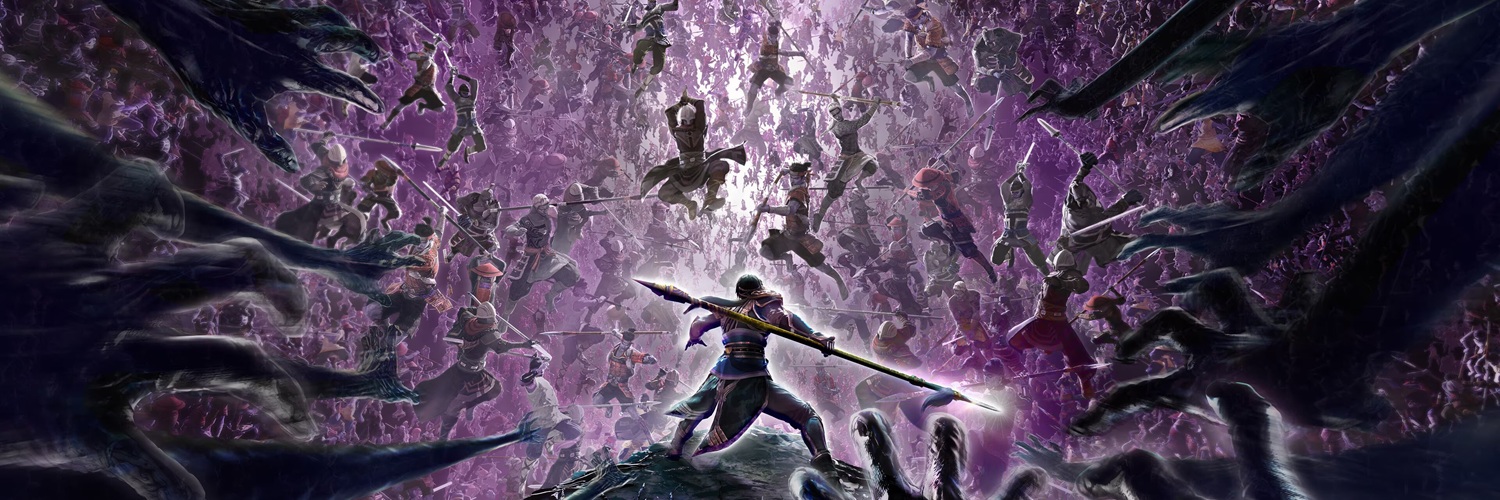
Well, this is amusing—just in my last review, I was talking about how rare surprises are in the video game industry, only for Koei Tecmo to prove me wrong again. After unexpectedly dropping an Unreal Engine 5 remaster of Ninja Gaiden 2, they’ve now done it again with Warriors: Abyss. No pre-release hype, no endless trailers—just a sudden launch that caught everyone off guard. This time, they’re taking the Warriors franchise into roguelike territory, an unexpected but intriguing shift that turns out to be a fun bitesize surprise.
Warriors: Abyss weaves a narrative that serves more as a grand excuse for its massive crossover rather than a deeply compelling tale. Over 100 Fighters from the Warriors franchise find their souls inexplicably drawn into the underworld, where they are met by Enma—a once-powerful ruler who has been dethroned by the ancient evil Gouma. Now reduced to little more than a desperate guide of hell, Enma enlists the heroes to battle through the abyss, vanquishing undead hordes and reclaiming Hell from its new overlord. While the premise is intriguing to carry the game, it lacks the narrative finesse of something like Hades or that game’s dynamic storytelling. The story primarily functions as a framework for the action, providing just enough context to justify the action going on and give Enma a personal stake in the conflict. It’s a serviceable backdrop, but nothing that will linger in the mind.

In the realm of roguelikes, narrative typically plays a secondary role—an appealing addition rather than the focal point. The core of the experience lies in the gameplay, and although Warriors: Abyss may not be the most complex or mechanically advanced title in the genre, it effectively integrates Warriors-style combat within some roguelike structure.
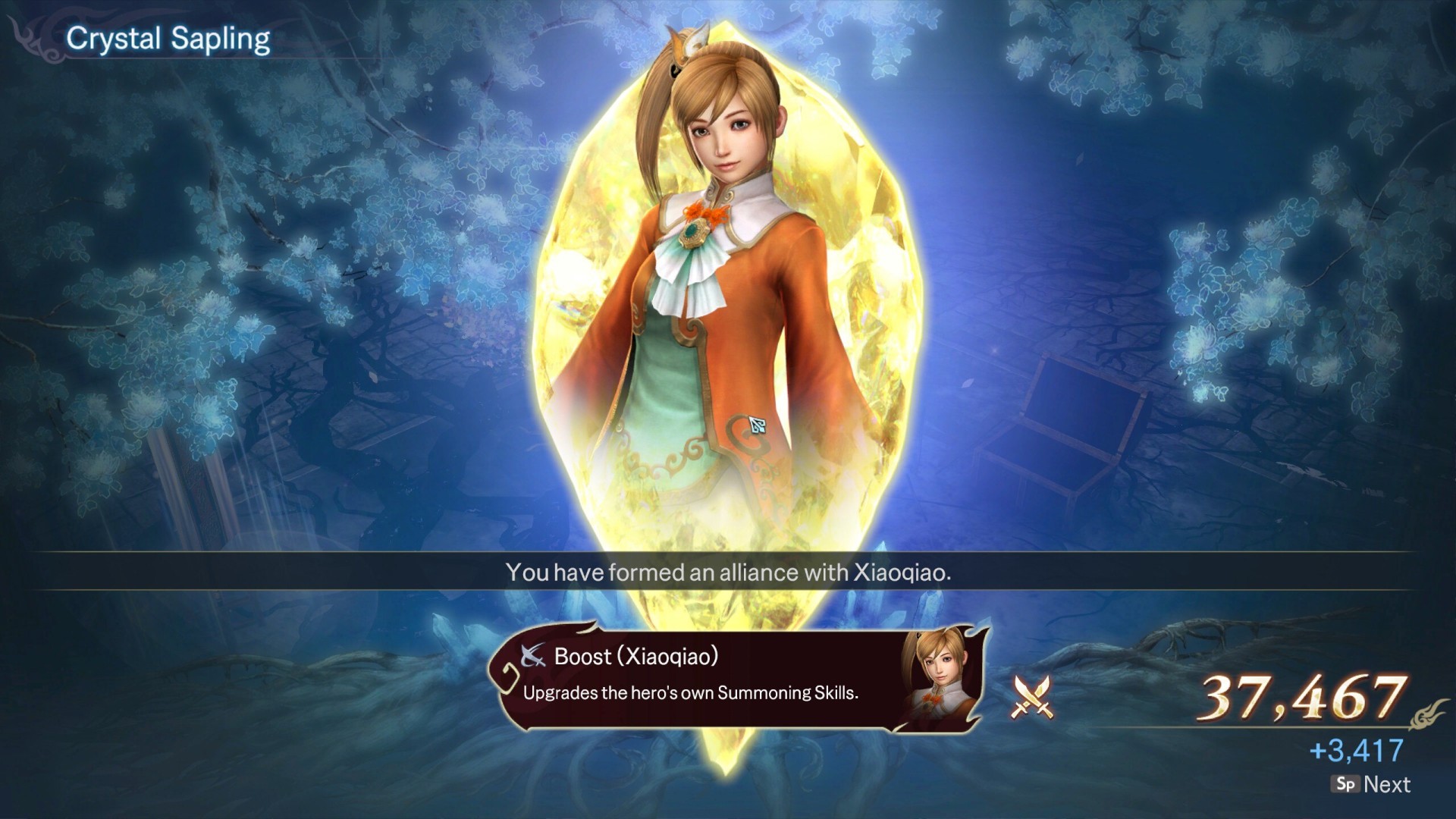
One of its standout features is its massive roster, boasting over 100 playable characters. However, not all of them are available from the start. Players who purchase the standard edition begin with a curated selection of 21 heroes, unlocking the rest progressively through the Hall of Bonded Souls. This system doesn’t just expand the roster—it also introduces a layer of progression, as each unlocked hero grants a permanent buff that enhances future runs. Those who opt for the deluxe or ultimate editions gain immediate access to every character, primarily for the benefit of using their alternate costumes, but they’ll still need to work through the Hall of Bonded Souls to unlock the associated buffs. This ensures that even with the full roster at your disposal, the core gameplay loop remains intact, rewarding players for their investment in each run rather than undermining progression with pay-to-win shortcuts.

The first batch of free characters launched while I was covering the game, adding five playable warriors from Dynasty Warriors’ Jin faction: Wang Yuanji, Sima Zhao, Sima Shi, Zhong Hui, and Zhang Chunhua. This is a strong addition to the already large cast. These characters become playable once unlocked in the Hall of Bonded Souls, which grants them their account-wide buffs. Alternatively, if you purchase a costume for any of these characters via DLC, they are immediately available for use, though their account buffs must still be unlocked separately in the Hall of Bonded Souls.
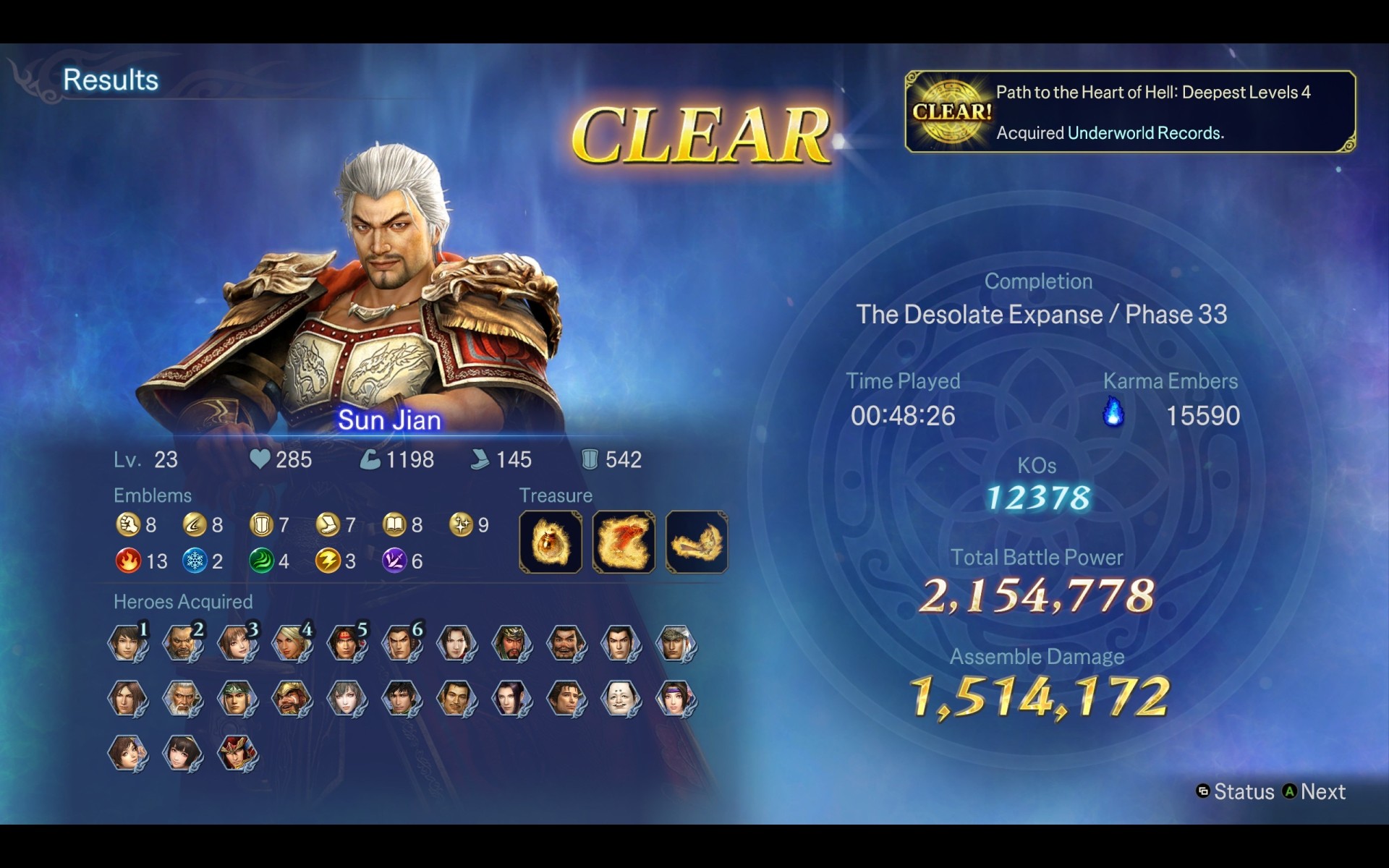
Each run begins with selecting an unlocked character before marching through 33 phases spread across four zones. Each of the first three zones consists of eight phases, ending in a boss fight, while the final zone follows suit but has the ultimate boss at the very end after the phase 32 boss. Unfortunately, the levels themselves are nothing more than uninspired battle arenas with weak thematic dressing—whether it’s a burning village, icy plains, a green farm village, or the veiny, fleshy interior of a castle. None of these settings feel alive or engaging. They are empty, lifeless spaces that serve as little more than repetitive backdrops for combat, completely devoid of character or atmosphere. The environments fail to leave any impression beyond how utterly bland they are.

Enemies in Warriors: Abyss mostly fall into the same predictable formula. The standard foes are nothing more than cannon fodder, much like the grunts from the Warriors series, now they are zombie-like warriors wielding axes, bows, spears, and other traditional weapons. They exist solely to fill the screen, starting in manageable numbers before flooding the battlefield into an overwhelming, chaotic mess. While they gain slightly more health as the phases progress, their real threat comes from sheer volume, often managing to land cheap hits simply due to their sheer presence rather than skill.
Mixed within these mindless swarms are tougher special enemies with visible health bars. These foes require a few more hits to take down and deal more damage in return, sometimes unleashing area-of-effect attacks marked by glowing purple indicators. Adding to the mix, mini bosses occasionally appear depending on whether the phase includes a randomly generated mission, reinforcing the roguelike elements of the game.

Boss fights provide the real challenge in Warriors: Abyss, as each boss comes with a hefty health pool and a shield that must be broken before dealing significant damage. Their aggressive attack patterns demand constant movement and strategic positioning. Many bosses start alone but summon minions as their health drops. These reinforcements come to make the battle more engaging and awkward, forcing players to balance avoiding or clearing these enemies before dealing more damage to the boss. Bosses frequently unleash devastating area-of-effect attacks, covering large portions of the battlefield. Players must stay alert, watching for the purple outlines that telegraph these attacks and using dashes to escape at the right moment.
A key aspect of roguelite games is randomness, but Warriors: Abyss falls short in this area. Environments remain unchanged across runs, removing the unpredictability that defines the genre. Bosses also appear in a fixed order, with only five in total, limiting variety. Introducing a larger pool of bosses that rotate randomly would make each run feel more dynamic and chaotic. Likewise, a broader range of enemies would add much-needed diversity to combat encounters.

What Warriors: Abyss does on the positive is that the randomness it has it incorporates that to the game’s strength, the characters. Each hero has four unique stats: health, strength, defence, and speed. Alongside these, they have Player Hero Traits—one available by default and another that must be unlocked by finding their character’s unique weapon during a run. It’s important to note that weapons found during a run can be for any hero, not necessarily the one you’re currently playing.
After each phase, players have a chance to recruit new heroes from the Hall of Bonded Souls. These heroes fill one of the six available slots, while any extra heroes gained during the run are placed in a pool. At the end of each phase, you can visit the War Banner of the King to swap out heroes from the pool before jumping through one of three portals. These portals add a random element to the game, determining the rewards and events in the next phase. During these events, players will earn two types of currency: blue Karma (used to unlock new characters and is kept at an account level) and red Blood Crystals (used to purchase buffs, characters and formations from the shop that can appear in a portal and is lost upon death).
Characters and formations play a crucial role in building power, which is clearly shown through the “Total Battle Power” stat. For players who don’t want to dive too deep into customisation, the game offers an automatic selection feature that chooses the best combination of warriors and formation based on your current build. This ensures certain buffs or elements stay intact, but for those who want more control, the manual selection allows adjustments to fit specific skills or playstyles. Personally, I found the auto-selection worked well enough for my build most of the time. At the start, players only have access to a few basic formations, which can be purchased during a run. However, new formations can be unlocked from the Hall of Bonded Souls using Karma Embers, giving players more options as they progress.
Another important feature to note is the emblem upgrades available during a run, which are based on five elements: Flame, Bolt, Ice, Slay, and Wind, along with five attributes: Vigor, Speed, Strength, Charm, and Wisdom. Collecting these emblems unlocks upgrades for your character during the run. For example, one Speed upgrade grants invulnerability during dodges, a highly useful buff. Gaining five Speed upgrades reduces the cooldown for dodging. Similarly, with Vigor, one upgrade interrupts telegraphed attacks, while collecting four upgrades increases your attack range. Each emblem can unlock up to 13 upgrades, and the final upgrade is unlocked after collecting 18 of the same emblems, offering powerful buffs. These upgrades become especially crucial in the later stages of the game, as they can significantly enhance combat performance.
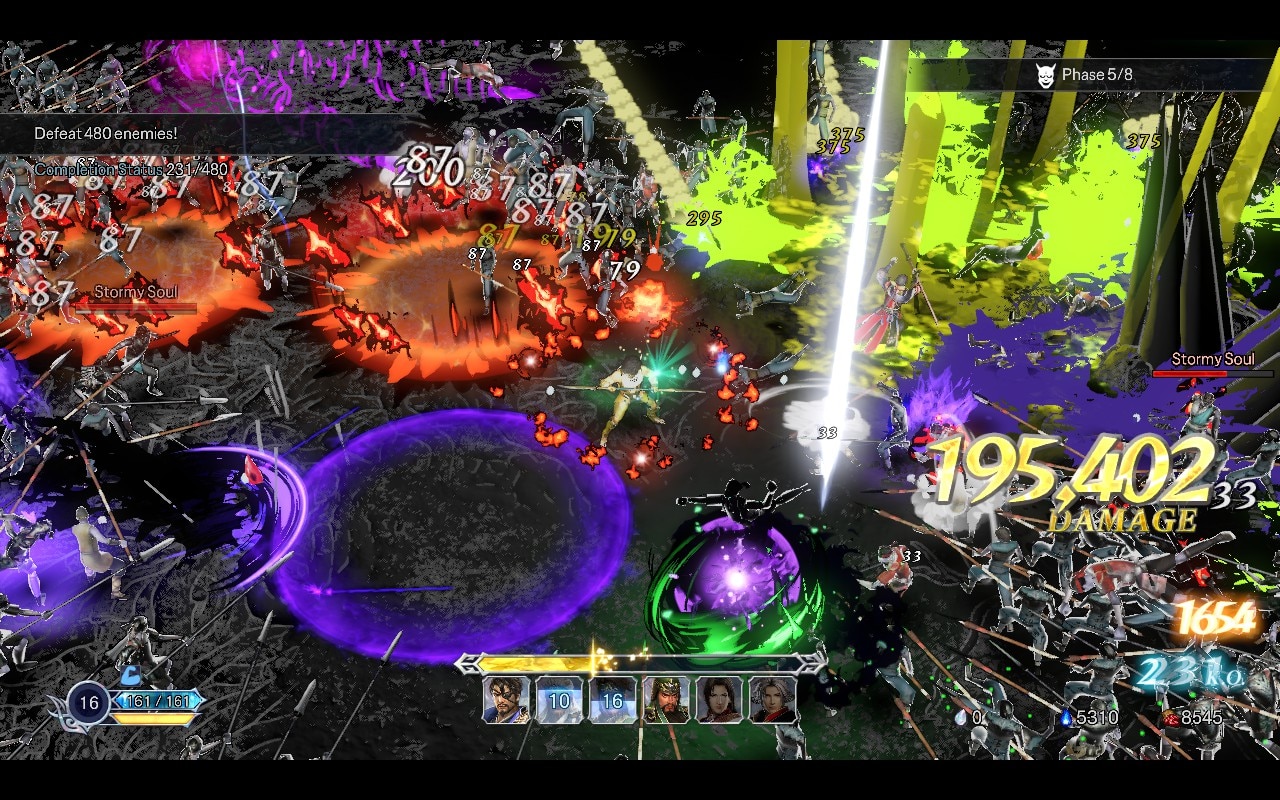
This naturally leads us into the game’s combat, which will feel familiar to Warriors fans. Despite the new isometric camera view, the combat remains like other Warriors games, utilising the classic two-button combo system for light and heavy attacks, each with its own flowchart of combos. What is neat is that the characters from Samurai Warriors come with hyper combo mechanic which makes them stand out more. Each character retains their signature weapons and attacks, further distinguishing them in combat. They also have their Musou moves, which are perfect for clearing crowds of enemies or dealing substantial damage to bosses.
Characters in your formation can be summoned at the end of these chain combos to deal additional damage, though this feature has a cooldown unless buffs are applied to reduce it. The final feature of the formation system is the Assemble Bar. Once filled, it activates a powerful Uber Musou move that summons all six heroes for a massive attack, obliterating everything on screen except bosses in a dazzling display of colour. This move stands in stark contrast to the otherwise muted environments, making it feel visually out of place—almost as if the Splatoon squids have just finished a battle in hell.
It took me around five hours to fully understand the mechanics and finally complete a run with a character. It’s worth noting that I was experimenting with different characters, so I wasn’t reusing anyone frequently. If you focus on just one character, I imagine clearing the first run would take much less time. For completionists, however, there’s more to tackle. To truly finish the game, you’ll need to complete a run with every character, as their levels increase with use. Each time a character reaches a new 50-level milestone, they receive a permanent buff.
In addition, there are increased difficulty modes. Beating the game with a character unlocks Traverse 1, and successfully completing Traverse 1 unlocks the next difficulty level for that character. I am not sure what the maximum limit is for the Traverse new game, but I have seen people hit Traverse 5. This means completionists will have hours upon hours of content to work through, especially with the possibility of new characters being added in future updates. While the game has the potential to expand, it’s a shame that it likely won’t improve its weakest aspects—the environments and enemy variety.

What keeps Warriors: Abyss entertaining is the sheer number of characters and combinations it offers. It blends elements of roguelike gameplay with the signature Warriors combat to create something different for Warriors fans. However, it doesn’t excel as a roguelike; instead, it’s a game that focuses on fun combat and character variety. The story is generic, and the randomness falls short, due to the repetitive boss battles and underwhelming level design. The environments feel basic, and the level design doesn’t push boundaries, but the satisfying combat—mashing buttons and mowing down enemies—still provides the same thrill fans of the mainline Warriors games will recognize.
It’s fun enough to keep you engaged for a decent amount of time, especially considering its reasonable price (£19.99). It feels more aimed at Warriors fans than roguelike enthusiasts, and with so many other options in the roguelike genre, Warriors: Abyss ends up being a fun, but flawed experience—an entertaining twist on Warriors gameplay, but not a standout in the roguelike genre.