Dynasty Warriors: Origins PC Review
The moment the tutorial mission kicks off and the first song—a remix of Dynasty Warriors 4 – Eve—begins to play, you realize Dynasty Warriors: Origins knows exactly which nostalgic chords it wants to strike. I first dove into the Musou games with Dynasty Warriors 4, so hearing this track instantly brought back memories of chaotic battles and the joy of discovering a series that’s become somewhat of a hit in video games; it certainly has its fair share of hardcore fans. This callback feels like a deliberate nod to fans disappointed by the missteps of Dynasty Warriors 9. It’s a reminder of what made the series great, almost as if the developers are saying, “We hear you. Let’s return the days when the series was glorious.” And they’ve done just that. Dynasty Warriors: Origins doesn’t just acknowledge the franchise’s roots—it embraces them, delivering a fresh yet familiar experience that feels like an apology and a hopeful promise for the future.
Dynasty Warriors: Origins, like other entries in the series, is influenced by the renowned Chinese novel Romance of the Three Kingdoms. If you have never heard of the novel, all you need to know is that it is a classic Chinese historical novel written by Luo Guanzhong during the 14th century. It is considered one of the “Four Great Classical Novels” (the others being Journey to the West, Outlaws of the Marsh, and Dream of the Red Chamber for anyone interested) of Chinese literature and is renowned for its blend of history, mythology, and fiction. The novel is set during the tumultuous period of the late Eastern Han Dynasty and the Three Kingdoms era (approximately 184–280 CE). It chronicles the decline of the Han Dynasty, the rise of warlords, and the eventual unification of China under the Jin Dynasty. The story revolves around the power struggles between the three main kingdoms: Wei, Shu, and Wu.
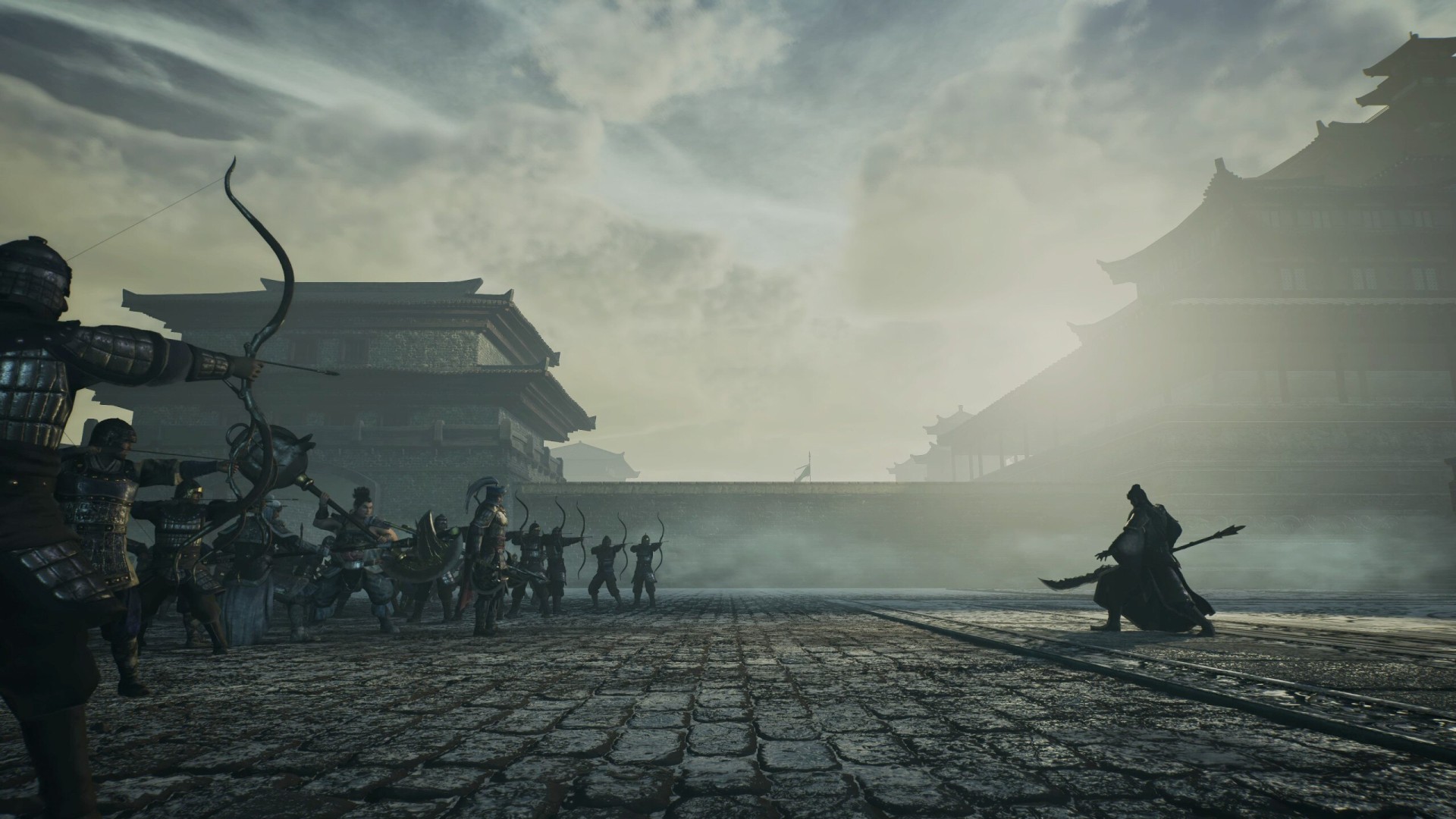
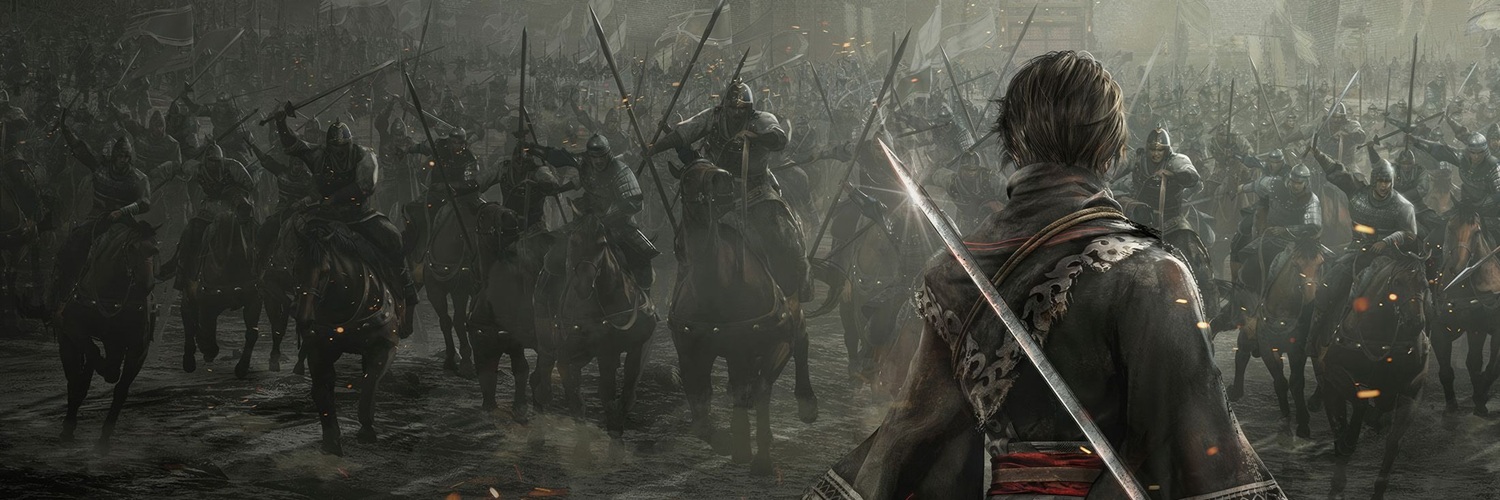
What sets Dynasty Warriors: Origins apart from its predecessors is its shift away from the traditional formula of selecting a warrior and taking them into battle. Instead, players step into the shoes of a brand-new, original character, Ziluan. Using a familiar trope, Ziluan is an amnesiac hero who finds himself entangled in the chaos of the Three Kingdoms era, wandering through conflict-ridden lands while meeting iconic warriors from previous games and aiding them in battle.
Ziluan’s backstory reveals him as a member of a secretive warrior-assassin society known as the Guardians of Peace, sworn to protect China during its time of turmoil. The generals know this and are always wanting Ziluan to be on their side, expecting him to bring them an advantage, thanks to his amazing warrior skills. This singular character focus makes Dynasty Warriors: Origins one of the most story-driven entries in the series. The narrative intertwines Ziluan’s quest to uncover his past with major historical events like the Yellow Turban Rebellion, the rise of Dong Zhuo and of course the split into the Three Kingdoms warlords. As the story progresses, players must ultimately align Ziluan with one of the three factions—Wei, Shu, or Wu—shaping both his destiny and the course of the larger conflict.

By introducing a protagonist unconnected to the original story, the developers have taken creative liberties to craft a fresh perspective on a familiar tale. This approach breathes new life into Dynasty Warriors’ now rhythmic narrative, offering deeper storytelling and character development while still honouring the series’ historical roots. Yet interesting the main character remains mostly a silent protagonist and while his character development is done through discovering his history, it is the rest of the warriors that we have come to enjoy over the years that get to deploy their personality on screen in detriment to Ziluan’s silent voice.
One of the most significant and surprising changes for fans is the transition to a single-player experience, completely removing cooperative and multiplayer features. This also means losing the ability to go into battles playing as a variety of warriors, each wielding unique and sometimes unconventional weapons, as seen in previous games (who could not love the iron boat?). For a series like Dynasty Warriors, where combat combo variety is a core appeal, being limited to a single character might feel like a step backward.

However, the game compensates by portraying Ziluan as a versatile warrior capable of mastering multiple weapon types. While Ziluan starts with a sword, players can discover a total of 10 different weapon types throughout the game: Halberd, Crescent Blade, Lance, Twin Pikes, Sword, Podao, Gauntlets, Wheels, Spear, and Staff. Each weapon features its own unique move set, offering gameplay similar to using other characters in previous instalments. This variety helps mitigate the potential monotony of being tied to a single character, allowing players to experiment with different combat styles and maintain an engaging experience.
Weapons play a central role in both combat and the progression of the main character. While players may find a favourite weapon type early on and feel tempted to stick with it, doing so is not recommended until later in the game. This is because progression relies on Ziluan’s Rank Level, which governs key stats like Health, Attack, and Defence. Each increase in Rank Level provides these stat boosts and certain milestones unlock new skill trees. These trees allow players to spend skill points to unlock valuable abilities that enhance stats, provide passive combat perks, and more. However, advancing in rank is contingent upon weapon proficiency; each weapon has its own proficiency level, and Ziluan’s overall rank is calculated based on the cumulative proficiency of all weapons. Consequently, focusing on a single weapon will impede Ziluan’s overall growth.
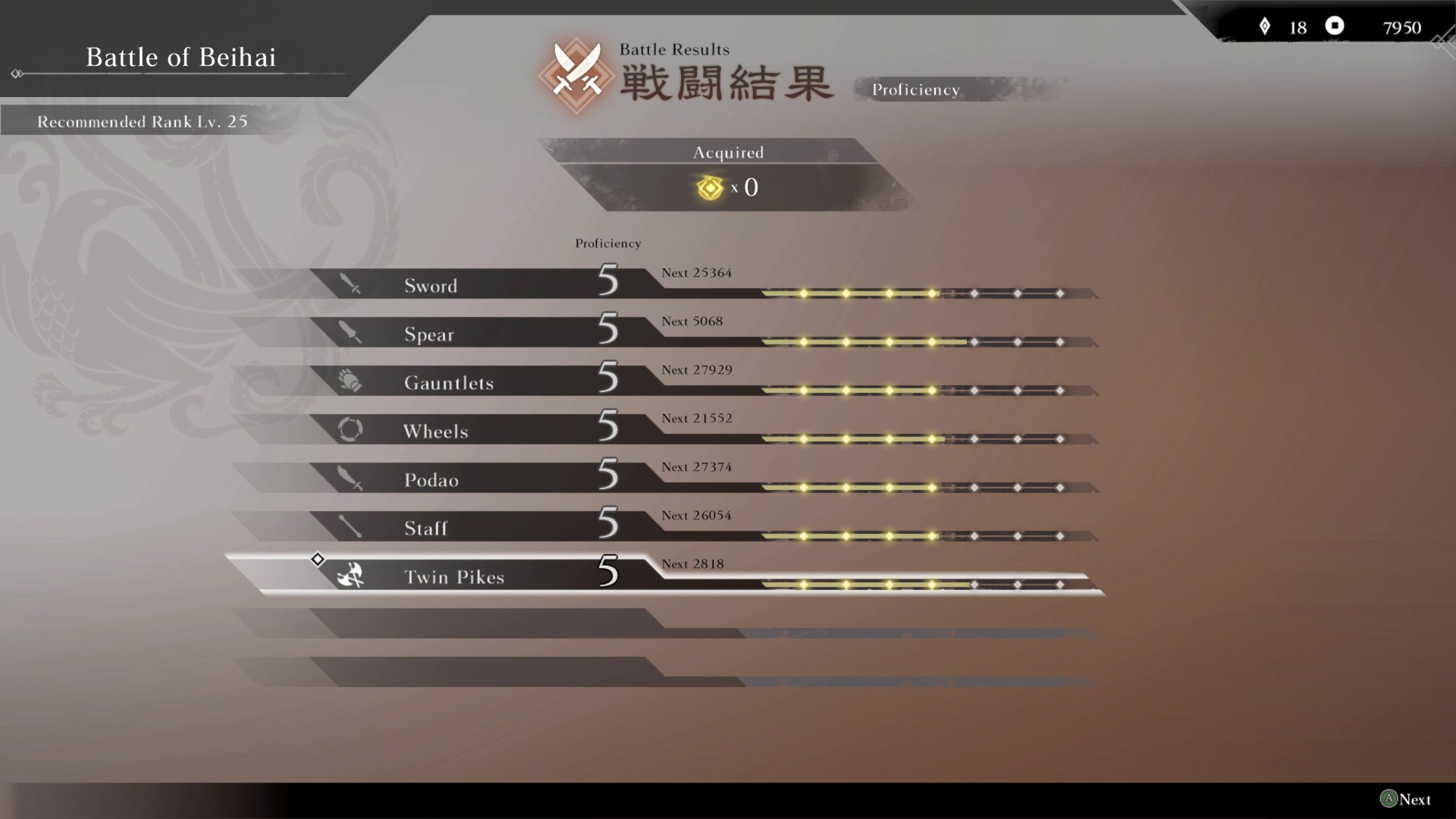
Skill points are primarily earned in battles, and staying true to the series’ iconic formula of taking down hundreds of enemies makes them easy to earn. For every 100 enemies defeated, players earn 3 skill points. Additionally, special training challenges issued by key characters offer opportunities to gain bonus skill points, rewarding players who take on these extra objectives. This integration of weapons and character growth ensures that progression is deeply tied to the game’s core combat mechanics while making sure combat can stay revitalised with the weapon changes.
The core mechanics remain familiar to long-time fans, featuring basic and heavy attacks that can be seamlessly combined into combos. Each weapon boasts its own unique attack strings, with more becoming available as the weapon’s proficiency increases. Charge attacks return to break enemy guards, while the iconic Musou attack provides a powerful move that can be unleashed when the Musou gauge reaches a certain threshold. The game also introduces Musou Rage, a temporary boost that grants enhanced power. Activating a Musou attack in this state unleashes the Ultimate Musou Attack, the most devastating move, capable of wiping out hundreds of enemies that can be seen in view. It also helps that the game has returned to the constructed stages of a battlefield rather than the open-world approach that hurt Dynasty Warriors 9.
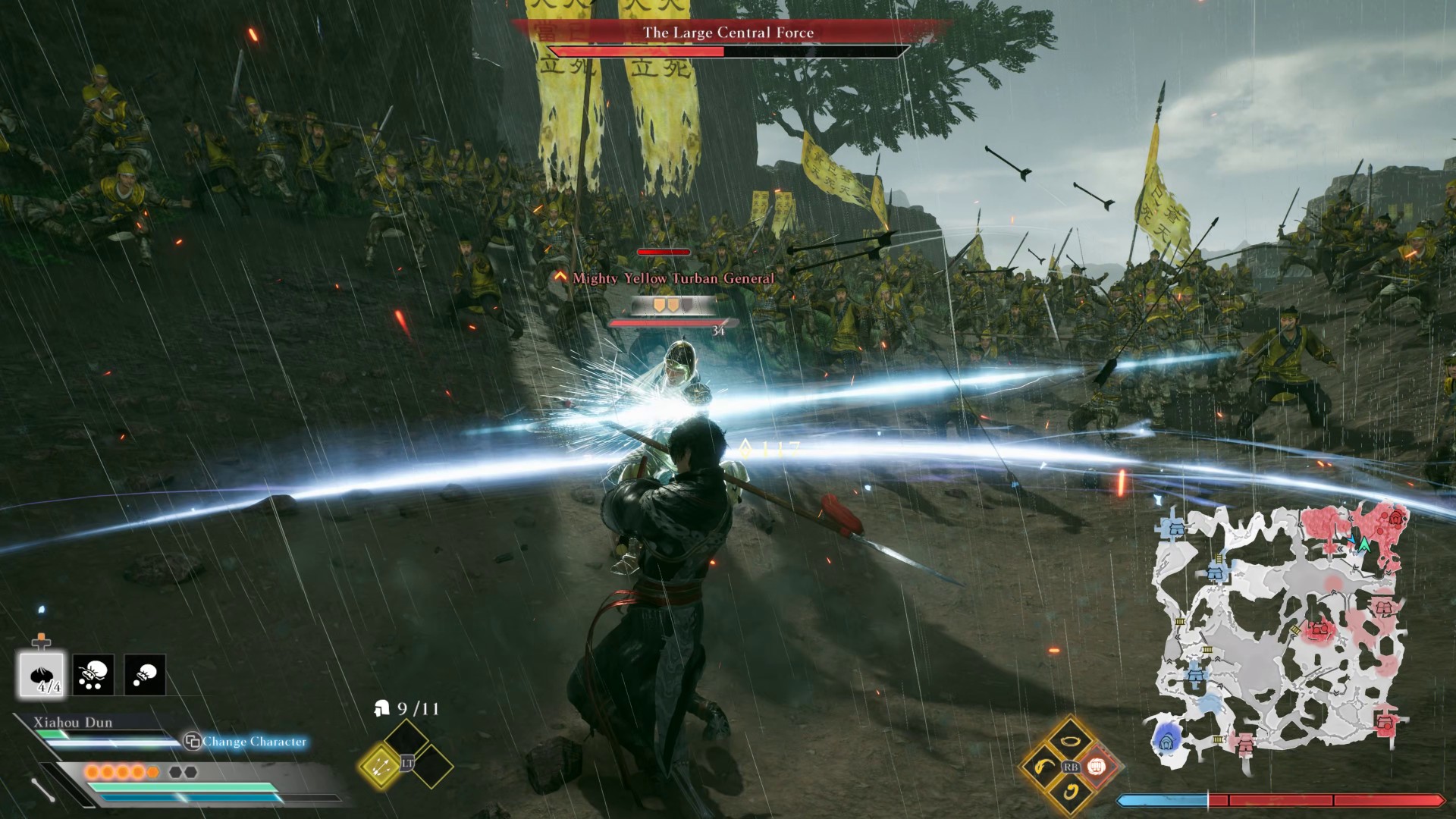
Each battlefield feels tailored in design with bases that need capturing and enemy soldiers slaying to lower the morale and improve your side’s efficiency in combat. Battle objectives are the same old formula with a few twists in their objectives. One example in a mission is finding the secret magic urns that are spewing out incense that are making the enemies appear to be darkened spirits that cannot be killed until the magic mist has cleared. Most the game is about enemies and friends pushing backwards and forwards taking over bases to give their side the upper hand in battle, coming to an end when taking down the final big general to end the mission.
Dynasty Warriors: Origins earns well-deserved praise for delivering the franchise’s most refined combat to date. This improvement comes down to several key enhancements. The combat feels tighter and more responsive, making every swing of the weapon more impactful. Slashing through groups of typical enemies requires only a few well-timed combos and charging into massive crowds leads to a satisfying display of bodies flying as they exaggeratedly react to your attacks. One standout improvement is the sheer scale of battles, with up to 1,000 units on screen at once. This creates a truly epic and chaotic atmosphere. Even better, standard soldiers, once little more than cannon fodder, now pose a slight threat when in mass groups surrounding generals. Unlike previous titles where enemies often hesitated to attack, soldiers now strike from multiple angles, breaking combos and keeping players on their toes when charging into a dense group.
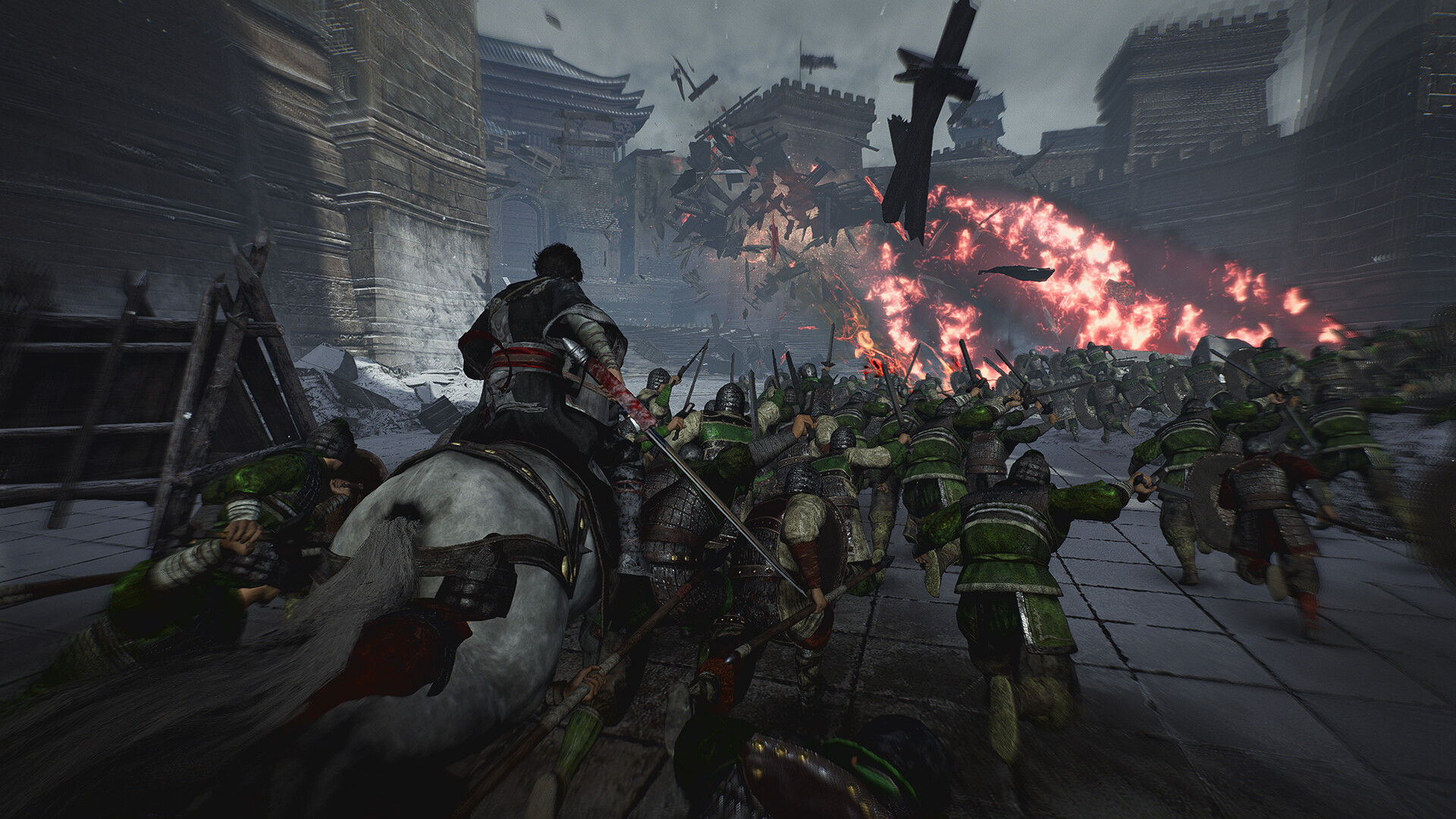
Fighting generals is where Dynasty Warriors: Origins flexes its new combat improvements. For the first time in the series, a parry mechanic takes centre stage in its combat. By perfectly timing a guard against an enemy’s attack, you can execute a powerful counter, leaving the opponent wide open for devastating follow-ups. Adding to this depth is a dodge mechanic, essential for avoiding unblockable red-glowing attacks that generals unleash. These mechanics, reminiscent of games like Stellar Blade, bring a refreshing character action vibe to the Musou formula. The result is a blend of classic large-scale battles and intense, one-on-one duels that give each fight against a general a more personal edge.
Generals also come equipped with a layer of defence called Fortitude shields, which must be broken down through consistent attacks. Once shattered, the enemy is stunned, leaving them wide open for free hits—though their shields will regenerate over time. The most efficient way to obliterate these shields is by leveraging the new Bravery system. This mechanic ties directly to Battle Arts, a new addition that lets players unleash strong weapon-specific moves at the cost of a few Bravery points. Bravery points can be replenished through perfect parries, defeating soldiers, and driving up the KO counter—a satisfying series’ signature gameplay loop. These changes bring a new feel to the battlefield, making every general encounter feel more personal with its one-on-one action, even more so when sometimes there is an option to make it a duel in which the camera shifts and a ring appears with soldiers around watching as yourself and the general take battle in a sort of gladiator match to the death.
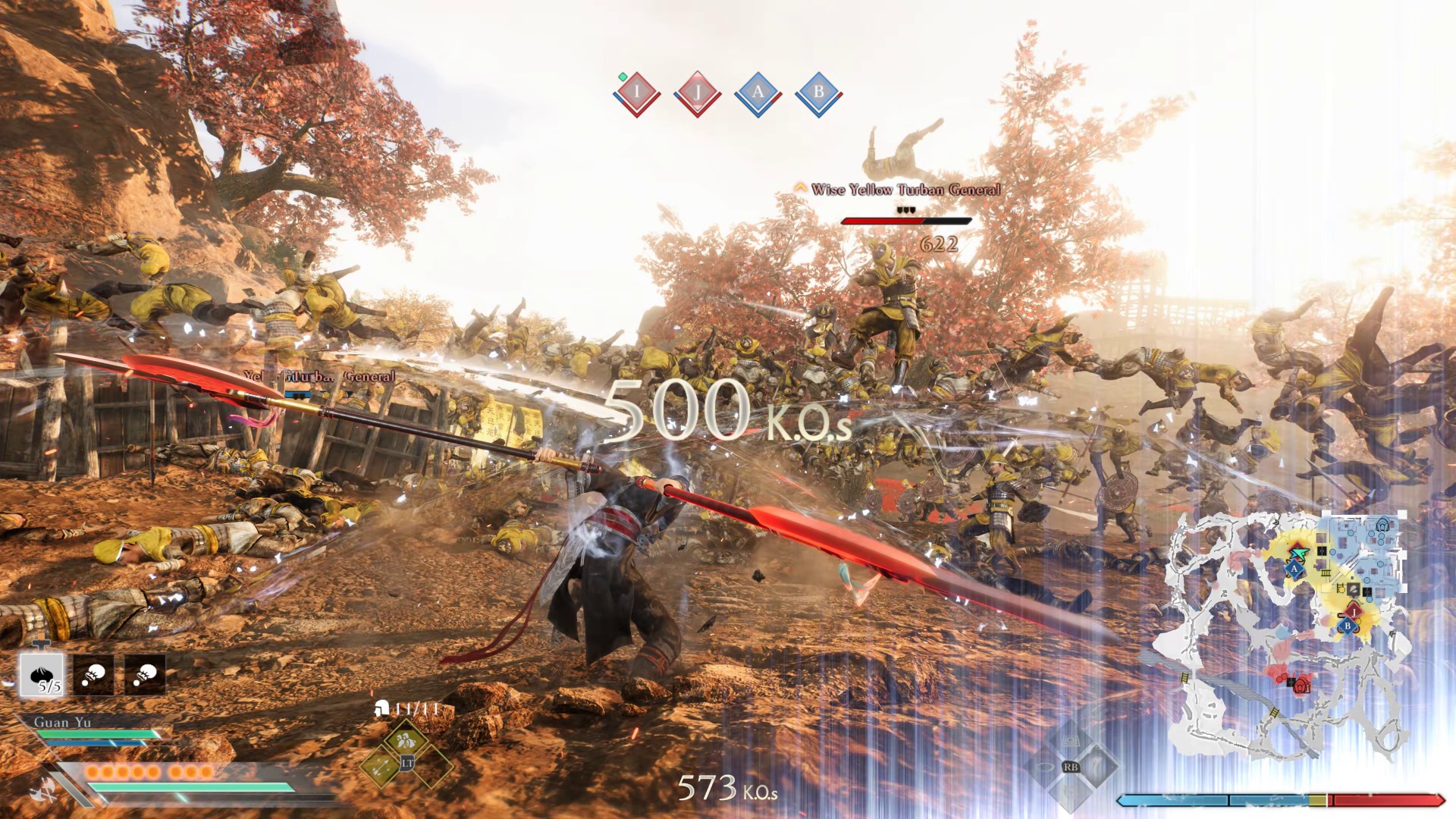
If on the receiving end of pain, there is the option to temporary play as another hero through the companion system. In certain battles, a companion hero accompanies you, and as the companion meter fills during the mission, you can temporarily take control of them. This grants access to their unique weapons, special skills, abilities, and devastating Musou attacks for a limited time. There are around 10 companions to play with throughout the game’s 35 – 55 hour story mode depending how many side events and factions a player wants to finish.
Battles in Dynasty Warriors: Origins are accessed through an overworld map, where Ziluan ventures across a sprawling landscape. Here, players can visit generals for conversations, engage in smaller skirmishes to earn skill points, uncover new weapons, and enhance their weapon proficiency. Shops scattered across the map offer items and gear upgrades, while story progression unfolds through cinematic moments. The overworld also hides valuable collectibles like old coins, which unlock bonus rewards, and pyroxene gems. These gems can be used to craft into one of five permanent gem types, levelling up randomly to provide powerful buffs such as increased attack range or enhanced parry damage. Only one of these gems can be equipped at a time to add a single buff to the character. Once the campaign is completed, a reforge system becomes available, allowing players to craft the ultimate weapons, adding endgame customization.
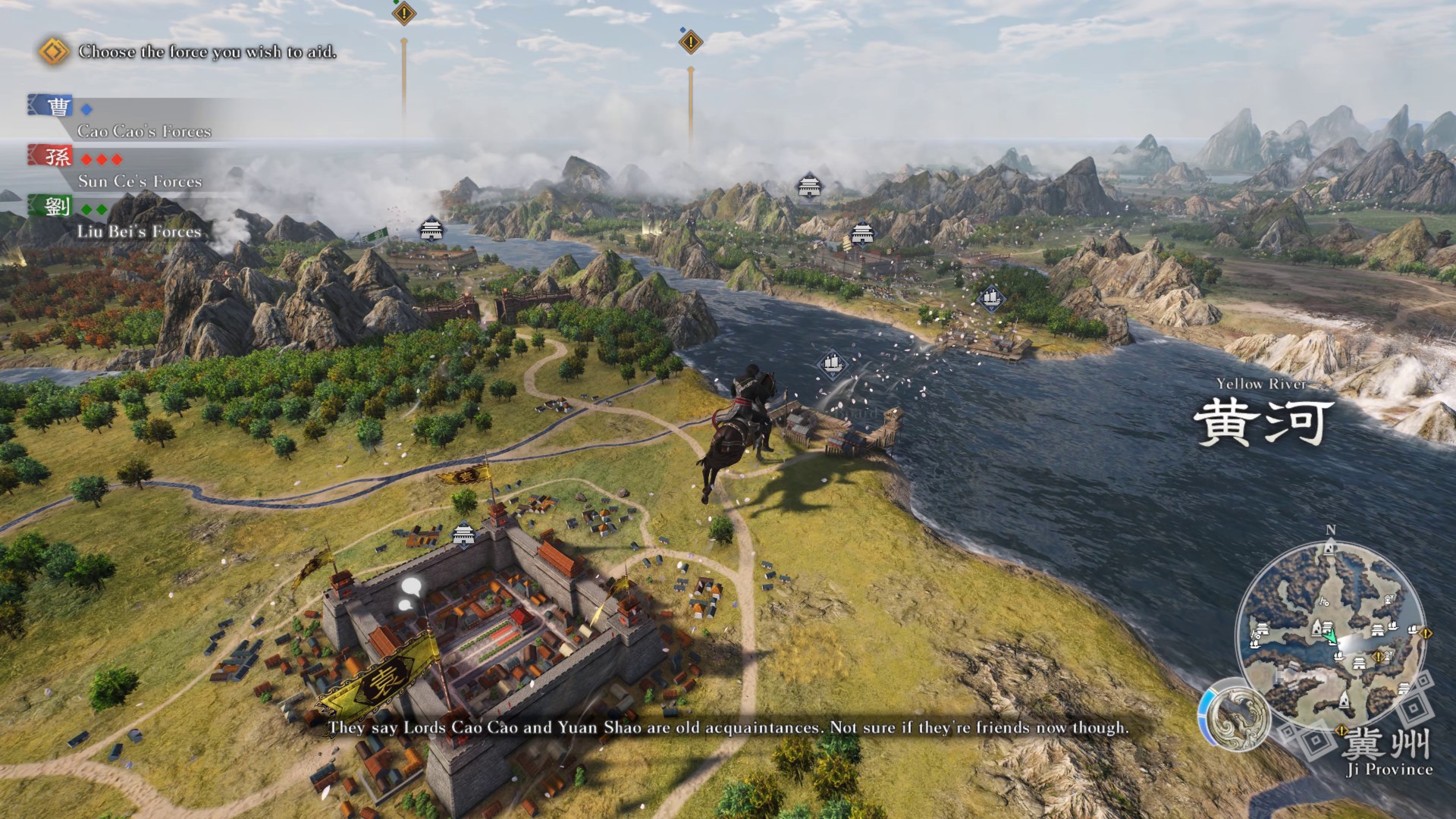
One feature of the endgame is its flexibility. Players can revisit Chapter 3—a turning point in the story where Ziluan chooses one of three leaders. This decision alters the story and battles in the subsequent chapters, but the game allows you to explore alternate paths and align with a different leader without restarting from the beginning. This design encourages replayability and lets players experience all sides of the conflict without unnecessary repetition.
While Dynasty Warriors: Origins brings plenty to admire—I’ve not even mentioned the improved graphics that run well on PC (tested on an AMD Ryzen 7800x3D and Nvidia RTX 4090), although I don’t understand why some of the main menu seems to render in 1080p when the rest of the game renders in 4K. The game offers adjustable graphical options and even a Steam Deck setting, ensuring smoother performance across devices. However, one glaring omission is the lack of cooperative play. This is a huge, missed opportunity, as the revamped combat system and the sheer chaos of massive battles seem tailor-made for teaming up with friends. The absence of extra game modes from previous entries is also disappointing. Aside from the story mode and the ability to replay chapters with a powered-up character or on a higher difficulty, there’s little to do once all the story is finished. A challenge mode or additional activities would have added replayability after completing all Three Kingdom campaigns.
Dynasty Warriors: Origins lays a solid foundation for the series’ future. It’s a positive step forward, offering the best gameplay and visuals we’ve seen in the franchise so far. The storytelling approach also provides a more in-depth exploration of familiar characters we’ve followed for over 24 years. The developers have done an excellent job enhancing the combat while maintaining most of the core elements that fans love about Dynasty Warriors. Let’s face it, a sequel is inevitable, and the missing features here could easily make their way back in future instalments. If this game is any indication, there’s plenty to be excited about for what comes next.